


Crown-of-thorns (Euphorbia milii) Light Needs

Crown-of-thorns grows best in full sun indoors or outdoors, with several hours of direct light each day.

Light Preference

Full Sun

Euphorbia milii Light Requirements

Euphorbia milii is native to Madagascar, where it grows in dry, open scrub and rocky areas with strong sun and fast drainage. In these exposed habitats, light is intense for much of the year, with occasional filtering from nearby vegetation in warm seasons. Cultivated indoor and outdoor plants keep the same adaptation to bright, direct exposure, especially when light increases gradually. It prefers full sun.

  • Ideal exposure:

    Crown-of-thorns needs about 6–8 hours of bright light daily, ideally full sun to partial sun, including 4–6 hours of direct sun.

  • Direct sun:

    Acclimated plants tolerate full sun, but sudden exposure from a dim indoor spot can scorch leaves and stems.

  • Lower light:

    Bright partial sun is tolerated, but shade usually reduces flowering and leads to stretched growth.

  • Sun timing:

    Morning sun is the safest direct light indoors, while hot afternoon sun should be introduced gradually.

Indoors, the best placement gives direct sun for part of the day and bright light for the rest.

NPoor
North-facing window:

A north-facing window is usually poor because it rarely provides enough direct sun for compact growth or reliable flowering.

ESuitable
East-facing window:

An east-facing window is suitable because it provides direct morning sun with lower heat stress than late-day exposure.

SBest
South-facing window:

A south-facing window is best in most homes, especially within 1–2 ft of the glass where direct sun is strongest.

WSuitable
West-facing window:

A west-facing window is suitable if the plant is acclimated gradually, since hot afternoon sun can stress leaves after a dimmer placement.

Place the plant as close to the glass as practical without pressing leaves or stems against hot or cold windowpanes.

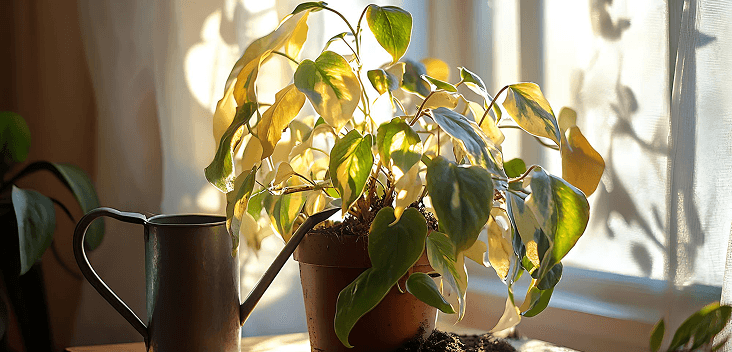
Euphorbia milii tolerates strong sun, but abrupt changes can cause sun stress.

Bleached patches:

Leaves or green stems may develop pale tan areas on the side facing the strongest sun.

Dry scorch spots:

Flat, dry marks can appear after a sudden move into intense direct light.

Sun-facing damage:

Marks are usually most noticeable on exposed upper leaves rather than shaded inner growth.

Faded bracts:

Colorful bracts may fade faster in very hot, unfiltered afternoon sun.

Shift the plant back from the hottest window or add a sheer curtain during peak afternoon sun. Reintroduce stronger sun gradually over 1–2 weeks.

Euphorbia milii does not perform well in shade. Low light usually shows first in growth shape and flowering.

  • Stretched stems:

    New growth may become longer and thinner, with more space between leaf clusters.

  • Leaning growth:

    Stems may angle strongly toward the brightest window or light source.

  • Fewer flowers:

    The plant may produce fewer colorful bracts because flowering depends on strong light.

  • Small new leaves:

    New leaves may stay smaller and less firm during the active growing season.

Move it to a brighter position with direct sun introduced in stages. Choose the brightest suitable window rather than extending time in shade.

Use the brightest available position and give at least a few hours of direct sun when the ideal exposure is not possible.

Rotate the pot every 1–2 weeks so the stems receive light evenly and do not lean toward the strongest side.

Avoid a dim room away from windows because that setup will not meet Euphorbia milii light needs for compact growth or flowering.

Get Personalized Care Plan

Scan your plant to receive care tips personalized for your specific plant

FAQ

It grows best in full sun to very bright partial sun. Several hours of direct light help support compact growth and regular flowering, especially indoors.

Everything About Crown-of-thorns

More Plant Light Guides

Get the Botan App

Discover how to care for your plants with Botan.

Botan app identifying a plant with a phone camera
Best Water for Plants – How to Choose the Right Type

7 min read · 13 Aug 2026

Best Water for Plants – How to Choose the Right Type

Rainwater, filtered, distilled, and tap water affect plants differently. Learn which types support healthy growth and which cause slow damage. Match each to your plants and discover how to easily improve tap water quality.

Plant Care
Best Water for Plants – How to Choose the Right Type
How Often to Water Fruit Trees

7 min read · 11 Aug 2026

How Often to Water Fruit Trees

Irrigation needs change as roots establish and weather shifts. This guide gives practical starting intervals, explains how soil and tree type change them, and shows how to recognize both excess moisture and drought stress.

Plant Care
How Often to Water Fruit Trees
Top 15 Plants That Don’t Need Sunlight

8 min read · 17 Sept 2026

Top 15 Plants That Don’t Need Sunlight

Some plants thrive in dim rooms, shaded corners, and places with indirect light. In this guide, you’ll explore the top 15 species best suited to low-light conditions and how to care for them.

Plant Recommendations
Top 15 Plants That Don’t Need Sunlight