Handle Sap Safely
Wear gloves and avoid touching your face when trimming or repotting, because the milky sap is irritating and can damage skin and eyes if not washed off promptly with soap and plenty of water.

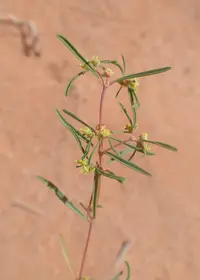
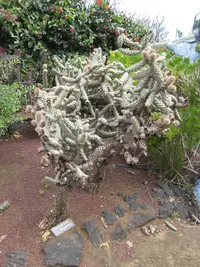
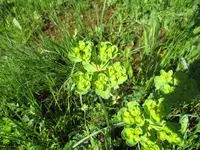
Parry's sandmat (Euphorbia parryi) is a small, clumping succulent native to rocky slopes and desert grasslands of the southwestern United States and northern Mexico. It forms tight mounds of bluish-green, cylindrical stems with small leaves and showy yellow to yellow-green flower-like bracts in spring.
This species is adapted to strong sun, high heat, and very lean, fast-draining soils. It grows slowly but is generally long-lived when kept dry and well ventilated. Once established, it tolerates drought well but reacts poorly to standing moisture or heavy, compacted substrates, which makes drainage the main factor in how to care for Parry's Sandmat.

Care Difficulty
Moderate Care

Light Preference
Full Sun

Water Requirements
Low Water

Temperature Preference
Cold Hardy

Hardiness Zone
5–8

Soil Texture
Sandy, Rocky, Loamy

Soil pH
Slightly acidic (6.5–7.0), Neutral (7.0)

Soil Drainage
Well-drained

Fertilization
Minimal (feed rarely)
Scan your plant to receive care tips personalized for your specific plant
Available on iOS and Android
This desert succulent thrives in strong sun but benefits from some protection at the hottest times of day.
Watering should mimic arid, rocky habitat, with thorough soakings followed by complete drying.
This species is adapted to hot, dry climates with cool nights and limited frost exposure.
This desert succulent tolerates low humidity and rarely needs special humidity management.
This species needs a very fast-draining, mineral-rich substrate to prevent root and stem rot.
This species is well suited to container culture in dry, bright locations.
This desert Euphorbia needs very light feeding, as it is adapted to nutrient-poor soils.
Euphorbia parryi needs minimal pruning, mainly to maintain health and safe handling.
This species is usually grown in rock gardens or xeric beds and is moved only when necessary.
Euphorbia parryi is most often propagated by seed but can sometimes be increased by careful division.
This cold-hardy native generally needs little winter attention in-ground within its hardiness range.

Plant Health Check
Not sure what's wrong with your plant? Check your plant's health inside the app.
This small Euphorbia species is native to high-elevation deserts of Arizona and New Mexico and tolerates winter cold far better than most succulents, often surviving light snow cover in its natural habitat.
It grows as tight, low rosettes that slowly form dense clumps, an adaptation that reduces water loss and buffers temperature swings on exposed rocky slopes.
Like many Euphorbia species, it produces a milky latex sap that deters herbivores, but in this compact, ground-hugging plant the sap is released only when the tissue is damaged, limiting unnecessary resource loss in its harsh native environment.
This species forms a small, clumping mound and spreads slowly outward over time. It is not considered aggressive. In well-drained, dry sites it stays relatively compact and is unlikely to overwhelm nearby drought-tolerant plants.
Keep your plants happy and healthy with plant identification, disease detection, and easy care guidance.