Euphorbia petiolata Care

Euphorbia petiolata

About Euphorbia petiolata

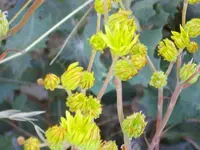
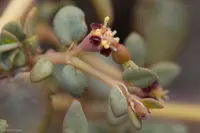
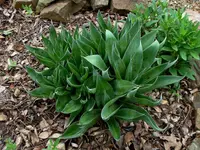
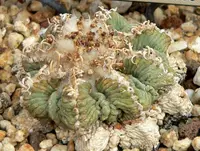
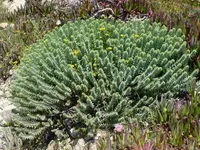
Euphorbia petiolata is a shrubby spurge with slender, often arching stems and narrow leaves, giving it a fine-textured, airy look. It belongs to the Euphorbiaceae family, known for milky sap and diverse growth forms.

This species is native to parts of Mexico and Central America, where it typically grows in warm, relatively dry habitats. It tends to be drought-tolerant once established, but sensitive to cold and excess moisture.

Because of its resilience and modest growth rate, it suits growers who can provide bright light, sharp-draining soil, and careful watering. Understanding how to care for Euphorbia petiolata mainly involves avoiding overwatering and protecting it from frost.

Main Plant Requirements

Care Difficulty

Moderate Care

Light Preference

Partial Sun

Water Requirements

Moderate Water

Temperature Preference

Warm Climate

Hardiness Zone

Unknown

Soil Texture

Sandy, Loamy

Soil pH

Slightly acidic (6.5–7.0)

Soil Drainage

Well-drained

Fertilization

Minimal (feed rarely)

Get Personalized Care Plan

Scan your plant to receive care tips personalized for your specific plant

Available on iOS and Android

How to Care for the Euphorbia petiolata

This shrubby euphorbia prefers bright, open exposure but benefits from some protection from intense midday sun.

  • Provide 4–6 hours of direct morning sun with light shade or filtered light in the early afternoon, especially in hot summer climates.
  • Plant in a position with at least bright, open sky exposure; dense shade leads to weak, stretched growth and reduced flowering.
  • In very hot regions, give more afternoon shade in summer to prevent leaf scorch, while in cooler climates it can tolerate nearly full sun all day.

Watering should respect this species’ drought-tolerant, succulent nature and avoid prolonged soil saturation.

  • Allow the top 3–5 cm of soil to dry before watering; in the ground this often means deep but infrequent soakings, then full drainage.
  • Reduce watering in cool seasons, only watering when stems start to slightly soften or lower leaves lose firmness rather than on a fixed calendar.
  • Watch for overwatering signs such as yellowing, mushy stems, or sour-smelling soil, and ensure sharply drained, gritty soil to protect the roots.

This species prefers warm, dry conditions and is sensitive to hard frost and prolonged cold.

  • Aim for active growth around 65–80°F (18–27°C), where stems remain firm and new shoots form steadily.
  • Protect from temperatures below 30–32°F (-1–0°C); brief light frost may be survived, but repeated freezing can damage stems and roots.
  • In hot regions, plants tolerate 90–100°F (32–38°C) if soil drains well and roots are not waterlogged, but growth may slow during extreme heat.

This species tolerates typical indoor humidity and rarely needs special adjustment.

  • Aim for 30–50% humidity; avoid persistently damp, stagnant air around foliage.
  • Plant spacing and air movement help prevent fungal issues in tightly sealed, high-humidity rooms.
  • If leaf yellowing and soft stems appear alongside overwatering, lower ambient humidity and improve airflow rather than misting.

This plant needs very sharply drained, mineral-based soil to prevent root rot.

  • Use a gritty mix such as 50–60% cactus soil blended with coarse sand and perlite or pumice for fast drainage.
  • Aim for slightly acidic to neutral pH, roughly 6.0–7.2, avoiding strongly acidic peat-heavy blends.
  • Ensure the mix feels loose and crumbly; large mineral particles increase aeration around the fine roots.
  • Avoid dense clay, water-retentive compost, and any mix that stays wet longer than 2–3 days after watering.

This species is suitable for container growing when drainage and stability are carefully managed.

  • Choose a pot just 2–4 cm wider than the root mass to limit excess wet substrate after watering.
  • Select unglazed terracotta if moisture reduction is needed, as it allows faster evaporation through the pot walls.
  • Use a heavy, low-profile container or add coarse topdressing to stabilize the plant against wind or accidental knocks.

This species grows in low-nutrient conditions, so Euphorbia petiolata care uses only light fertilization in pots or poor soils.

  • Use a balanced, diluted liquid fertilizer (around 10-10-10 NPK at 1/4–1/2 strength) for container plants.
  • Feed sparingly during active growth in spring–summer, about every 6–8 weeks if growth is pale or weak.
  • Skip fertilizing in autumn–winter, when growth slows or the plant is dormant.
  • In the ground, rely mainly on a thin layer of compost in spring rather than frequent feeding.

Pruning is modest but useful to maintain a clean, compact form and safe handling of Euphorbia petiolata.

  • Best time is late winter to early spring before strong new growth begins.
  • Remove dead, damaged, or crossing stems to reduce disease risk and improve airflow.
  • Shorten overly long or leaning shoots to refine shape and control size.
  • Use sharp, clean pruners and wear gloves to avoid skin contact with the milky sap.

This plant prefers minimal disturbance, so repot or transplant Euphorbia petiolata only when clear signs appear.

  • Check for roots circling the pot, emerging from drainage holes, or stalled growth as indicators it has outgrown its container.
  • Plan repotting or garden transplanting for early spring, allowing the root system a full season to reestablish.
  • Move up just 1 pot size or replant at the same depth in well-drained, gritty soil to limit waterlogging.
  • Water lightly after moving, keep in bright but not harsh sun for 7–10 days, and avoid fertilizing until new growth appears.

Propagation of Euphorbia petiolata is possible but should be approached carefully due to its irritating latex sap.

  • Use semi-ripe stem cuttings in late spring–summer, wearing gloves and allowing the cut ends to callus for 1–2 days.
  • Insert cuttings into a sharply draining mix (gritty cactus substrate), kept slightly moist and in bright, indirect light.
  • Seed propagation is slower; sow fresh seed on a sandy mix, just covered, at 68–75°F with steady, light moisture.
  • Provide good airflow and avoid overwatering during rooting to limit rot and fungal problems.

Mature Euphorbia petiolata is moderately cold hardy but benefits from simple winter care in colder regions.

  • In-ground plants tolerate light frosts but may suffer damage in prolonged freezes below the species’ hardiness range.
  • Apply a 5–8 cm layer of dry mulch around, not against, the crown to buffer temperature swings.
  • For container plants in areas with hard frost, move pots to a bright, cool indoor or sheltered spot.
  • Keep soil on the dry side in winter, watering only enough to prevent shriveling.

Care Tips

Handle Sap Safely

Wear disposable gloves and avoid touching your face when cutting or repotting, then rinse tools and any sap-contact surfaces with soapy water to reduce skin irritation risk from the milky latex.

Strategic Stem Pinching

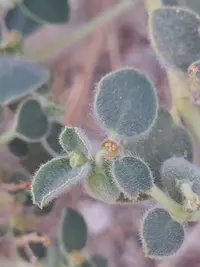
Pinch or cut back the soft tips of overly tall stems in late spring to encourage a denser, more self-supporting habit rather than a few weak, elongated shoots.

Gradual Light Shifts

When moving the plant outdoors or to a brighter window for the season, increase light exposure over 7–10 days to prevent sunscald on previously shaded stems and leaves.

Targeted Pest Monitoring

Inspect the undersides of leaves and stem joints every 2–3 weeks, and if mealybugs or aphids appear, spot-treat with a cotton swab dipped in 70% isopropyl alcohol before populations build up.

Controlled Container Size

Use a pot only 2–4 cm wider than the root ball, as slightly tight quarters help limit excessive, weak growth and make caring for Euphorbia petiolata more predictable.

Common Pests and Diseases

Spider mites

This pest often appears on stressed plants grown in hot, dry conditions, causing fine stippling on leaves and a dusty or webbed look on stems. Symptoms include gradual yellowing, leaf drop, and reduced vigor.

Solution

Rinse stems and foliage thoroughly with a strong, lukewarm water spray, then increase humidity around the plant while keeping soil on the dry side. For persistent infestations, treat all plant surfaces with insecticidal soap or a neem oil solution every 7–10 days, isolating the plant from others until new growth appears healthy.

Mealybugs

These insects hide in stem joints and along ribs, forming white, cottony clusters and excreting sticky honeydew that can lead to sooty mold. Symptoms include distorted new growth, weakened stems, and slow decline.

Solution

Remove visible insects with a cotton swab dipped in 70% isopropyl alcohol and prune heavily infested sections. Follow with 2–3 rounds of insecticidal soap or horticultural oil at 7–10 day intervals, and reduce excess nitrogen fertilization that encourages soft, susceptible growth.

Powdery mildew

This disease shows as white to gray powdery patches on stems and leaves, more common in crowded plants with fluctuating moisture and poor air movement. Symptoms include dull, discolored surfaces and gradual loss of vigor.

Solution

Improve air circulation, avoid overhead watering, and space plants so surfaces dry quickly. Remove the worst affected stems and apply a sulfur-based or potassium bicarbonate fungicide according to label directions, repeating as needed while monitoring for new lesions.

Crown and stem canker

This disease causes sunken, brown to black lesions at the stem base or along green stems, sometimes accompanied by gumming or cracking tissue. Symptoms include wilting despite adequate watering and eventual collapse of affected segments.

Solution

Cut out and discard infected stem sections back to firm, healthy tissue using sterile tools, and keep the plant on the dry side while it recovers. Improve drainage, avoid water standing around the crown, and if multiple plants are affected, drench only the remaining healthy plants with a labeled broad-spectrum fungicide to limit spread.

Scale insects

These insects appear as small, hard, brown or tan bumps along stems and leaf bases, often blending with the plant’s surface. Symptoms include sticky honeydew, sooty mold, and general decline with reduced new growth, particularly when growing Euphorbia petiolata in sheltered outdoor or indoor locations.

Solution

Gently scrape or rub off scales with a soft brush or cloth dipped in 70% isopropyl alcohol, then dispose of debris. Follow up with 2–3 applications of horticultural oil, ensuring full coverage of stems and crevices, and monitor closely for crawler stages to catch reinfestations early.

Interesting Facts

Narrow petiole transition

This species has a distinct transition from the leafy blade to a well-defined petiole, which is reflected in its name petiolata and helps distinguish it from closely related species with more sessile, or stalkless, leaves.

Specialized cyathia structure

Like other Euphorbia species, it produces cyathia, a highly reduced flower structure that mimics a single bloom, but in E. petiolata the arrangement and shape of the bracts and glands are key traits used by botanists to identify the species.

Latex-based defense

Its tissues contain a milky latex that deters many herbivores; in E. petiolata the latex canals are especially well developed along the stems and leaf midribs, an anatomical feature often examined in taxonomic studies of the genus.

FAQs about Euphorbia petiolata

This species has a milky latex sap that is irritating and potentially toxic if ingested. It can cause stomach upset, mouth irritation, and skin or eye inflammation. Keep it away from children and pets and wear gloves when pruning.

Grow Healthy Plants with Botan Care

Keep your plants happy and healthy with plant identification, disease detection, and easy care guidance.

Botan plant care app — identify plants on mobile

Explore More Plants