

Handle Sap Safely
Always wear nitrile or latex gloves and avoid touching your face when cutting or repotting, since the milky sap is irritating; if sap gets on skin, rinse immediately with plenty of water and a gentle soap.

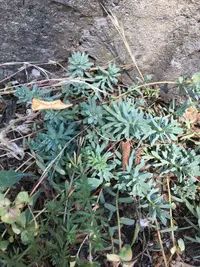
Euphorbia petrophila is a compact, rock-dwelling succulent shrub from arid regions, typically forming low, branching mounds of thick, jointed stems. Its appearance is architectural, with small, often inconspicuous leaves and seasonal clusters of tiny, cup-like flowers typical of the Euphorbia genus.
This species is adapted to strong sun, high drainage, and low, infrequent moisture, which makes it well suited to rock gardens and specialized succulent collections. For anyone learning how to care for Euphorbia petrophila, its main challenge is preventing overwatering and providing enough light, rather than meeting high nutrient or humidity demands.

Care Difficulty
Moderate Care

Light Preference
Full Sun

Water Requirements
Low Water

Temperature Preference
Warm Climate

Hardiness Zone
9–11

Soil Texture
Sandy, Rocky, Loamy

Soil pH
Slightly acidic (6.5–7.0), Neutral (7.0)

Soil Drainage
Well-drained

Fertilization
Minimal (feed rarely)
Scan your plant to receive care tips personalized for your specific plant
Available on iOS and Android
This drought-adapted succulent prefers strong light but needs some protection from extreme midday sun in hot climates.
This species stores water in its tissues and needs infrequent, deep watering rather than frequent light applications.
This succulent prefers warm, dry conditions and is not reliable in areas with hard frost without protection.
This species is adapted to arid conditions and does not have demanding humidity requirements.
This succulent prefers very fast-draining, mineral-based soil to prevent root rot.
This species is well suited to container growing, especially in outdoor rock gardens or balcony collections.
This drought-adapted species needs only light feeding when actively growing.
Pruning is minimal and mainly keeps the plant safe and compact.
This species prefers stable conditions and infrequent disturbance.
Propagation is possible from cuttings or seeds but requires careful handling of sap and moisture.
Winter care depends on climate and whether the plant is grown in the ground or in a container.

Plant Health Check
Not sure what's wrong with your plant? Check your plant's health inside the app.
This species naturally grows in narrow rock crevices and on limestone cliffs in arid regions, anchoring itself in minimal, mineral-rich pockets of soil.
It forms low, cushion-like clumps made of many short, jointed segments, an adaptation that reduces exposure to intense sun and drying winds in its native habitat.
Small leaves appear on the new growth during favorable seasons but are shed quickly as conditions become hotter and drier, allowing the plant to conserve water efficiently during how to take care of Euphorbia petrophila.
This species performs best outdoors in bright, dry, rocky or gritty conditions. It can be kept indoors only if it receives very strong light, low humidity, and fast-draining mineral soil, which makes Euphorbia petrophila indoor care more challenging.
Keep your plants happy and healthy with plant identification, disease detection, and easy care guidance.

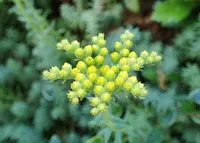
Reflexed Stonecrop
Petrosedum rupestre

rainbow hedgehog cactus
Echinocereus rigidissimus
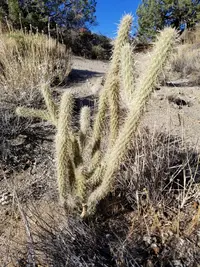
Gander's buckhorn cholla
Cylindropuntia ganderi
 POPULAR
String of Fishhooks
Curio radicans
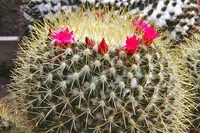
rainbow pincushion
Mammillaria rhodantha
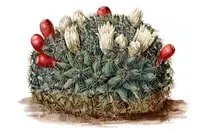
little nipple cactus
Mammillaria heyderi
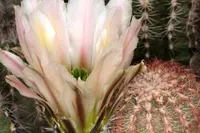
rainbow cactus
Echinocereus pectinatus
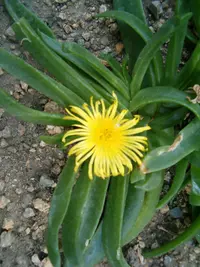
Long Tonguefig
Glottiphyllum longum