Spine-safe handling
Use thick gloves and long sleeves when repotting or repositioning the plant, and grip the root ball gently from below or use folded newspaper bands around the stems to avoid injury from the dense spines and prevent stem breakage.

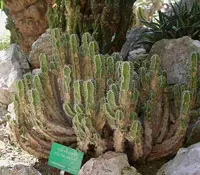
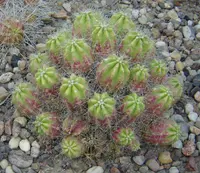
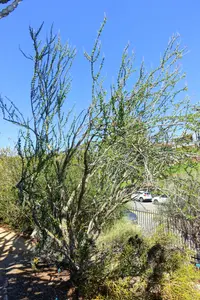
Euphorbia polyacantha is a small, drought-tolerant succulent shrub from arid regions of East Africa. It forms dense, spiny, cactus-like clumps with segmented, green stems. Tiny leaves appear briefly on new growth, while the plant relies mainly on its stems for photosynthesis. Small, cup-shaped cyathia, the characteristic flowers of Euphorbia, may appear along the ribs in suitable conditions. This species suits growers who prefer low-maintenance plants but are comfortable handling spines and latex sap carefully. It thrives in strong light, fast-draining mineral soil, and infrequent watering, which are key points in how to care for Euphorbia polyacantha.

Care Difficulty
Moderate Care

Light Preference
Full Sun

Water Requirements
Low Water

Temperature Preference
Warm Climate

Hardiness Zone
9–11

Soil Texture
Sandy, Loamy, Rocky

Soil pH
Slightly acidic (6.5–7.0), Neutral (7.0)

Soil Drainage
Well-drained

Fertilization
Minimal (feed rarely)
Scan your plant to receive care tips personalized for your specific plant
Available on iOS and Android
This species thrives in bright, open conditions with strong but not extreme sun exposure.
This drought-adapted succulent requires infrequent but thorough watering in fast-draining soil.
This plant prefers warm, dry conditions and is sensitive to prolonged cold and frost.
This species handles low humidity well and rarely needs special humidity management indoors.
This drought-adapted succulent requires very fast-draining, mineral-rich soil to prevent root rot.
This species is well-suited to container growing when drainage and stability are prioritized.
This drought-adapted species needs only light, occasional feeding in poor soils.
Pruning is mainly for safety, health, and access around the spiny stems of Euphorbia polyacantha.
This species is usually landscape-grown, so focus on careful transplanting rather than frequent repotting.
Propagation of this spiny euphorbia is possible but should be done with care due to latex sap and armature.
In suitable hardiness zones this species is fairly cold tolerant, but young or potted plants benefit from simple winter precautions.

Plant Health Check
Not sure what's wrong with your plant? Check your plant's health inside the app.
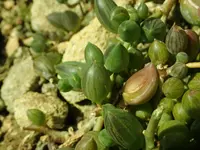
This species forms low, much-branched shrubs armed with numerous rigid spines that are actually modified stem structures, with tiny leaves that appear briefly and are quickly shed in response to arid conditions.
Euphorbia polyacantha is native to dry regions of East Africa, where its succulent, water-storing stems and reduced leaf surface help limit water loss under intense sun and low rainfall.
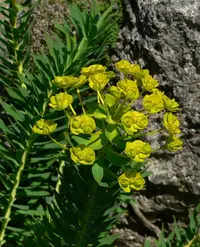
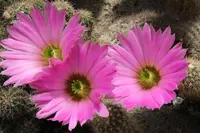
Like other euphorbias, it produces cyathia, a specialized inflorescence that looks like a single flower but is actually a tight cluster of reduced male and female flowers surrounded by nectar glands that attract pollinators.
This species contains a milky latex sap that is irritating and potentially toxic if ingested. It can cause mouth, stomach, and skin irritation. Keep it away from children and pets, and avoid getting sap in eyes.
Keep your plants happy and healthy with plant identification, disease detection, and easy care guidance.