

Root disturbance control
Handle the plant by the pot or root ball during repotting and division, since fine, brittle roots resent disturbance and recover more slowly if broken.

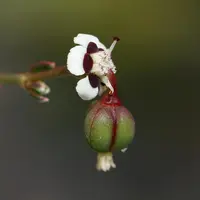
Lesser Florida spurge (Euphorbia polyphylla) is a small, herbaceous perennial native to sandy pinelands and open habitats in Florida and parts of the southeastern United States. It typically forms low, branching clumps with many narrow leaves and small, inconspicuous flowers.
This species is adapted to dry, well-drained, often nutrient-poor soils and seasonal heat, which influences how to care for Lesser Florida spurge in cultivation. It generally prefers bright light, low to moderate moisture, and a gritty substrate that does not stay wet for long periods.

Care Difficulty
Moderate Care

Light Preference
Partial Shade

Water Requirements
Moderate Water

Temperature Preference
Warm Climate

Hardiness Zone
Unknown

Soil Texture
Sandy, Loamy

Soil pH
Slightly acidic (6.5–7.0)

Soil Drainage
Well-drained

Fertilization
Minimal (feed rarely)
Scan your plant to receive care tips personalized for your specific plant
Available on iOS and Android
This coastal Euphorbia prefers bright, indirect light with some direct sun but burns in harsh exposure.
This species behaves like a drought-tolerant Euphorbia and must dry between waterings to avoid rot.
This plant favors warm, frost-free conditions and reacts poorly to prolonged cold or sudden extremes.
This species handles typical indoor humidity well and rarely needs special adjustments.
This species prefers a very fast-draining, mineral-rich mix that prevents water from sitting around the roots.
This species is well suited to container growing when drainage and root space are carefully managed.
Euphorbia polyphylla grows in poor, sandy soils and usually needs only minimal feeding in cultivation.
Pruning Euphorbia polyphylla is mainly corrective and hygienic rather than decorative.
This species is usually grown in the ground, so focus on careful transplanting rather than frequent repotting.
Euphorbia polyphylla is typically propagated by seed, with some scope for careful division of established clumps.
This species is moderately cold tolerant in its native range and usually needs only light winter care in mild climates.

Plant Health Check
Not sure what's wrong with your plant? Check your plant's health inside the app.
This species is naturally restricted to pine rockland habitats of southern Florida, where it grows in shallow pockets of soil over limestone exposed to high light and seasonal drought.
The plant forms a low, sprawling mat with many narrow leaves crowded along the stems, an adaptation that helps it tolerate intense sun and drying winds near the ground surface.
Like many members of the genus, it exudes a white latex when damaged; this sap is irritating and potentially toxic to skin and eyes and helps deter herbivores in its native habitat.
Lack of blooms often comes from insufficient light, heavy shade from taller plants, or nutrient-poor, compacted soil. Check for root disturbance, over-competition from weeds, or recent transplant shock, which can all reduce flowering temporarily.
Keep your plants happy and healthy with plant identification, disease detection, and easy care guidance.

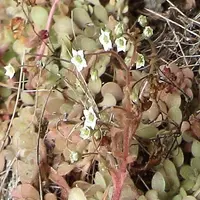
Sedum fragrans
Sedum fragrans
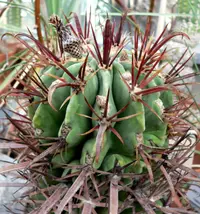
Devil's Tongue Barrel Cactus
Ferocactus latispinus
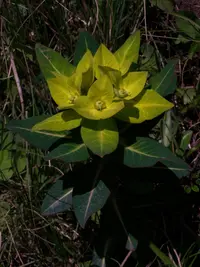
Euphorbia stracheyi
Euphorbia stracheyi
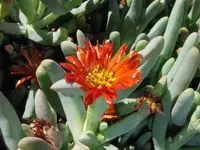
Antegibbaeum
Antegibbaeum fissoides
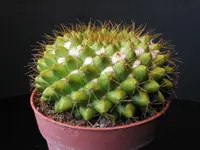
Mammillaria marksiana
Mammillaria marksiana
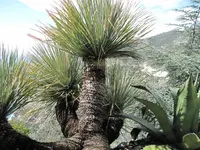
Great Desert Spoon
Dasylirion acrotrichum
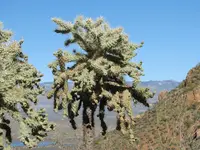
jumping cholla
Cylindropuntia fulgida
Tooth Clockfig
Cheiridopsis denticulata