Handle Sap Safely
Always wear gloves and avoid touching your face or eyes when cutting or repotting, as the milky latex sap is irritating and should be rinsed off skin with plenty of water if contact occurs.

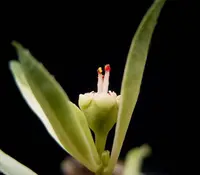
Sun spurge, Euphorbia radians, is a small, short-lived herbaceous plant from the spurge family. It typically forms low clumps with narrow leaves and distinctive green to yellowish bracts around tiny flowers.
This species is native to parts of North America, where it often grows in open, sunny sites with well-drained soils. It tends to appear in disturbed areas, roadsides, or light grassland.
Euphorbia radians is generally easy to grow if its need for bright light and good drainage is met. Its drought tolerance and modest size make it suitable for low-input gardens.
The plant has a milky sap, so gardeners should care for sun spurge with basic caution during pruning or handling.

Care Difficulty
Moderate Care

Light Preference
Full Sun

Water Requirements
Low Water

Temperature Preference
Warm Climate

Hardiness Zone
9–11

Soil Texture
Sandy, Loamy, Rocky

Soil pH
Slightly acidic (6.5–7.0), Neutral (7.0)

Soil Drainage
Well-drained

Fertilization
Minimal (feed rarely)
Scan your plant to receive care tips personalized for your specific plant
Available on iOS and Android
This drought-tolerant species prefers bright, open conditions similar to its native habitat.
This Euphorbia has low water demand and is prone to rot in persistently wet soil.
This species prefers warm, dry conditions and is not reliable in hard frost.
This species tolerates typical indoor humidity and rarely needs special adjustments.
This species needs sharply drained, mineral-lean soil to avoid root rot.
This species is well suited to container growing as long as excess moisture is tightly controlled.
This drought-tolerant Euphorbia radians needs only light feeding to maintain healthy growth.
Pruning Euphorbia radians is mainly done to keep the plant safe, compact, and tidy.
This species prefers stable conditions and only occasional repotting or transplanting.
Propagation of Euphorbia radians is usually done from cuttings or seed under controlled conditions.
Winter care depends on local climate, as this Euphorbia tolerates only light frost.

Plant Health Check
Not sure what's wrong with your plant? Check your plant's health inside the app.
This species is native to Mexico and occurs naturally only within specific regions of the country, where it grows in seasonally dry habitats.
The species name radians refers to its radiating floral display, where the small euphorbia flowers (cyathia) are arranged in a star-like pattern that makes the inflorescence stand out among related species.
Like many spurges, this plant produces a white, milky latex that can irritate skin and eyes, so any handling that risks sap exposure should be done with caution and protection.
Poor flowering usually comes from insufficient light, excess nitrogen fertilizer, or plants that are too young or crowded. Improve light exposure, avoid high-nitrogen feeds, and divide or replant crowded clumps to restore normal blooming.
Keep your plants happy and healthy with plant identification, disease detection, and easy care guidance.