

Glove-first handling
Always wear gloves and avoid touching your face when handling or repotting this plant, as the milky sap is irritating and can cause skin and eye inflammation.

Euphorbia ramiglans is a small, shrubby succulent from arid regions of southern Africa. It forms many branching, leafless stems with a sculptural, geometric look. New growth is green, aging to gray or brown, often lined with tiny ridges and sparse spines. The plant produces small, yellowish cyathia, the specialized cup-like flowers typical of Euphorbia species. It grows slowly and stays compact, which suits container culture and indoor collections. Thick, water-storing stems make it drought-tolerant but sensitive to overwatering and poorly drained soil. Bright light, lean mineral soil, and careful watering are the main points to understand when learning how to care for Euphorbia ramiglans.

Care Difficulty
Moderate Care

Light Preference
Full Sun

Water Requirements
Low Water

Temperature Preference
Tropical / Frost Sensitive

Hardiness Zone
10–11

Soil Texture
Sandy, Loamy, Rocky

Soil pH
Slightly acidic (6.5–7.0), Neutral (7.0)

Soil Drainage
Well-drained

Fertilization
Minimal (feed rarely)
Scan your plant to receive care tips personalized for your specific plant
Available on iOS and Android
This shrubby succulent prefers bright, indirect light with some direct sun in cooler hours.
This species stores water in its stems and needs infrequent but thorough watering.
This succulent favors warm, dry conditions and is sensitive to cold and frost.
This species handles typical indoor humidity well and rarely needs special adjustments.
This Euphorbia needs a very fast-draining, mineral-rich mix to prevent root rot.
This species is well suited to container growing when drainage and stability are controlled carefully.
This drought-adapted succulent needs only light feeding to stay healthy in containers.
Pruning is mainly used to maintain shape and remove damaged growth on this succulent shrub.
This species grows slowly and prefers infrequent disturbance, especially in containers.
Propagation is usually done from cuttings, as seed is less commonly available and slower.
This succulent is sensitive to hard frost and benefits from basic winter protection in cool climates.

Plant Health Check
Not sure what's wrong with your plant? Check your plant's health inside the app.
This species forms a small, many-branched succulent shrublet with thickened tuberous roots that store water and nutrients, helping it survive long dry periods in its native South African habitat.
Its slender, angular stems grow in a zigzag pattern with distinct segments, giving the plant a sculptural appearance that differs from the rounder, more columnar shapes seen in many other succulent euphorbias.
The flowers are actually cyathia, a specialized inflorescence typical of Euphorbia, and in this species they are small and often yellowish to greenish, with glands and bracts forming the apparent flower structure rather than petals.
This succulent handles both, but usually performs better outdoors in bright, dry conditions with excellent drainage and good airflow. Indoors it needs maximum light, minimal watering, and a gritty mix to prevent rot and weak, etiolated growth.
Keep your plants happy and healthy with plant identification, disease detection, and easy care guidance.

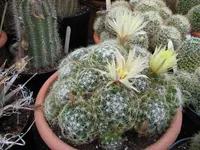
longmamma nipple cactus
Mammillaria sphaerica
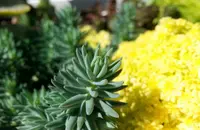
Jenny's Stonecrop
Petrosedum rupestre subsp. rupestre 'Blue Spruce'
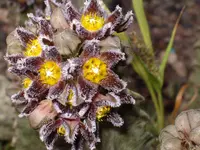
Apteranthes burchardii
Apteranthes burchardii
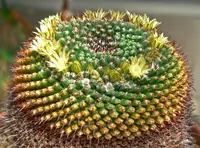
Mammillaria gigantea
Mammillaria gigantea
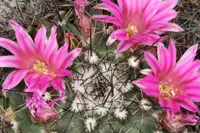
Mammillaria melanocentra
Mammillaria melanocentra
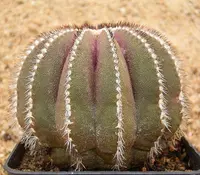
Uebelmannia pectinifera
Uebelmannia pectinifera
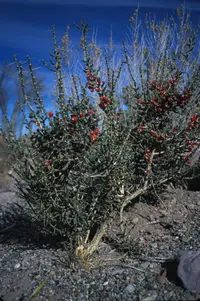
Christmas cactus
Cylindropuntia leptocaulis
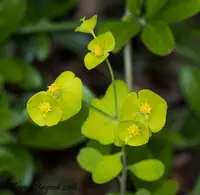
Roemer's spurge
Euphorbia roemeriana