

Summer heat protection
In very hot, dry sites, place a flat rock or gravel mulch around the plant to reduce soil temperature spikes and protect its shallow roots during peak afternoon heat.

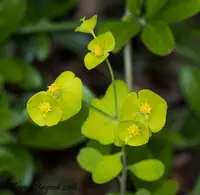
Roemer's spurge, Euphorbia roemeriana, is a small, seasonal herb in the spurge family, known for its modest size and often pale to reddish foliage. It typically appears in open, rocky habitats and thin soils, where it completes its life cycle quickly during favorable conditions.
This species is native to parts of the south-central United States, especially Texas, where it grows in dry, sunny sites. Its drought tolerance and compact habit can make it interesting for specialized rock gardens or native plant collections.
Because it is adapted to lean, fast-draining soils and bright exposure, it may not thrive in rich, constantly moist garden beds. Anyone planning to care for Roemer's spurge should understand its preference for dry, open, and well-drained conditions.

Care Difficulty
Moderate Care

Light Preference
Partial Sun

Water Requirements
Low Water

Temperature Preference
Warm Climate

Hardiness Zone
7–10

Soil Texture
Sandy, Loamy, Rocky

Soil pH
Slightly acidic (6.5–7.0), Neutral (7.0)

Soil Drainage
Well-drained

Fertilization
Minimal (feed rarely)
Scan your plant to receive care tips personalized for your specific plant
Available on iOS and Android
This small perennial spurge prefers bright, open light but needs some protection from harsh sun.
This drought-adapted species needs infrequent, careful watering and very sharp drainage.
This species is adapted to warm, dry climates and dislikes prolonged cold or excessive humidity.
This species tolerates dry air well, so humidity is rarely a concern indoors or outdoors.
This species prefers very fast-draining, mineral soils that mimic rocky native habitats.
This species can be grown in containers when drainage and stability are carefully managed.
This small, native Euphorbia from rocky habitats usually needs minimal feeding in garden soils.
Pruning needs for Euphorbia roemeriana are low and focus on safety and plant tidiness rather than shaping.
In cultivation, this species is more often transplanted in rock gardens or native beds than repotted in containers.
Euphorbia roemeriana is typically propagated by seed, with some growers also using small divisions from established clumps.
This species is relatively cold hardy in its native range and usually needs only light winter care in the garden.

Plant Health Check
Not sure what's wrong with your plant? Check your plant's health inside the app.
This species is naturally restricted to a small area of central Texas, where it grows almost exclusively on limestone-derived soils in the Edwards Plateau region.
The plant behaves as a spring ephemeral, completing most of its growth and reproduction during the cool, moist spring period before high summer heat and drought arrive.
Its small, three-lobed seed capsules have a characteristic rough, warted surface that helps distinguish it from many other small Euphorbia species in the field.

Euphorbia roemeriana is considered a rare species in parts of its range and is tracked by conservation programs in Texas because of its limited distribution and specialized limestone habitat.
All parts are considered toxic due to the milky sap, which can irritate skin, eyes, and the digestive tract. Keep away from children, cats, dogs, and livestock, and wear gloves when handling or pruning this species.
Keep your plants happy and healthy with plant identification, disease detection, and easy care guidance.

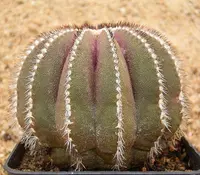
Uebelmannia pectinifera
Uebelmannia pectinifera
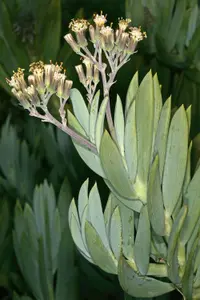
Mount Everest
Curio ficoides
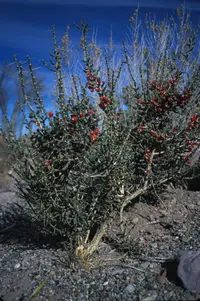
Christmas cactus
Cylindropuntia leptocaulis
Apteranthes burchardii
Apteranthes burchardii
Jenny's Stonecrop
Petrosedum rupestre subsp. rupestre 'Blue Spruce'
Mammillaria gigantea
Mammillaria gigantea
longmamma nipple cactus
Mammillaria sphaerica
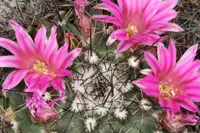
Mammillaria melanocentra
Mammillaria melanocentra