

Handle sap safely
Wear gloves when repotting or taking cuttings, and keep paper towels ready to blot any white latex sap immediately so it does not contact skin, eyes, or nearby plants.

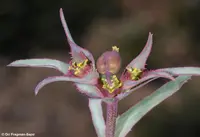
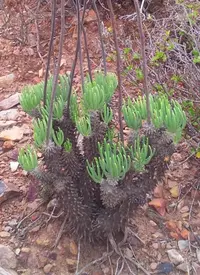
Euphorbia retusa is a small, drought-tolerant succulent shrub from arid regions of North Africa. It grows low and compact, with thick, often irregularly lobed stems and very small or short-lived leaves. The plant stores water in its fleshy tissues and often grows in rocky or sandy soils with strong sun exposure. These traits make it slow-growing but long-lived when kept dry and bright. In cultivation, it prefers high light, minimal humidity, and very fast-draining mineral soil. For those learning how to care for Euphorbia retusa, its main challenge is avoiding overwatering and cold, especially in poorly ventilated indoor spaces.

Care Difficulty
Moderate Care

Light Preference
Full Sun

Water Requirements
Low Water

Temperature Preference
Tropical / Frost Sensitive

Hardiness Zone
Unknown

Soil Texture
Sandy, Loamy, Rocky

Soil pH
Slightly acidic (6.5–7.0), Neutral (7.0)

Soil Drainage
Well-drained

Fertilization
Minimal (feed rarely)
Scan your plant to receive care tips personalized for your specific plant
Available on iOS and Android
This compact succulent prefers bright, dry conditions similar to its desert habitat.
This species stores water in its tissues and needs infrequent but thorough watering.
This succulent favors warm, arid conditions with strong temperature tolerance if kept dry.
This species tolerates typical indoor humidity and rarely needs special humidity management.
Euphorbia retusa needs a very fast-draining, mineral-based mix that prevents waterlogging around the roots.
This compact succulent is well suited to container growing.
This drought-adapted succulent needs only light feeding to stay healthy in containers.
Pruning needs are minimal and focus on safety, health, and maintaining a compact form.
This species grows slowly and prefers infrequent disturbance of its compact root system.
Propagation is usually done from cuttings but requires care because of the caustic sap.
This plant is not frost hardy and needs protection in regions with cold winters.

Plant Health Check
Not sure what's wrong with your plant? Check your plant's health inside the app.
This species forms a low, cushion-like clump of many short, jointed, leafless stems, an adaptation that reduces wind exposure and water loss in its native arid habitats of Egypt and the Sinai Peninsula.
The thick, segmented stems act as water-storage organs, swelling after rare rainfall events and slowly shrinking during prolonged drought, which helps the plant survive in very dry, sandy or rocky soils.
Like many spurges, it produces a white latex in its stems, but in this species the latex plays a particularly important role in sealing wounds and deterring herbivores in exposed, open desert environments.
Brown patches or tips usually come from sun scorch, fertilizer burn, or old mechanical damage rather than watering issues. Check for very intense midday sun, recent feeding, or physical injury, and adjust exposure and fertilizer strength accordingly.
Keep your plants happy and healthy with plant identification, disease detection, and easy care guidance.

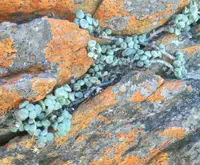
String-of-Tears
Curio citriformis
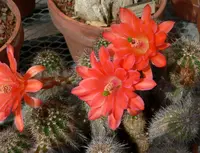
Mojave mound cactus
Echinocereus polyacanthus
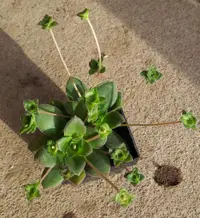
Rock Stonecrop
Crassula orbicularis
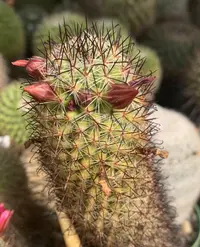
Mammillaria duoformis
Mammillaria duoformis
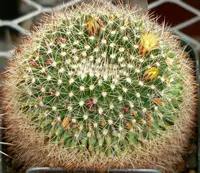
Cactus
Mammillaria petrophila
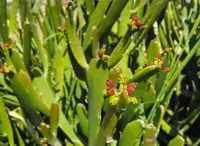
Euphorbia xylophylloides
Euphorbia xylophylloides
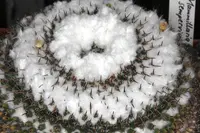
Mammillaria sempervivi
Mammillaria sempervivi
Pegleg Butterbush
Tylecodon wallichii