Glove-safe handling
Always wear gloves and avoid touching your face or eyes when pruning or repotting, as the milky sap is irritating and can cause skin and eye reactions.

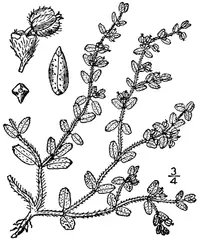
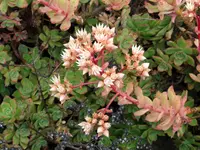
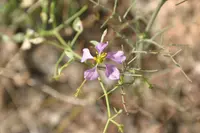
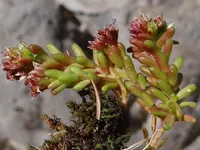
Slimseed sandmat (Euphorbia stictospora) is a small, spreading herb in the spurge family, often forming low mats close to the ground. It typically has fine stems, small leaves, and tiny, inconspicuous flowers that give it a delicate, textured look.
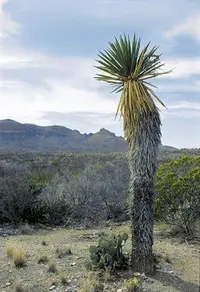
This species occurs mainly in dry, open habitats, often on sandy or rocky soils in warm regions. It tends to be resilient once established, but its small size and specific habitat needs mean it suits more naturalistic or dry garden settings. In cultivation, it generally prefers bright light, well-drained soil, and modest watering, which is useful to know when planning how to care for Slimseed Sandmat.

Care Difficulty
Moderate Care

Light Preference
Full Sun

Water Requirements
Low Water

Temperature Preference
Warm Climate

Hardiness Zone
Unknown

Soil Texture
Sandy, Loamy, Rocky

Soil pH
Slightly acidic (6.5–7.0), Slightly alkaline (7.0–7.5)

Soil Drainage
Well-drained

Fertilization
Minimal (feed rarely)
Scan your plant to receive care tips personalized for your specific plant
Available on iOS and Android
Euphorbia stictospora thrives in bright, open sites with strong but not extreme sun exposure.
This drought-tolerant species prefers infrequent, deeper watering rather than frequent light applications.
This species is adapted to warm, dry climates and dislikes prolonged cold or excess humidity.
This species handles typical indoor humidity well and rarely needs special adjustment.
This plant needs a sharply draining, mineral-heavy substrate to prevent root rot.
This species is well suited to container growing when drainage and root space are managed carefully.
Euphorbia stictospora is a low-nutrient native-type species that only needs light feeding in containers or very poor soils.
Euphorbia stictospora needs only light structural and hygiene pruning to stay compact and healthy.
This species is usually grown in the ground; container plants or young Slimseed Sandmat only need infrequent repotting or careful transplanting.
Euphorbia stictospora is most practically propagated by seed, with some potential for careful stem cuttings.
This species is generally cold-tolerant in suitable climates and often needs only basic winter care.

Plant Health Check
Not sure what's wrong with your plant? Check your plant's health inside the app.
This species is a small, fast-cycling annual that naturally colonizes loose sandy and gravelly soils, often in disturbed or open habitats where many other broadleaf plants struggle to establish.
It typically forms a very low, spreading mat close to the soil surface, a growth form that helps it tolerate high light and drying winds by reducing exposure and conserving moisture at ground level.
The plant tends to flower and set seed relatively late in the growing season, which allows it to take advantage of open ground and reduced competition in its native range.
Yes. The milky sap can irritate skin, eyes, and the digestive tract. Contact may cause redness or rash; ingestion may cause nausea or vomiting. Keep pets and children away and wash exposed skin promptly.
Keep your plants happy and healthy with plant identification, disease detection, and easy care guidance.