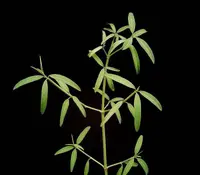
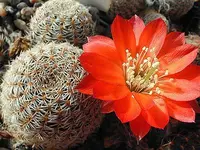
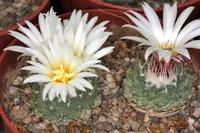
Root neck protection
Plant with the tuberous root crown slightly raised above the surrounding soil line and top-dress with coarse grit to keep the neck dry and reduce rot risk during unexpected heavy rain or overwatering events.

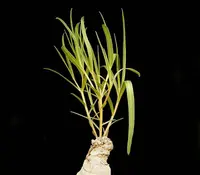
Euphorbia trichadenia is a small, succulent shrub from arid regions of southern Africa. It stores water in its swollen, tuberous base and fleshy stems. The plant usually forms a low, branching clump with small leaves and tiny, yellow-green flowers typical of the Euphorbia genus. Its compact size makes it suitable for containers and specialized succulent collections. This species prefers bright light, very well-drained, gritty soil, and careful watering with good drying between waterings. Once its basic needs are understood, how to care for Euphorbia trichadenia is relatively straightforward for growers familiar with drought-tolerant plants.

Care Difficulty
Moderate Care

Light Preference
Full Sun

Water Requirements
Low Water

Temperature Preference
Warm Climate

Hardiness Zone
10–11

Soil Texture
Sandy, Loamy, Rocky

Soil pH
Slightly acidic (6.5–7.0), Neutral (7.0)

Soil Drainage
Well-drained

Fertilization
Minimal (feed rarely)
Scan your plant to receive care tips personalized for your specific plant
Available on iOS and Android
This drought-adapted succulent prefers bright, open conditions similar to its native habitat.
This species is highly drought tolerant and must never sit in persistently wet soil.
This plant prefers warm, dry conditions and is sensitive to cold and prolonged damp.
This species is adapted to arid conditions and does best in relatively dry household air.
This drought-adapted succulent prefers a very fast-draining, mineral-rich substrate that keeps roots dry between waterings.
This species is well-suited to container culture when planted in a stable, fast-draining setup.
This drought-adapted succulent needs only light feeding to maintain healthy growth.
Pruning needs are minimal and mainly focus on safety and tidiness for this small Euphorbia.
Container-grown plants benefit from infrequent but careful repotting to refresh the soil and manage root health.
This species is most often propagated by stem cuttings or seeds under warm, dry conditions.
This plant prefers mild, dry winters and is not reliable in prolonged hard frost.

Plant Health Check
Not sure what's wrong with your plant? Check your plant's health inside the app.
This species is a true geophyte, storing resources in a subterranean tuber that allows it to die back almost completely in the dry season and resprout quickly when rains return.
Its narrow, often finely divided leaves are produced mainly in the growing season and can vary noticeably in shape and size depending on rainfall and light intensity in its southern African habitat.
Like many spurges, it produces white, latex-like sap, but in this species the sap flows from distinct raised tubercles along the stems, a feature used by botanists to help confirm Euphorbia trichadenia identification.

In cultivation this species can form unusually large, woody underground tubers that become exposed over time, creating a caudex-like structure that is highly valued by collectors of drought-adapted succulent plants.
This species produces small nectar-rich flowers that can attract bees and small solitary wasps. It is not a top butterfly magnet, but in dry, sunny gardens it contributes modestly to overall pollinator diversity and activity.
Keep your plants happy and healthy with plant identification, disease detection, and easy care guidance.