

Mimic forest layering
Grow this moss under low, filtered light beneath taller plants or shade cloth to simulate the forest floor, which keeps the cushion dense and reduces stress from light and airflow fluctuations.

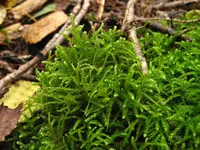
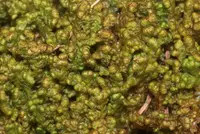
Eurhynchium angustirete is a creeping moss that forms dense, soft carpets of fine, overlapping stems and tiny leaves. Its texture gives a lush, velvety look on shaded surfaces.
This species is typically found on forest floors, rotting wood, and moist rocks in cool, humid woodland habitats. It spreads horizontally rather than growing tall, which makes it useful for ground cover in shaded garden areas and terrariums.
The plant prefers constant moisture, good air circulation, and low to medium light. Its main challenge is sensitivity to drying out, so learning how to care for Eurhynchium angustirete focuses on keeping conditions evenly humid without stagnation.

Care Difficulty
Moderate Care

Light Preference
Partial Shade

Water Requirements
Keep Soil Moist

Temperature Preference
Cool Climate

Hardiness Zone
6–9

Soil Texture
Loamy, Silty, Organic-rich

Soil pH
Acidic (5.5–6.5), Slightly acidic (6.5–7.0)

Soil Drainage
Moist but well-drained

Fertilization
Minimal (feed rarely)
Scan your plant to receive care tips personalized for your specific plant
Available on iOS and Android
This woodland moss prefers soft, indirect light that mimics a shaded forest floor.
This moss needs consistently moist conditions but is sensitive to stagnant water.
This moss thrives in cool to mild conditions and dislikes temperature extremes.
This moss prefers consistently moist, humid conditions and reacts quickly to dry air.
This species thrives in soft, consistently moist, organic-rich substrates that mimic forest-floor conditions.
This moss can be grown in shallow containers if moisture and stability are carefully managed.
This moss generally needs minimal feeding, especially when grown in naturalistic or shaded garden settings.
Pruning needs for Eurhynchium angustirete are low and focus mainly on tidying rather than shaping.
This species is usually grown as a groundcover mat, so care focuses on transplanting patches rather than classic repotting.
Propagation of this moss is straightforward and mainly done by division and re-laying small mats.
In most temperate climates this moss is cold hardy and needs little specific winter care.

Plant Health Check
Not sure what's wrong with your plant? Check your plant's health inside the app.
This moss forms dense, featherlike carpets with slender, strongly flattened shoots, which helps it capture light efficiently in the low-light conditions of forest floors.
It commonly colonizes trunks and branches of broadleaf trees, especially in mildly base-rich or nutrient-enriched bark and humus, and is often more abundant where there is moderate nitrogen input from nearby human activity.
Its presence is associated with humid, shaded woodland habitats in parts of Europe and temperate Asia, so it is often used by bryologists as a fine-scale indicator of consistently moist, sheltered microclimates.
This moss forms low, creeping mats that can spread steadily over moist substrates, but it is not considered aggressive. It gradually enlarges its patch without choking healthy neighboring plants when moisture, shade, and substrate conditions are balanced.
Keep your plants happy and healthy with plant identification, disease detection, and easy care guidance.

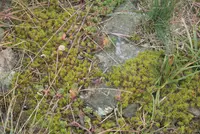
Sand-hill Screw-moss
Syntrichia ruraliformis
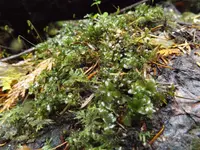
rhizomnium moss
Rhizomnium glabrescens
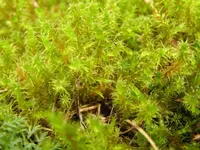
square goose neck moss
Rhytidiadelphus squarrosus
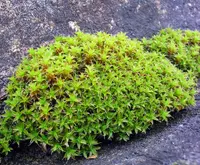
great hairy screw-moss
Syntrichia ruralis
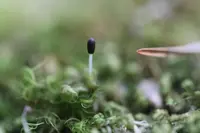
Tree Ruffle Liverwort
Porella navicularis
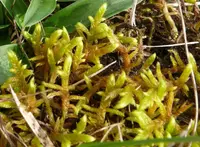
wrinkle-leaved feather-moss
Rhytidium rugosum
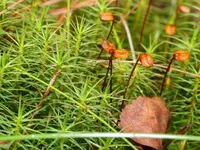
Common Haircap Moss
Polytrichum commune
Northern Naugehyde Liverwort
Ptilidium ciliare