Tree Ruffle Liverwort Care (Porella navicularis)

Tree Ruffle Liverwort

About Tree Ruffle Liverwort

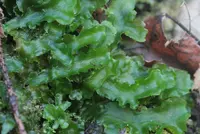
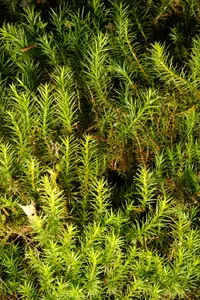
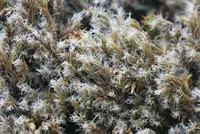
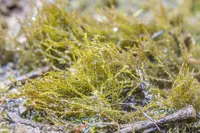
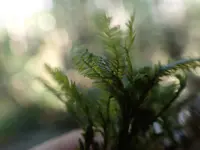
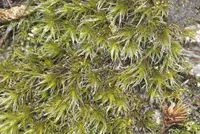
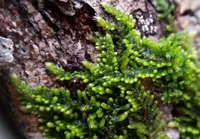
Tree ruffle liverwort (Porella navicularis) is a small, non-vascular plant that forms dense, overlapping mats on bark, rocks, and rotting wood. It belongs to a group of plants related to mosses but with flattened, leaf-like lobes.

Its fronds are usually deep green to olive and have a distinctly ruffled, layered texture that hugs rough surfaces, especially on tree trunks in moist forests. This species is common in cool, humid, shaded habitats along the Pacific Northwest of North America.

It is sensitive to drying out, air pollution, and strong sun, so it can be challenging to keep indoors long term. Many people who learn how to care for Tree Ruffle Liverwort focus on stable humidity, soft light, and gentle air movement.

Main Plant Requirements

Care Difficulty

Hard Care

Light Preference

Shade

Water Requirements

Keep Soil Moist

Temperature Preference

Cool Climate

Hardiness Zone

Unknown

Soil Texture

Peaty, Organic-rich, Rocky

Soil pH

Acidic (5.5–6.5)

Soil Drainage

Waterlogged tolerant

Fertilization

Minimal (feed rarely)

Get Personalized Care Plan

Scan your plant to receive care tips personalized for your specific plant

Available on iOS and Android

How to Care for the Tree Ruffle Liverwort

This moss-like liverwort prefers cool, shaded conditions with very limited direct sun.

  • Provide dappled or filtered light with 0–2 hours of weak early-morning sun; avoid direct midday or afternoon exposure, which can scorch fronds and dry the substrate quickly.
  • Site Tree Ruffle Liverwort on the north or east side of rocks, logs, or tree bases where it receives bright shade and consistent moisture from surrounding vegetation.
  • In summer, increase shading if surrounding canopy thins; in winter, brief low-angle sun is usually tolerated if humidity stays high and the substrate does not dry out.

This species needs consistently moist conditions and does not tolerate drying out.

  • Aim for a constantly damp substrate; surfaces such as rotting wood or rock should feel moist but not dripping, with no standing water for more than a few hours.
  • Increase watering or misting during warm, windy, or low-humidity periods, using gentle flows that do not physically disturb the Porella navicularis mats.
  • Reduce added water slightly in cool, wet seasons but continue monitoring edges of colonies; curling or crisping tips indicate underwatering, while slimy, foul-smelling patches indicate chronic overwatering and poor air flow.

This liverwort prefers cool, humid microclimates and is sensitive to both hard frost and intense heat.

  • Optimal growth occurs around 45–65°F (7–18°C), especially in shaded forested areas with stable moisture and shelter from wind.
  • It usually tolerates brief drops to about 25°F (−4°C) if kept moist and insulated by leaf litter or surrounding vegetation, but prolonged hard freezes can damage or kill exposed mats.
  • Heat above 80°F (27°C), particularly in full sun, stresses plants; compensate with deep shade, frequent misting, and cooling from nearby water, rocks, or dense groundcover.

This species needs consistently high humidity to maintain healthy, hydrated fronds.

  • Aim for 70–95% humidity, as Tree Ruffle Liverwort naturally grows in saturated, shaded forest and streamside microhabitats.
  • Dry air causes crisped, gray-brown fronds, slowed growth, and shrinking mats that recede from exposed edges.
  • Increase humidity with closed terrariums, covered trays with damp sphagnum, or placement near constantly moist hardscape rather than open, heated room air.

This liverwort prefers a stable, moist, organic-rich substrate that stays damp but never waterlogged.

  • Use a fine-textured mix of 60–80% milled sphagnum or peat, blended with leaf mold or composted bark to mimic decaying wood or humus.
  • Ensure gentle but continuous drainage with a thin base layer of sand or small gravel so water can move through without leaving stagnant pockets.
  • Keep pH slightly acidic, around 5.0–6.5, which matches typical forest substrates for Porella navicularis.
  • Avoid dense mineral soils, clay, or heavily fertilized potting mixes that compact, stay soggy, or cause salt buildup and tissue burn.

This species can be grown in shallow containers when moisture and stability are carefully controlled.

  • Choose a wide, shallow container that allows mats to spread horizontally, which distributes moisture evenly across the surface.
  • Use a container material that retains moisture, such as glazed ceramic or plastic, to reduce rapid drying compared with unglazed terracotta.
  • Provide a slightly rough or textured planting surface (bark slab, rock, or mesh over substrate) so the thalli can anchor and resist displacement from watering.

Porella navicularis usually needs no fertilizer when grown on suitable bark or rock substrates.

Porella navicularis benefits from light grooming rather than true pruning.

  • Best time is late winter or early spring, before active growth resumes.
  • Pinch or gently pull away dead, browned, or decaying fronds to limit mold and algae.
  • Thin out dense, crowded patches to maintain airflow and an even, low cushion.
  • Use fingertips or soft tweezers, avoiding scissors that can crush delicate shoots.

Tree Ruffle Liverwort is more often repositioned than repotted, since it grows as a mat on bark, rock, or soil.

  • Transplant when mats detach, dry at the edges, or growth stalls despite good moisture.
  • Move patches in cool, mild weather, ideally in early spring or early fall.
  • Aim for infrequent moves; once attached to new bark or rock, leave undisturbed.
  • Lift thin layers gently, press onto the new damp surface, and keep evenly moist to reduce stress.

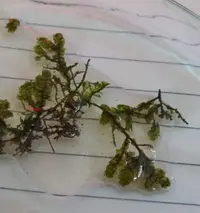
Porella navicularis is usually propagated by division of existing mats rather than by spores in home settings.

  • Best season is early spring or early fall, when moisture is reliable and temperatures are mild.
  • Carefully tear or cut small sections with healthy green shoots and attached older tissue.
  • Press divisions onto rough, damp bark, rock, or soil so rhizoids can anchor.
  • Maintain high humidity and gentle, indirect light until new growth is clearly visible.

This liverwort is cold hardy in many temperate areas and generally needs little special winter care outdoors.

  • Tolerates light to moderate frost if kept evenly moist and not exposed to harsh drying winds.
  • In very cold regions, place container-grown mats in a sheltered, frost-free but cool spot.
  • Avoid freeze–thaw cycles on smooth rock; slight insulating debris or moss cover helps limit damage.

Care Tips

Use Textured Substrates

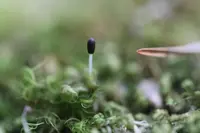
Attach the moss to rough, naturally textured hardwood or porous rock rather than smooth plastic or glass, as the irregular surface allows rhizoids to anchor firmly and form denser, more stable mats.

Gentle Misting Technique

Use a fine-mist spray bottle held at a distance and angle the spray so water falls like light rain, which hydrates the fronds without blasting them off the substrate or causing compacted, suffocated growth.

Shaded Airflow Management

Position the culture where there is very gentle, indirect air movement to reduce stagnant, stale air while avoiding direct drafts that can desiccate the thin leafy shoots.

Periodic Rinsing Regime

Every 2–4 weeks, gently rinse the colony with soft or rainwater to wash away dust, algae spores, and accumulated minerals, then let excess water drain off to keep the thallus clean and photosynthetically efficient.

Layered Colony Renewal

If older inner sections start to brown, carefully peel and reattach only the freshest outer fronds to a new, clean substrate, which gradually rejuvenates the colony and supports long-term success in growing Tree Ruffle Liverwort.

Common Pests and Diseases

Slime molds

This disease appears as slimy, often dark or brightly colored patches that grow over the liverwort surface in very wet, stagnant conditions. Symptoms include smothered shoots and gradual thinning or death of affected patches.

Solution

Gently rinse the colony with clean, non-chlorinated water to dislodge slime masses, then improve air movement and reduce constant splash or film water on the surface. Avoid nutrient-rich runoff, remove decaying organic debris nearby, and keep moisture high but not waterlogged to support stable Porella navicularis care instructions.

Algal overgrowth

This disease presents as a smooth, bright green to dark green film that coats the substrate and sometimes the liverwort, especially under nutrient-rich runoff and continuous wetness. Symptoms include shading of the fronds and reduced vigor where the algae forms dense layers.

Solution

Rinse or gently brush off the algal film with soft water, then lower nutrient input by avoiding fertilizer drift and limiting organic buildup. Increase shade or diffuse light slightly, improve water flow or intermittent drying of hard surfaces, and thin dense patches so liverwort tissue can dry slightly between wetting events.

Springtail feeding

These insects are tiny, pale to dark jumping arthropods that increase in number in constantly moist microhabitats. Symptoms include fine surface nibbling on delicate new shoots when populations become very dense, although light presence is usually harmless.

Solution

Improve microhabitat balance by reducing excess decaying organic matter and slightly increasing airflow so surfaces are not perpetually saturated. If damage is evident, flush the area gently with clean water to disperse populations and, in indoor culture, temporarily allow the surface to become just barely less wet while still preventing desiccation of the liverwort mat.

Mite damage

This pest includes small, often unseen arthropods that can roughen or distort delicate leaf lobes under warm, stagnant conditions. Symptoms include dull, roughened tissues, tiny scars, and slowed growth on affected cushions.

Solution

Increase humidity stability while improving air circulation, avoiding hot, stagnant pockets. Rinse colonies periodically with a gentle stream of water to dislodge mites, remove and discard heavily affected fragments, and in controlled terraria avoid overcrowding and dust buildup that favors mite populations.

Fungal blight

This disease shows as localized brown to black patches where shoots collapse and turn mushy, often following mechanical damage in persistently saturated, poorly ventilated areas. Symptoms include rapid dieback of small sections of the mat that may spread if conditions stay stagnant and wet.

Solution

Promptly remove and discard affected fragments with clean tools, then improve ventilation and slightly reduce standing surface moisture without letting tissues dry out completely. Avoid overhead splashing, keep nearby organic debris to a minimum, and, in cultivation, space colonies so air can move around them and freshly cut edges can heal in stable, cool, humid conditions.

Interesting Facts

Tree bark specialist

This liverwort most often grows tightly appressed on the bark of conifers and hardwoods in humid forests of western North America, forming dense mats that follow trunk and branch contours.

Distinctive boat-shaped leaves

The overlapping leaf lobes curve downward and inward, giving individual branches a subtly boat-shaped profile that helps trap moisture along the plant surface.

Moisture-sensitive distribution

Its natural range closely tracks ocean-influenced, high-humidity forest belts, and it is especially common in coastal and montane areas where frequent fog and rain keep bark surfaces damp.

Botan icon

Did you know?

This species is often used as an indicator of relatively undisturbed, moist old-growth or mature forest conditions in parts of its range, so its presence on tree trunks can signal stable, long-standing forest microclimates.

FAQs about Tree Ruffle Liverwort

This species performs best outdoors in cool, humid, shaded environments, such as on tree bark or rocks in forests. Indoor conditions are usually too dry and stagnant unless humidity, air movement, and substrate moisture are carefully controlled.

Grow Healthy Plants with Botan Care

Keep your plants happy and healthy with plant identification, disease detection, and easy care guidance.

Botan plant care app — identify plants on mobile

Explore More Plants