

Use stable substrate
Anchor the moss to rough, stable surfaces such as lava rock, porous sandstone, or unglazed clay tiles to allow rhizoids to grip firmly and prevent patches from slipping or washing away during irrigation or rain events.

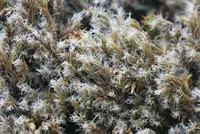
Racomitrium lanuginosum, often called woolly fringe moss, is a hardy, cushion-forming moss found on rocks, cliffs, and exposed mountain slopes. It forms dense, gray-green to yellow-green mats with fine, hair-like leaf tips that give it a soft, woolly look.
This moss naturally occurs in cool, open habitats across northern and upland regions, where it tolerates strong light, wind, and periodic drying. Its slow growth and preference for clean, low-nutrient surfaces make it relatively demanding to establish in cultivation.
Those who want to learn how to care for racomitrium moss should know it prefers bright, indirect light, consistent moisture, and a stable, well-drained, slightly acidic substrate.

Care Difficulty
Moderate Care

Light Preference
Partial Sun

Water Requirements
Moderate Water

Temperature Preference
Cold Hardy

Hardiness Zone
2–8

Soil Texture
Rocky, Sandy, Peaty

Soil pH
Strongly acidic (4.5–5.5), Acidic (5.5–6.5)

Soil Drainage
Well-drained

Fertilization
Minimal (feed rarely)
Scan your plant to receive care tips personalized for your specific plant
Available on iOS and Android
This moss prefers cool, bright conditions with gentle exposure rather than strong, direct sun.
This species copes well with periodic drying but grows best with frequent light moisture and excellent drainage.
This cold-hardy moss prefers cool conditions but can handle a wide temperature range when moisture is appropriate.
This moss prefers consistently cool, moist air but copes with moderate household humidity if not allowed to dry out fully.
Racomitrium lanuginosum grows best on very lean, sharply drained, mineral-based substrates rather than rich potting mixes.
This species is suitable for shallow container culture when drainage and surface exposure are managed carefully.
This moss is adapted to nutrient-poor habitats and usually needs no fertilizer under outdoor conditions.
Racomitrium lanuginosum needs only minimal pruning to keep cushions neat and healthy.
Transplanting is occasional and mainly needed when mats overgrow their space or substrate breaks down.
Racomitrium lanuginosum plant care often includes simple vegetative propagation rather than spore sowing.
This moss is naturally cold hardy and usually needs no special winter protection in the ground.

Plant Health Check
Not sure what's wrong with your plant? Check your plant's health inside the app.
This moss is especially common on windswept, nutrient-poor rocks in subarctic and alpine regions, where few other plants can endure the cold and exposure. It forms dense cushions on boulders, lava fields, and mountain ridges across northern Europe, North America, and parts of Asia.
Its leaves are covered with long, silky hairpoints that trap a thin layer of still air, reducing water loss in dry, windy environments. These hairpoints also reflect excess solar radiation, which helps protect the delicate photosynthetic tissues from damage at high elevations.
This species is an early colonizer of freshly exposed rock surfaces, such as glacial outwash and recent lava flows. By trapping dust and organic particles between its shoots, it gradually contributes to the first stages of soil formation that later allow other plants to establish.

In high-latitude and high-altitude habitats, this moss can tolerate repeated cycles of freezing and thawing, rapidly resuming photosynthesis during short melt periods even when much of the surrounding ground remains frozen, which makes it an important year-round contributor to primary production in harsh climates.
Growth is slow. In suitable cool, open, and well-drained sites, it usually extends only a few millimeters per year, forming low cushions over several seasons rather than quickly covering surfaces. Disturbance, heat, and dryness slow it further.
Keep your plants happy and healthy with plant identification, disease detection, and easy care guidance.

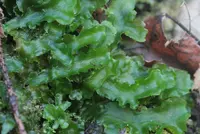
greasewort
Aneura pinguis
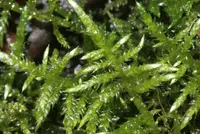
cirriphyllum moss
Cirriphyllum piliferum
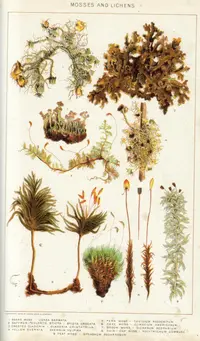
American climacium moss
Climacium americanum
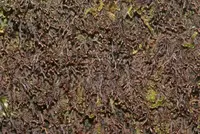
Tamarisk Scalewort
Frullania tamarisci
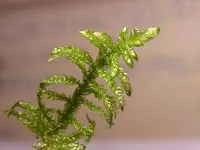
Neat Feather-moss
Pseudoscleropodium purum
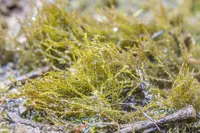
alternateleaf archidium moss
Archidium alternifolium
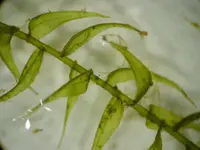
drepanocladus moss
Drepanocladus aduncus
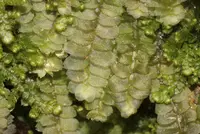
Common Pouchwort
Calypogeia fissa