thelia moss Care (Thelia hirtella)

Also known as: Common Thelia
thelia moss

About thelia moss

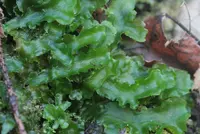
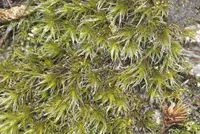
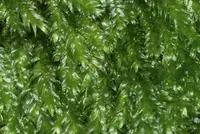
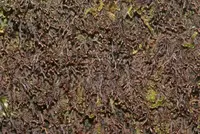
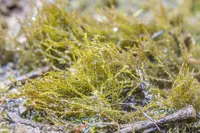
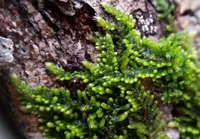
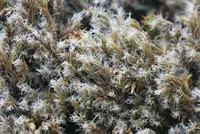
Thelia hirtella, commonly called thelia moss, is a small, creeping moss that forms low, dense mats over soil, rocks, or decaying wood. Its fine, overlapping leaves give it a soft, textured surface that can appear bright to deep green when healthy.

This moss is native to parts of North America, often found in moist forests and shaded banks with consistent humidity. It generally prefers cool, shaded locations with evenly moist, slightly acidic substrates. Because it lacks deep roots and depends on ambient moisture, it can be sensitive to drying out, which influences how to care for thelia moss and keep it stable over time.

Main Plant Requirements

Care Difficulty

Moderate Care

Light Preference

Partial Shade

Water Requirements

Keep Soil Moist

Temperature Preference

Cool Climate

Hardiness Zone

Unknown

Soil Texture

Loamy, Silty, Organic-rich

Soil pH

Acidic (5.5–6.5)

Soil Drainage

Moist but well-drained

Fertilization

Minimal (feed rarely)

Get Personalized Care Plan

Scan your plant to receive care tips personalized for your specific plant

Available on iOS and Android

How to Care for the thelia moss

This moss prefers cool, shaded woodland-type light with only brief weak sun exposure.

  • Provide bright, indirect light or dappled shade, with at most 1–2 hours of soft morning sun and no harsh midday or afternoon sun.
  • Site thelia moss on the north or east side of rocks, logs, or banks where surrounding vegetation filters direct rays.
  • Watch color and density: pale, crispy, or thinning shoots indicate too much sun, while very lank, stretched growth suggests light is too dim.

This species favors consistently moist conditions that mimic a humid forest floor.

  • Keep the substrate evenly damp; allow only the surface to lose its sheen before rewetting, avoiding complete drying of the moss layer.
  • Use soft, low-mineral water where possible and apply it as a fine spray or gentle flow so Thelia hirtella does not detach from its substrate.
  • In warmer, windy periods increase misting frequency, but reduce it in cool, still weather; a sour smell, slime, or blackened stems usually signals overwatering and stagnation.

This moss thrives in cool to mild climates and declines in temperature extremes.

  • Aim for 50–70°F (10–21°C) for steady growth, with the most active development in the middle of this range.
  • Tolerates brief drops to around 25–30°F (-4 to -1°C) if sheltered under leaf litter, but repeated hard freezes damage shoots and can cause dieback.
  • In hot spells above 80°F (27°C), provide deep shade and higher humidity, since prolonged heat and drying winds quickly desiccate the fine foliage.

This moss prefers consistently moist air and reacts quickly to drying conditions.

  • Aim for 60–90% humidity; it tolerates brief dips lower only if the substrate stays evenly moist.
  • Crisping tips, dull or brown patches, and slowed regrowth indicate humidity is too low for healthy thelia moss.
  • Increase humidity with a closed terrarium, covered dish garden, or by placing trays of wet sphagnum around the planting area.

This species prefers a consistently moist, fine-textured, organic substrate rather than typical potting soil.

  • Use a mix of milled sphagnum, fine compost, and a little sand to mimic soft, humus-rich woodland or streambank surfaces.
  • Ensure the substrate stays damp but not waterlogged by using a shallow layer over a draining base of gravel or coarse sand.
  • Slightly acidic conditions around pH 5.0–6.5 support Thelia hirtella, so avoid alkaline materials such as limestone chips.
  • Press the mix gently to create a firm, even surface, which stabilizes the moss and keeps moisture distribution uniform.

This species adapts well to shallow containers, especially in terrarium-style setups.

  • Choose wide, shallow trays so the spreading mat can expand horizontally without thick, soggy layers that rot from the base.
  • Use a container with a raised drainage layer so free water can collect below the moss without saturating its rhizoids.
  • Select glass or plastic containers that slow evaporation if you aim to grow Thelia hirtella in consistently high humidity conditions.

This moss needs very little feeding, as it is adapted to low-nutrient habitats.

  • Skip fertilizer entirely for outdoor or terrarium-grown thelia moss unless growth is clearly nutrient-limited.
  • If needed, use a highly diluted balanced liquid fertilizer (around 1/8–1/4 strength) with an NPK near 10-10-10.
  • Apply only during active growth in spring–summer, no more than once every 4–6 weeks.
  • Avoid slow-release pellets or rich compost that can burn delicate tissues or encourage algae growth.

Pruning needs for Thelia hirtella are minimal and mainly cosmetic.

  • Trim only browned, dead, or contaminated patches using small, clean scissors or aquascaping tweezers.
  • Remove crowded or shaded clumps to maintain even coverage and better light penetration across the mat.
  • Light shaping encourages denser, lower growth rather than tall, uneven tufts.
  • Discard removed material away from natural waterways to avoid unwanted spread in sensitive habitats.

Transplanting rather than classic repotting suits Thelia hirtella, which grows as a mat over surfaces.

  • Plan transplanting in mild, stable conditions, often spring or early fall for outdoor culture or any low-stress period indoors.
  • Move moss when growth slows, mats detach easily, or substrate degrades rather than on a fixed schedule.
  • Lift thin sections with attached substrate or wood/rock, keeping the underside evenly moist to limit root-like rhizoid stress.
  • Set fragments onto the new surface, press gently for firm contact, then maintain high humidity and soft, low-flow watering until reanchored.

Propagation is straightforward and relies on division of existing mats rather than seeds for most growers.

  • Use simple fragmentation: tear or cut the moss mat into small sections, each with healthy green tissue.
  • Carry out division in spring or during a period of steady growth for faster recovery.
  • Place fragments on clean, moist rock, wood, or substrate with good contact and moderate, indirect light.
  • Maintain high humidity, gentle airflow, and consistently moist conditions until new tips and spreading edges appear.

Thelia hirtella is generally cold tolerant and often needs little specific winter care once established.

  • In temperate outdoor sites, natural snow or leaf litter usually provides enough insulation for the substrate.
  • Avoid sudden freeze–thaw cycles by keeping containers in a shaded, sheltered spot against a wall or inside an unheated garage.
  • For indoor or aquarium setups, keep temperatures stable and avoid placing tanks or terraria near drafty windows or heaters.

Care Tips

Substrate anchoring

Press the moss gently but firmly onto rough-textured, clean stone or wood and secure it with fine mesh or cotton thread for 4–6 weeks so new rhizoids can anchor before the support is moved or tilted.

Flow and splash management

If grown in a paludarium or near moving water, position the colony where it receives gentle, indirect flow or occasional splash rather than direct current, which can physically tear cushions and desiccate the outer layer.

Layered colony thinning

Every few months, lift and remove only the loosely attached top layer of older, browned shoots to prevent smothering of the younger, shaded growth underneath and to maintain good gas exchange around the mat.

Clean hardscape selection

Use inert, low-lime stones or sandblasted wood that has been thoroughly rinsed and soaked beforehand, as high-calcium or resin-leaching materials can inhibit steady growth and cause patchy dieback when growing thelia moss.

Targeted misting technique

When using hand-misting, spray horizontally across the colony from a distance rather than directly down onto it, which wets the plant evenly while reducing the risk of dislodging fine shoots or compacting delicate cushions during Thelia hirtella care.

Common Pests and Diseases

Mite infestations

This pest often appears in warm, still, low-humidity aquarium zones or on emersed culture, where fine webbing and pale, stippled moss shoots may be seen. Symptoms include slowed growth and uneven, patchy yellowing of the moss mat.

Solution

Rinse the moss gently under dechlorinated water while lightly rubbing affected areas, then increase water movement and humidity to discourage mites. For emersed culture, isolate the container and use a soft brush with diluted insecticidal soap on hardscape around the moss, avoiding heavy residues directly on the cushion, and repeat after 5–7 days if activity continues.

Planarian grazing

These flatworms can move across the moss surface at night and rasp delicate shoots, leading to ragged tips and thin or bare patches in otherwise healthy cushions. Symptoms include slowed spread of the colony despite stable water parameters.

Solution

Manually remove visible planarians during night checks with a pipette or siphon, and reduce excess food and detritus that sustain their population. In aquaria, use a fish-safe planaria treatment at the lowest effective dose and increase fine mechanical filtration, then perform several partial water changes to export dead organisms and dissolved wastes.

Algal overgrowth

This condition develops when strong light combines with high dissolved nutrients, leading to green or brown filamentous growth coating the moss. Symptoms include smothered shoots, reduced photosynthesis, and eventual dieback under dense algal mats.

Solution

Shorten the photoperiod, slightly shade the moss, and improve nutrient balance by reducing excess feeding and stabilizing CO2 and fertilization. Manually remove algae with a soft brush or tweezers, siphon loosened material during water changes, and increase flow so water moves gently but continuously over the moss surface, which supports growing Thelia hirtella without giving algae a strong advantage.

Fungal dieback

This disease appears in very stagnant, organic-rich setups where white or translucent fungal films form on decaying fragments trapped in the moss. Symptoms include localized brown, mushy patches that fail to recover even when other areas remain green.

Solution

Carefully trim and remove affected sections and any trapped debris, then increase water circulation and maintain more frequent, smaller water changes to lower organic load. If the problem persists, briefly dip detached moss clumps in a very dilute aquarium-safe fungicide or hydrogen peroxide solution, thoroughly rinse with dechlorinated water, and reattach only the firm, green portions.

Bacterial film and melt

This issue is common when fresh hardscape or untreated organics are added, leading to cloudy biofilms on surfaces around the moss and sudden softening or melting of the youngest shoots. Symptoms include a slimy coating, off-odors in very small tanks, and rapid tissue collapse in the most delicate tips.

Solution

Increase partial water changes, improve filtration, and gently siphon off visible films from wood, rocks, and the moss surface without tearing the cushion. Reduce organic inputs, remove decaying materials, and ensure good but not turbulent water flow over the colony; in persistent cases, temporarily relocate healthy moss fragments to a cleaner tank until parameters stabilize.

Interesting Facts

Feathery creeping mats

This moss forms delicate, flat carpets with distinctly feather-like shoots that often drape over rock and bark surfaces, creating a finely textured layer rather than dense cushions.

Preference for acidic rock

It typically colonizes shaded, acidic substrates such as sandstone and decomposing logs, showing a strong association with low-pH environments in humid forests.

Indicator of moist forests

Its presence is often linked with consistently humid, shaded microhabitats, so botanists use it as one of several indicators of stable, moist forest conditions on rocky slopes and ravines.

FAQs about thelia moss

This species spreads slowly to moderately by creeping stems and fragmentation. It forms low, patchy mats rather than fast carpets. Regular trimming and removing loose fragments help control coverage when growing thelia moss in small containers or aquariums.

Grow Healthy Plants with Botan Care

Keep your plants happy and healthy with plant identification, disease detection, and easy care guidance.

Botan plant care app — identify plants on mobile

Explore More Plants