Use Mesh Substrate
Attach the moss to fine plastic mesh or embroidery cloth laid flat on the substrate to create even, low cushions that are easy to lift, trim, and rinse without disturbing the colony.

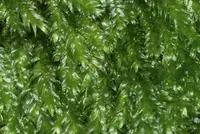
Elegant pseudotaxiphyllum moss (Pseudotaxiphyllum elegans) is a small, creeping moss that forms dense, velvety green carpets. Its fine, overlapping leaves create a soft, uniform texture that suits detailed aquascapes and terrariums.
In nature, it typically grows on rocks, soil, or decaying wood in humid, shaded forests, often along streams or in other consistently moist sites. It prefers stable moisture, gentle water movement, and low to moderate light.
Because it adapts well to enclosed, humid environments and does not demand strong light, many hobbyists find it moderately easy to care for elegant pseudotaxiphyllum moss once conditions are kept consistently damp and clean.

Care Difficulty
Moderate Care

Light Preference
Partial Shade

Water Requirements
Keep Soil Moist

Temperature Preference
Cool Climate

Hardiness Zone
5–9

Soil Texture
Loamy, Silty, Organic-rich

Soil pH
Strongly acidic (4.5–5.5), Acidic (5.5–6.5)

Soil Drainage
Moist but well-drained

Fertilization
Minimal (feed rarely)
Scan your plant to receive care tips personalized for your specific plant
Available on iOS and Android
This moss prefers soft, filtered light that mimics the shaded forest floor where it naturally grows.
Pseudotaxiphyllum elegans thrives in consistently moist conditions but suffers if the substrate is either waterlogged or allowed to dry out completely.
This moss prefers cool to mild conditions and is naturally adapted to temperate woodland climates.
This moss needs consistently high humidity to stay dense and green.
Pseudotaxiphyllum elegans grows best on moist, airy, organic-rich substrates rather than dense mineral soil.
This species is well suited to container culture, especially in shallow dishes or terrariums.
This moss needs minimal feeding, as it is adapted to low-nutrient habitats and often thrives without added fertilizer.
Light grooming is usually enough to keep Pseudotaxiphyllum elegans mats dense and healthy.
Mats are moved or divided rather than traditionally repotted, especially in terrariums and aquascapes.
Pseudotaxiphyllum elegans is commonly multiplied by simple division of existing mats.
Outdoors this moss is quite cold tolerant and usually needs little special winter care.

Plant Health Check
Not sure what's wrong with your plant? Check your plant's health inside the app.
This species naturally grows on moist soil, rocks, and rotting wood in cool, shaded forests across East Asia and parts of Europe and North America, often forming soft mats on stream banks and slopes.
Its tiny lance-shaped leaves are arranged in a way that gives the shoots a somewhat flattened look from above, a feature that helps distinguish it from many similar pleurocarpous mosses that look more cylindrical.
Aquarists often use this moss in paludariums and high-humidity terrariums because its fine texture creates a delicate carpet effect on hardscape, although long-term submerged growth is less stable than in true aquatic mosses such as Taxiphyllum barbieri.
This moss is evergreen, holding its fine green foliage through all seasons when moisture is adequate. In very dry or exposed conditions it can temporarily brown and desiccate, then often rehydrate and green up again when moisture returns.
Keep your plants happy and healthy with plant identification, disease detection, and easy care guidance.