Use Rock Pockets
Pack small cushions of the moss into shallow crevices or drilled depressions in rocks so the colony anchors well and is less likely to be dislodged by rain or foot traffic.

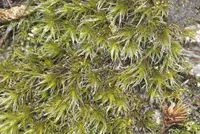
Yellow-green rock moss, Racomitrium heterostichum, is a small, cushion-forming moss that clings tightly to exposed rocks and stone surfaces. It forms dense, low mats that look like fine, yellow-green fur.
This moss is naturally found on rocky outcrops, walls, and mountain slopes in cool, temperate regions, often in places with good air circulation. It has a slow, steady growth habit and tolerates wind, cold, and periodic drying, which makes it relatively resilient but also slow to establish.
To care for Yellow-green Rock Moss, it helps to provide bright light, regular moisture without waterlogging, and a stable, mineral-rich surface such as rock or coarse gravel.

Care Difficulty
Moderate Care

Light Preference
Partial Shade

Water Requirements
Moderate Water

Temperature Preference
Cold Hardy

Hardiness Zone
3–8

Soil Texture
Rocky, Sandy, Loamy

Soil pH
Strongly acidic (4.5–5.5), Acidic (5.5–6.5)

Soil Drainage
Well-drained

Fertilization
Minimal (feed rarely)
Scan your plant to receive care tips personalized for your specific plant
Available on iOS and Android
This moss prefers bright, cool conditions that mimic exposed but not scorched rock faces.
This species prefers consistently moist but not waterlogged conditions on well-drained rock or gritty substrates.
This moss is naturally cold tolerant but still benefits from moderate temperature ranges during active growth.
This moss prefers consistently moist air and benefits from elevated humidity.
Provide a mineral, sharply drained substrate that mimics rocky, nutrient-poor sites.
This species can be grown successfully in shallow containers that mimic rocky outcrops.
This moss generally thrives on low-nutrient substrates and usually needs no fertilizer.
Racomitrium heterostichum needs only light grooming to keep cushions tidy and healthy.
This moss is usually grown on rocks or shallow substrates, so transplanting is rare and minimal.
Racomitrium heterostichum is commonly spread by division of existing mats rather than by spores in home culture.
This moss is naturally cold hardy and usually needs no special winter care in temperate climates.

Plant Health Check
Not sure what's wrong with your plant? Check your plant's health inside the app.
This moss occurs mainly on acidic, siliceous rocks such as granite and sandstone, where it forms tight cushions that tolerate rapid drying and intense sun better than many other mosses on the same surfaces.
Its narrow leaves become strongly crisped and twisted when dry, giving patches a rough, shaggy texture that helps reduce water loss and protects the photosynthetic tissue until moisture returns.
Although it has a broad distribution across much of the Northern Hemisphere, from North America to Eurasia, it is usually confined to exposed, well-drained rock outcrops and is largely absent from basic or nutrient-rich substrates.

This species is often used as a benchmark taxon in bryological surveys of rocky habitats, because its clear preference for open, nutrient-poor siliceous rock makes it a useful indicator of long-term habitat continuity and limited pollution or physical disturbance.
This species spreads slowly by creeping stems and spore dispersal, forming tight mats over time. It is not considered aggressive. It usually coexists well with other low, slow-growing rock garden or alpine plants.
Keep your plants happy and healthy with plant identification, disease detection, and easy care guidance.