

Mimic Rock Crevices
Grow mats on rough, inert substrates like lava rock, broken brick, or unglazed clay shards, then wedge these pieces into shaded rockeries or wall gaps to mimic its natural crevice habitat and stabilize the colonies.

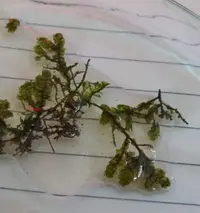
Cliff scalewort, Porella cordaeana, is a leafy liverwort, a simple non-vascular plant that forms tight, overlapping mats on rocks and shaded bark. Its small, flattened shoots create neat, scale-like layers that hug the surface and retain moisture. Colors range from fresh green to brownish tones depending on age and conditions.
This species is native to Europe and parts of western Asia, typically found on sheltered, moist cliffs, ravines, and old trees in cool, humid climates. It is sensitive to drying winds, air pollution, and prolonged drought, which makes it challenging to grow away from naturally damp, shaded sites.
Those who want to care for Cliff Scalewort should aim to mimic its natural habitat with constant moisture, soft light, and a stable, mildly acidic substrate such as moisture-retentive rock or bark.

Care Difficulty
Hard Care

Light Preference
Shade

Water Requirements
Keep Soil Moist

Temperature Preference
Cool Climate

Hardiness Zone
5–9

Soil Texture
Rocky, Organic-rich

Soil pH
Acidic (5.5–6.5)

Soil Drainage
Moist but well-drained

Fertilization
Minimal (feed rarely)
Scan your plant to receive care tips personalized for your specific plant
Available on iOS and Android
This shade-loving liverwort thrives in cool, consistently low-light conditions on moist, sheltered rock or soil surfaces.
This moss-like liverwort requires consistently moist conditions and does not tolerate drying out.
This species prefers cool, stable temperatures and is sensitive to both hard frost and intense heat when exposed.
This liverwort needs consistently high humidity to stay healthy in cultivation.
This species prefers a moist, humus-rich, rocky substrate rather than conventional potting soil.
This species can be grown in shallow containers or trays when rock or bark pieces are used as the main substrate surface.
This moss-like liverwort is adapted to nutrient-poor rock and bark surfaces and usually needs no fertilizer in cultivation.
Porella cordaeana benefits from light grooming rather than structured pruning.
This species is usually grown on rocks or bark and is only transplanted when colonies outgrow the mounting surface or become unstable.
Porella cordaeana is commonly propagated by division of small mats rather than by spores in home culture.
In suitable climates, Cliff Scalewort is cold hardy and generally needs minimal dedicated winter care outdoors.

Plant Health Check
Not sure what's wrong with your plant? Check your plant's health inside the app.
This leafy liverwort is strongly associated with calcareous, often vertical rock faces in humid, hilly and montane regions across Europe, showing a clear preference for mildly basic substrates rather than acidic ones.
Its shoots are distinctly dorsiventral and form overlapping, shingle-like leaf rows with inflated lobules, creating a thick, cushiony mat that helps trap moisture on exposed rock surfaces.
Populations decline in areas with heavy air pollution, so it is used locally as a bioindicator species to reflect relatively clean, humid forest and ravine microclimates.
This liverwort forms low, creeping mats that slowly extend across moist rock or bark surfaces. It spreads by short branching shoots and fragments, not long runners, and is usually easy to keep within bounds in garden or terrarium settings.
Keep your plants happy and healthy with plant identification, disease detection, and easy care guidance.

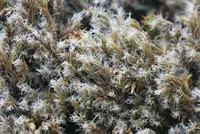
racomitrium moss
Racomitrium lanuginosum
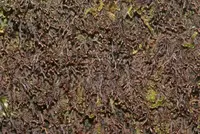
Tamarisk Scalewort
Frullania tamarisci
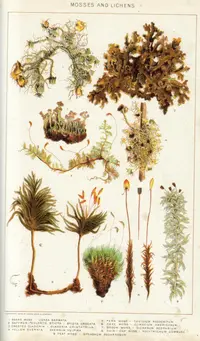
American climacium moss
Climacium americanum
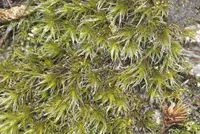
Yellow-green Rock Moss
Racomitrium heterostichum
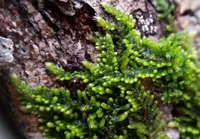
thelia moss
Thelia hirtella
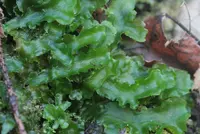
greasewort
Aneura pinguis
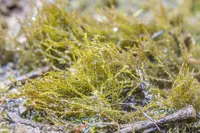
alternateleaf archidium moss
Archidium alternifolium
Bigelow's Porotrichum Moss
Porothamnium bigelovii