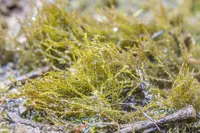
Sand-hill Screw-moss Care (Syntrichia ruraliformis)

Sand-hill Screw-moss

About Sand-hill Screw-moss

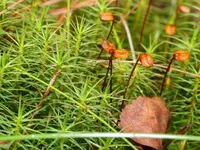
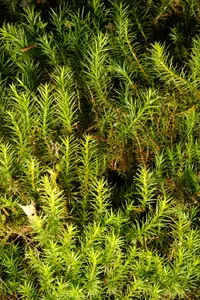
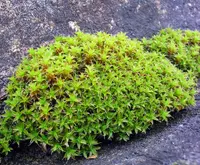
Sand-hill screw-moss (Syntrichia ruraliformis) is a hardy acrocarpous moss that forms dense, low cushions or tufts. Its leaves are narrow and often twist when dry, then spread out and turn greener again when rehydrated.

This moss naturally occurs on sandy soils, dunes, and dry, open ground, especially in temperate coastal regions. It tolerates drying out for periods, which makes it more forgiving than many mosses in low-humidity environments.

To care for Sand-hill Screw-moss, provide bright, indirect light, occasional moisture, and a free-draining, sandy substrate that mimics its natural habitat.

Main Plant Requirements

Care Difficulty

Easy Care

Light Preference

Partial Sun

Water Requirements

Low Water

Temperature Preference

Cold Hardy

Hardiness Zone

3–9

Soil Texture

Sandy, Loamy, Rocky

Soil pH

Acidic (5.5–6.5), Slightly acidic (6.5–7.0)

Soil Drainage

Well-drained

Fertilization

Minimal (feed rarely)

Get Personalized Care Plan

Scan your plant to receive care tips personalized for your specific plant

Available on iOS and Android

How to Care for the Sand-hill Screw-moss

Syntrichia ruraliformis is a sun-tolerant moss that also performs well in partial shade.

  • Provide 4–6 hours of direct morning sun or bright, open light; light afternoon shade prevents excessive drying on exposed sites.
  • Tolerates partial shade under sparse shrubs or open tree canopies, but dense shade can cause thinning and slower spread over time.
  • On exposed sand or rock, strong midsummer sun can scorch or desiccate shoots; slight shading or aspect facing east or north reduces stress in hot seasons.

This moss is drought-tolerant and adapted to periodic drying, but benefits from thoughtful moisture management.

  • Allow the surface to dry fully between wetting events; in sandy or rocky sites, aim to rewet once shoots look dull, crisp, or slightly curled.
  • Use well-drained, gritty or sandy substrate so water drains within a few minutes; avoid standing water, which can cause rot and encourage algae growth.
  • In cooler, wet seasons rely mostly on rainfall and only supplement if it stays dry for 10–14 days; in hot, windy weather, check moisture every few days.

This species is hardy and tolerates a wide temperature range when established.

  • Optimal active growth occurs around 50–70°F (10–21°C), especially in cool, moist spring and autumn conditions.
  • Tolerates winter lows down to about 5–15°F (-15 to -9°C) when attached to soil or rock, going dormant and rehydrating once conditions improve.
  • In summer, withstands short periods up to 90–95°F (32–35°C) if not combined with prolonged drought; light shade and occasional moisture reduce heat stress.

This moss handles a wide humidity range but grows best with consistently moist air and substrate.

  • Aim for 50–80% humidity, allowing brief drying of the surface between thorough re-wettings.
  • Dry indoor air causes crisp, pale leaf tips and slower cushion expansion, showing humidity stress.
  • Increase humidity with frequent fine misting and by placing the colony on a shallow tray of damp sand or gravel.

Provide a very free-draining, mineral-rich substrate that mimics sandy or rocky habitats.

  • Use a mix of 40% coarse sand, 40% fine gravel or grit, and 20% low-nutrient compost or leaf mold for Syntrichia ruraliformis.
  • Ensure water drains within seconds; a substrate that stays soggy encourages rot and smothering by algae.
  • Keep pH slightly acidic to neutral, around 6.0–7.0, avoiding strongly acidic peat-only mixes or limed potting soil.
  • Improve aeration by adding extra grit or pumice and avoid fine, compacting materials like clay or heavy loam.

This species is suitable for shallow containers and trays that allow its cushions to spread.

  • Choose wide, shallow dishes so the moss can form dense mats without deep, stagnant pockets of moisture.
  • Use unglazed terracotta or porous stone containers when faster surface drying is needed to prevent algae and liverwort overgrowth.
  • Elevate the container slightly so drainage holes stay clear and air can move under the base, reducing constant saturation at the substrate bottom.

Syntrichia ruraliformis usually grows well without added fertilizer, especially in low-nutrient, sandy habitats.

Syntrichia ruraliformis needs almost no pruning, since growth stays low and compact on its own.

This moss is rarely grown in deep containers; care focuses on gently transplanting surface mats when necessary.

  • Transplant during mild, moist weather in spring or fall to reduce desiccation stress.
  • Move only thin surface mats, keeping attached substrate intact to protect rhizoids and structure.
  • Shift or divide patches when growth thins, becomes shaded out, or is displaced by erosion.
  • Water lightly after transplanting, then allow normal wet–dry cycles so the colony can reattach.

Syntrichia ruraliformis is commonly spread by division of existing mats rather than by spore sowing in home settings.

  • Divide small clumps in cool, moist seasons such as early spring or fall.
  • Lift thin patches with a knife or spatula, keeping some substrate attached.
  • Press divisions onto the new surface, ensuring close contact without burying the shoots.
  • Maintain frequent light misting and open shade until new growth anchors and spreads.

Sand-hill Screw-moss is fully cold hardy and generally needs no special winter care in outdoor plantings.

Care Tips

Secure To Substrate

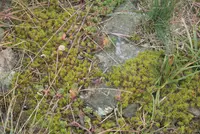
Press damp cushions firmly onto rough stone, bark, or a clay tile and secure with biodegradable mesh or cotton thread for 2–4 weeks so new rhizoids can anchor before any disturbance.

Use Capillary Matting

Place the mounted moss on a capillary mat kept evenly moist so water wicks upward, providing steady hydration from below without flooding the leaf tips.

Seasonal Dry-Rest

Allow slightly longer dry intervals in late summer to mimic its natural habitat, which encourages tighter, more resilient cushions rather than weak, overly lush growth.

Minimize Handling

Handle patches only by the substrate, not the tufts, and avoid frequent rearranging so the delicate shoots are not broken and the colony can knit into a continuous carpet.

Gentle Debris Cleaning

Lift off fallen leaves and grit with soft tweezers or a hand blower instead of rinsing heavily, which helps keep photosynthetic surfaces clear without washing away fragments that help growing Sand-hill Screw-moss spread.

Common Pests and Diseases

Desiccation stress

Symptoms include brittle, pale, and tightly curled shoots that fail to green up fully after wetting. This problem is common when cushions are exposed to intense sun, wind, and prolonged dryness beyond their natural tolerance.

Solution

Reduce heat and wind exposure by providing light shade during the hottest hours and using windbreaks where possible, especially in shallow containers or roof plantings. Rehydrate cushions gradually with fine misting rather than heavy soaking, and maintain a more even moisture cycle without keeping the moss constantly saturated to support long-term Syntrichia ruraliformis care.

Algal overgrowth

This disease-like condition appears as a slimy green film that coats the moss surface, leading to patchy yellowing and loss of structure. It develops in sites that stay wet for long periods with poor air movement and high nutrient input, such as runoff from fertilized areas.

Solution

Improve drainage and airflow, reduce watering frequency, and prevent nutrient-rich runoff from reaching the moss. In small plantings, gently rinse off surface algae with low-pressure water, then allow the substrate to dry slightly between waterings so the moss re-establishes dominance over the algae.

Slugs and snails

These pests graze on tender new moss shoots, leaving ragged, thinned patches and scattered slime trails on and around cushions. Damage is often worst in cool, humid, shaded locations and in container or roof gardens near other vegetation.

Solution

Hand-pick slugs and snails during the evening or early morning and remove nearby hiding places such as dense debris, boards, or stones in close contact with the moss. Use physical barriers or iron phosphate pellets placed around but not directly on the moss surface to reduce feeding without damaging the colony.

Moss mites

These insects, more accurately tiny arachnids, feed within dense cushions and can cause a dull, patchy appearance with fine frass and thinning shoot tips. Infestations are more likely in old, compacted mats with accumulated organic debris.

Solution

Gently lift and thin dense moss cushions to improve ventilation and remove built-up detritus that shelters mites. If damage is persistent, rinse the moss with a firm but not damaging stream of water and, in container settings, briefly submerge the cushions in clean water to dislodge mites before allowing them to drain and dry on a mesh surface.

Interesting Facts

Twisted desert leaves

This moss forms tight, screw-like twists in its leaves when dry, which reduces surface area and water loss and allows it to tolerate exposed, sandy habitats.

Specialized leaf cells

Its leaves contain hyaline cells, which are dead, transparent cells that act as tiny water reservoirs, helping the plant rehydrate quickly after rain or dew in otherwise harsh environments.

Urban and roadside specialist

In parts of western Europe and coastal regions, this species is a common pioneer on compacted soils, road verges, and sandy banks, stabilizing loose substrates and contributing to early soil formation.

Botan icon

Did you know?

Spores of this moss can disperse over long distances by wind, but the species also spreads very effectively through tiny leaf fragments and shoot pieces, which allows genetically identical clones to form extensive, dense carpets across dunes and disturbed ground.

FAQs about Sand-hill Screw-moss

Growth is slow to moderate. In suitable outdoor conditions, mats usually extend only a few millimeters to about 1–2 cm per year. Expansion mainly occurs by fragments spreading with wind, water, or foot traffic rather than vertical growth.

Grow Healthy Plants with Botan Care

Keep your plants happy and healthy with plant identification, disease detection, and easy care guidance.


Botan plant care app — identify plants on mobile

Explore More Plants