spotted Joe-Pye weed Care (Eutrochium maculatum)

spotted Joe-Pye weed

About spotted Joe-Pye weed

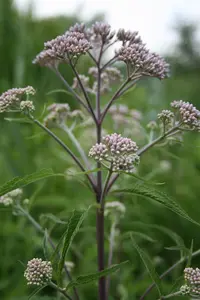
Spotted Joe-Pye weed, Eutrochium maculatum, is a tall, clump-forming perennial valued for its late-summer flower display and strong vertical presence in garden borders. It belongs to the aster family and produces dome-shaped clusters of pink to mauve flowers above sturdy, often purple-speckled stems.

This species is native to moist meadows, ditches, and stream edges across much of North America, where it supports butterflies and other pollinators. It prefers sun to light shade, consistently moist soil, and space to reach its full height, which guides how to care for spotted Joe-Pye weed.

Once established in a suitable site, it tends to be long-lived and relatively low-maintenance, making it a practical choice for naturalistic and wildlife-friendly plantings.

Main Plant Requirements

Care Difficulty

Moderate Care

Light Preference

Full Sun

Water Requirements

Keep Soil Moist

Temperature Preference

Cold Hardy

Hardiness Zone

3–9

Soil Texture

Loamy, Silty, Organic-rich

Soil pH

Acidic (5.5–6.5), Slightly acidic (6.5–7.0)

Soil Drainage

Moist but well-drained

Fertilization

Minimal (feed rarely)

Get Personalized Care Plan

Scan your plant to receive care tips personalized for your specific plant

Available on iOS and Android

How to Care for the spotted Joe-Pye weed

This moisture-loving perennial thrives in bright outdoor conditions with consistent light exposure.

  • Provide 4–6 hours of direct sun daily, ideally morning sun with light afternoon shade, to support tall, sturdy stems and abundant flower clusters.
  • Accepts partial shade, especially in hotter regions, but flowering may decrease if it receives less than about 3–4 hours of direct light per day.
  • In full, intense afternoon sun, foliage of spotted Joe-Pye weed can scorch or wilt; in cooler climates, more sun is tolerated, especially from spring to early fall.

This species prefers consistently moist soil and does not handle prolonged drying well.

  • Aim for soil that stays evenly damp to at least 5–8 cm depth; in average rainfall, supplemental watering is most needed during dry spells or sandy soils.
  • During hot summer periods, water when the top 2–3 cm of soil begin to lose moisture, using thorough deep watering rather than frequent light sprinkling.
  • Reduce watering in late fall and winter once Eutrochium maculatum has died back, but prevent complete soil desiccation; yellowing, limp leaves usually signal drought stress, while blackened, mushy stems suggest waterlogging.

This hardy perennial is adapted to cool to warm outdoor climates with marked seasonal changes.

  • Active growth is strongest around 65–80°F (18–27°C), with robust stems and flowering when soil moisture is stable and roots are not overheated.
  • Established plants tolerate winter cold down to about -30°F (-34°C) in the ground, dying back above soil while crowns and roots overwinter safely under mulch or snow cover.
  • Summer heat up to about 90°F (32°C) is tolerated if soil stays moist; extended extremes above this range increase wilting and stress, especially in full afternoon sun.

This species grows best in moderate outdoor humidity but mainly relies on consistently moist soil rather than air moisture.

  • Aim for 40–60% humidity, which is typical in most temperate outdoor conditions.
  • Plants tolerate brief dry air if soil stays evenly damp, but prolonged hot, dry winds can cause stress.
  • Low humidity stress shows as leaf edge browning and wilting despite moist soil; shelter plants or group them near other moisture-loving perennials when caring for spotted Joe-Pye weed.

This moisture-loving perennial prefers deep, consistently damp, organic-rich soil.

  • Use a loamy soil with high organic matter, such as native garden soil improved with 30–50% compost or well-rotted manure.
  • Ensure slow, even drainage; soil should hold moisture without remaining waterlogged or foul-smelling.
  • A slightly acidic to neutral pH of 6.0–7.0 suits Eutrochium maculatum and supports nutrient uptake.
  • Improve aeration in heavy clay by incorporating coarse compost and leaf mold rather than sand, and avoid very sandy mixes that dry out quickly.

This tall, moisture-demanding perennial is challenging but possible to grow in large outdoor containers.

  • Select a wide, heavy container at least 40–50 cm deep to stabilize the tall stems against wind sway.
  • Use a moisture-retentive mix, such as peat-free compost with added leaf mold, and monitor water needs more closely than in-ground plants.
  • Place the pot where it is sheltered from strong gusts, since the tall, top-heavy growth can tip lightweight containers over when wet and leafy.

Eutrochium maculatum benefits from modest nutrition in lean or heavily used soils but rarely needs heavy feeding.

  • Use a balanced slow-release fertilizer (around 10-10-10) or well-aged compost in early spring as new growth emerges.
  • Apply a light top-dressing once per growing season; heavy, repeated feeding can produce weak, floppy stems.
  • Dilute liquid feeds to half strength if used, and water beforehand to prevent root burn.
  • Avoid fertilizing in late fall and winter, when spotted Joe-Pye weed is dormant and not actively growing.

Pruning Eutrochium maculatum helps manage height, maintain vigor, and tidy the planting area.

  • In late winter or very early spring, cut back all previous year’s stems to 5–10 cm to encourage strong new shoots.
  • During summer, remove dead, damaged, or crossing stems to reduce disease risk and improve air circulation.
  • Pinch or cut back taller stems by about one-third in late spring to create shorter, bushier plants with more flowering stems.
  • Use clean, sharp pruners or loppers and disinfect blades when moving between plants to limit disease spread.

This perennial is usually grown in the ground; transplanting is more common than container repotting.

  • Plan to lift and divide clumps every 3–5 years in early spring or early fall to prevent overcrowding and maintain vigor.
  • Transplant when growth appears congested, flowering declines, or stems emerge thinner and more weakly from the center.
  • Dig a broad root ball, keep roots shaded and moist, and replant at the same depth in well-prepared, moist soil.
  • Water thoroughly after transplanting, then keep soil evenly moist for several weeks to reduce root stress and support reestablishment.

Eutrochium maculatum plant care often includes periodic propagation to renew clumps and expand plantings.

  • Division in early spring or early fall is the most reliable method; split healthy clumps into several sections with buds and roots.
  • Replant divisions promptly into moist, fertile soil, spacing generously to allow tall growth and good air flow.
  • Sow seeds outdoors in fall or cold-stratify them for several weeks before spring sowing to improve germination.
  • Keep seedbeds consistently moist and free of competition from weeds while seedlings establish strong root systems.

This species is cold hardy in most temperate climates and generally needs minimal winter care in the ground.

  • After hard frost, stems can be left standing for wildlife value, then cut back close to the ground in late winter.
  • Apply a 5–8 cm mulch layer around the root zone in colder regions to moderate soil temperature and moisture swings.
  • Move container-grown plants into a sheltered, unheated but frost-free or slightly protected spot to reduce freeze–thaw stress.

Care Tips

Install sturdy supports

Set up strong stakes or a discreet wire corral in late spring before stems reach full height so tall flowering stalks stay upright in wind and heavy rain without flopping or breaking.

Practice strategic thinning

In late spring, pinch or cut back 20–30% of the tallest stems by 5–10 cm to create a sturdier, slightly shorter plant with better air flow and more evenly distributed flower clusters.

Manage self-seeding

If unwanted seedlings are an issue, shear or deadhead most flower heads as they fade, leaving only a few to mature for wildlife or seed saving while preventing excessive spread.

Create a moist basin

When planting, form a shallow soil basin around the root zone to collect rain and irrigation water, which helps keep the root area consistently moist in summer without constant hand-watering.

Monitor stems for borers

Inspect hollow stems in late summer and fall for signs of insect boring; remove and dispose of any affected stems immediately to interrupt pest life cycles and support long-term Eutrochium maculatum plant care.

Common Pests and Diseases

Powdery mildew

This disease causes a white to gray, powdery coating on upper leaf surfaces, often in crowded or dry, warm conditions. Symptoms include distorted growth and premature leaf yellowing or browning.

Solution

Improve air circulation by thinning stems and avoid overhead watering, especially late in the day. Remove and discard heavily infected leaves, water at the base, and use a sulfur or potassium bicarbonate fungicide labeled for ornamentals if mildew spreads widely.

Rust

This disease produces orange to brown pustules on the undersides of leaves, with corresponding yellow spots on the upper surface. Symptoms include gradual weakening of the plant and early leaf drop in humid conditions.

Solution

Promptly remove and destroy affected leaves to reduce spore spread and keep plantings spaced for better airflow. Avoid wetting foliage, water early in the day, and if needed apply a copper- or chlorothalonil-based fungicide according to label directions when rust first appears.

Leaf spot

This disease shows as small, water-soaked or brown spots on leaves that may enlarge and merge, leading to tattered or dropping foliage. Symptoms include greatest damage in extended wet or humid weather, especially on dense clumps.

Solution

Prune and discard infected leaves and debris at the base to remove inoculum, and space plants so foliage dries quickly after rain or irrigation. Water at soil level and, for persistent problems, use a labeled ornamental foliar fungicide at the first sign of spotting.

Aphids

These insects cluster on young stems and flower buds, sucking sap and causing curling or yellowing leaves. This pest also excretes sticky honeydew that can attract sooty mold on foliage.

Solution

Dislodge colonies with a strong stream of water, focusing on shoot tips and undersides of leaves. For heavier infestations, use insecticidal soap or a light horticultural oil, applied thoroughly and repeated as needed while protecting beneficial insects as much as possible.

Japanese beetles

These insects chew irregular holes in leaves and flowers, sometimes skeletonizing foliage during peak summer activity. This pest is most damaging in sunny, open plantings where beetles congregate in groups.

Solution

Hand-pick beetles in early morning when they are sluggish and drop them into soapy water to reduce numbers. Cover high-value clumps with insect netting during peak flight and, if pressure remains high, use a targeted contact insecticide labeled for Japanese beetles on ornamentals, applied only to active feeding areas.

Interesting Facts

Hollow, Speckled Stems

This species develops tall, hollow stems with distinctive purple or reddish spots, a key trait that helps distinguish it from other Joe-Pye weeds and many similar wetland perennials.

Specialist Butterfly Host

It serves as an important larval host and nectar source for several North American butterflies, including swallowtails and fritillaries, supporting complex wetland food webs.

Wetland Nutrient Tolerance

The plant thrives in nutrient-rich, periodically flooded soils typical of marsh edges and wet meadows, showing notable tolerance to seasonal water level fluctuations that stress many other perennials.

Botan icon

Did you know?

This species is naturally distributed across a broad band of northern and northeastern North America, from the upper Midwest and Great Lakes across southern Canada to the Atlantic coast, where it plays a characteristic role in tall wetland meadow plant communities.

FAQs about spotted Joe-Pye weed

This species is highly attractive to pollinators. Large, nectar-rich flower clusters draw many butterflies, native bees, and other beneficial insects from midsummer into fall, making it a strong choice for wildlife-friendly and rain garden plantings.

Grow Healthy Plants with Botan Care

Keep your plants happy and healthy with plant identification, disease detection, and easy care guidance.

Botan plant care app — identify plants on mobile

Explore More Plants