Warlock's Butter Care (Exidia nigricans)

Warlock's Butter

About Warlock's Butter

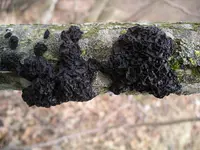
Warlock's butter, Exidia nigricans, is a jelly fungus rather than a traditional green plant. It forms irregular, cushion-like or brain-like blackish masses on dead wood, especially on broadleaf trees. The surface is gelatinous when wet and becomes hard and shriveled in dry weather.

This species occurs mainly in temperate forests of Europe and North America, where it helps decompose dead branches and logs. It is not commonly grown indoors and is usually encountered outdoors by nature enthusiasts.

Because it depends on decaying wood and consistent moisture, it can be challenging to cultivate intentionally. Gardeners who want to care for Warlock's Butter typically need a shaded, humid spot and well-rotted wood as a substrate.

Main Plant Requirements

Care Difficulty

Moderate Care

Light Preference

Shade

Water Requirements

Keep Soil Moist

Temperature Preference

Cool Climate

Hardiness Zone

5–9

Soil Texture

Loamy, Organic-rich

Soil pH

Acidic (5.5–6.5), Slightly acidic (6.5–7.0)

Soil Drainage

Moist but well-drained

Fertilization

Minimal (feed rarely)

Get Personalized Care Plan

Scan your plant to receive care tips personalized for your specific plant

Available on iOS and Android

How to Care for the Warlock's Butter

This jelly fungus prefers low to moderate light levels typical of shaded woodland habitats.

  • Provide dappled or filtered light under trees, with no more than 1–3 hours of weak morning sun and full shade by midday.
  • Avoid direct, strong afternoon sun, which can dry the substrate rapidly and cause Warlock's Butter to shrivel and harden.
  • In summer, deeper shade is beneficial, while in late autumn and winter slightly more indirect light is tolerated as the sun is weaker.

This wood-rotting fungus depends on consistently moist, but not waterlogged, conditions around its host wood.

  • Aim for the substrate or dead wood to feel evenly damp most of the time, allowing the surface to just start drying before the next soaking rain or watering.
  • Use well-drained, humus-rich surroundings so excess water can run off; standing water promotes bacterial rot and loss of Exidia nigricans fruiting bodies.
  • In hot, dry periods, watch for shriveled, rubbery structures as a sign of drying and re-moisten; pale, slimy, foul-smelling tissue suggests prolonged over-saturation.

This species fruits best in cool to mild conditions typical of temperate woodlands.

  • Ideal fruiting temperatures are around 40–60°F (4–16°C), often in late autumn to early spring when air is cool and humid.
  • Fruiting bodies tolerate brief drops to about 25°F (-4°C) but repeated hard freezes below this can damage tissue or halt development.
  • Heat above 75°F (24°C), especially when combined with low humidity, causes rapid drying and dormancy, so shaded, cool microclimates are important in summer.

This wood-decay fungus prefers consistently moist, humid conditions rather than dry air.

  • Aim for 70–90% humidity around the fruiting area to keep the jelly-like tissue hydrated and stable.
  • Dry air causes shriveling, hardening, and reduced fruiting, which usually reverses if moisture is restored.
  • Increase humidity by misting nearby wood, placing damp leaf litter or moss around the substrate, and reducing direct airflow.

This species grows on dead or decaying wood, so soil conditions matter only when preparing an artificial substrate.

  • Use a loose, fibrous mix of well-rotted hardwood chips, shredded bark, and coarse sawdust to mimic decomposing logs.
  • Ensure excess water drains freely; the substrate should be evenly moist but never waterlogged or sitting in puddles.
  • Maintain a mildly acidic reaction around pH 5.0–6.5, similar to many forest-floor and rotting-wood conditions important for Exidia nigricans.
  • Improve aeration by adding coarse bark or wood chunks, avoiding compacted garden soil, peat-only mixes, or fine clay that restrict airflow.

This fungus is suitable for container culture only when grown on wood pieces placed inside a vessel rather than in conventional potting soil.

  • Choose a wide, shallow, non-porous container that holds moisture around the wood while still allowing some air movement at the top.
  • Raise the wood slightly above any collected water so the base stays moist from humidity, not submerged in standing water.
  • Use a heavy or weighted container if the wood pieces are tall or uneven to prevent tipping as the substrate absorbs water.

This wood-inhabiting fungus usually grows on nutrient-rich dead branches and needs no additional fertilizer in cultivation.

Pruning is generally unnecessary for this wood-decaying fungus, as Exidia nigricans forms naturally on dead branches and logs.

This jelly fungus is not suited to typical pot culture, so focus on positioning rather than true repotting or transplanting.

  • Move colonized wood to a shaded, humid site if a log needs relocating, keeping the substrate orientation the same.
  • Transplant only during mild, moist weather to limit desiccation of the fruiting bodies and underlying mycelium.
  • Handle logs gently to avoid cracking the wood, which can damage internal fungal tissue and slow recovery.
  • After moving, keep the area evenly moist and undisturbed so the organism can re-establish in its new position.

In home settings, propagation of this saprophytic fungus is rarely attempted and is more complex than typical plant methods.

This species is naturally cold hardy in temperate climates and usually needs no deliberate winter care.

Care Tips

Use Suitable Hosts

Encourage more fruiting by leaving in place sound but dead hardwood branches or logs from oak, beech, maple, or other broadleaf trees, as this fungus relies on well-seasoned dead wood rather than freshly cut or fully decayed material.

Stabilize Log Moisture

Partially sink small logs or branches into the soil or leaf litter so they wick moisture yet keep the upper surface exposed, creating a consistently damp but aerated substrate that favors persistent colonies.

Seasonal Wood Rotation

Add new hardwood pieces every 1–2 years and move very crumbly, heavily decomposed pieces to a separate pile, ensuring a steady supply of mid-stage dead wood where the fungus can establish and fruit reliably.

Shade And Wind Buffer

Place colonized wood where it is shaded from direct sun and sheltered from strong, drying winds, for example on the north or east side of shrubs or fences, to prevent fruiting bodies from desiccating between rains.

Minimal Surface Disturbance

Avoid scrubbing or peeling bark, power-washing logs, or frequently turning colonized wood, since the mycelium just under the bark is easily damaged and stable positioning supports long-term success when caring for Warlock's Butter.

Common Pests and Diseases

Bacterial soft rot

This disease causes the jelly-like fruit bodies to become watery, foul-smelling, and collapse into a slimy mass, especially in warm, wet conditions. Symptoms include rapid tissue breakdown and a strong unpleasant odor on decaying clusters.

Solution

Remove and discard affected fruiting bodies promptly and avoid handling them when they are very wet to limit spread. Improve air circulation around the substrate or wood, reduce prolonged surface wetness where possible, and keep any storage containers for collected specimens dry and well ventilated to slow bacterial development.

Secondary mold colonization

This disease appears as white, green, or gray fuzzy growth over the dark jelly structures, often when they are old, damaged, or drying unevenly. Symptoms include a dusty or cottony layer that obscures the natural surface of the fungus.

Solution

Physically remove mold-covered fruiting bodies and any decaying organic debris around them. Encourage quicker drying of any handled or stored specimens, avoid stacking wet material together, and if observing outdoors, increase exposure to air movement and avoid nutrient-rich litter buildup that favors mold growth.

Fungus gnats

These insects are small, dark flies that are attracted to very moist, decaying wood and gelatinous fruit bodies, where their larvae may feed on surface tissue and surrounding organic matter. Symptoms include tiny flies hovering around the substrate and fine surface grazing or pitting on older tissue.

Solution

Reduce excessive moisture in any contained or indoor observation setups by allowing the substrate surface to dry slightly between misting events. Remove heavily colonized, decomposing material, use fine mesh covers on containers if present, and place yellow sticky traps nearby to intercept adult gnats and break their life cycle.

Wood-boring beetle larvae

These insects tunnel within the dead hardwood that supports the fungus, indirectly affecting stability and moisture balance of the substrate. Symptoms include small exit holes, frass (fine sawdust) on or below the log, and sections of bark or wood that crumble easily.

Solution

If the substrate log is being intentionally maintained for growing Exidia nigricans, remove and dispose of heavily damaged sections and avoid using wood already full of borer holes. Store culture logs off bare soil, keep them moderately but not excessively moist, and, for indoor or controlled setups, rotate or replace infested wood to maintain a sound substrate.

Interesting Facts

Distinctive warted surface

This jelly fungus forms irregular blackish patches with a characteristically warted or bubbled upper surface, which helps distinguish it from the similar but smoother Exidia glandulosa when fruitbodies fuse together on wood.

Cold weather activity

The fruitbodies often appear and enlarge during cool, wet periods in autumn and winter, when many other fungi are dormant, then can shrivel in dry spells and rehydrate repeatedly without being killed.

Deadwood decomposer role

It grows mainly on dead, attached branches of broadleaf trees such as oak and beech, contributing to the breakdown of lignin-rich wood and helping recycle nutrients in temperate forest ecosystems.

Botan icon

Did you know?

Molecular studies have shown that this species, once lumped together with Exidia plana and confused with other black Exidia, represents a distinct evolutionary lineage, and its modern name and concept were stabilized only after detailed DNA and microscopic work clarified these look-alike taxa.

FAQs about Warlock's Butter

This jelly fungus is technically edible but has little flavor or nutritional value. It is usually consumed only as a textural addition. Correct identification is essential, and it should never be eaten from polluted or contaminated wood.

Grow Healthy Plants with Botan Care

Keep your plants happy and healthy with plant identification, disease detection, and easy care guidance.

Botan plant care app — identify plants on mobile

Explore More Plants