


Seasonal habitat mimic
When trying growing White Saddle, keep it outdoors in a shaded, undisturbed, leaf-littered corner from late summer to autumn to better match its natural woodland fruiting conditions.

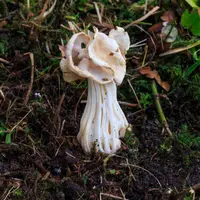
White saddle (Helvella crispa) is a distinctive fungus, not a leafy houseplant. It produces pale, irregularly folded caps on slender, ribbed stems that resemble a small saddle. This species typically appears in late summer to autumn in woodlands, grassy edges, and along paths, especially in temperate regions of Europe and North America.
It grows from the ground, often near hardwoods, and may form groups or scattered clumps. The unusual form is attractive to mushroom enthusiasts, but it is considered difficult and unreliable to cultivate. Those who try to care for White Saddle should know it prefers natural, undisturbed soil with steady moisture and dappled light, similar to a cool woodland floor.

Care Difficulty
Hard Care

Light Preference
Partial Shade

Water Requirements
Keep Soil Moist

Temperature Preference
Cold Hardy

Hardiness Zone
4–9

Soil Texture
Loamy, Silty, Organic-rich

Soil pH
Acidic (5.5–6.5), Slightly acidic (6.5–7.0)

Soil Drainage
Moist but well-drained

Fertilization
Minimal (feed rarely)
Scan your plant to receive care tips personalized for your specific plant
Available on iOS and Android
This fungus grows best in dappled woodland light rather than direct, open sun.
This woodland fungus depends on consistently moist, not waterlogged, soil to fruit well.
This species prefers cool to mild conditions and typically fruits in late summer to autumn.
Humidity is not a primary factor for Helvella crispa, which is more dependent on cool, consistently moist soil conditions than air moisture.
This fungus relies on consistently moist, loose forest-type soil with high organic matter and excellent drainage.
This species is not suitable for container growing because it depends on complex soil relationships in the ground that containers cannot reliably support.
This fungus is adapted to low-nutrient forest soils, so Helvella crispa needs minimal fertilization in cultivation.
Pruning Helvella crispa is limited to hygiene rather than shaping or growth control.
This mycorrhizal fungus is rarely kept in containers, so focus on careful site establishment rather than frequent repotting.
Intentional propagation of Helvella crispa is challenging and not commonly practiced by home growers.
This species is naturally cold hardy in temperate climates and usually needs no special winter care.

Plant Health Check
Not sure what's wrong with your plant? Check your plant's health inside the app.
This fungus forms irregular, saddle-like caps with strongly crisped and lobed margins that are typically white to cream, making it one of the more easily recognized Helvella species in the field.
It commonly fruits on soil in mixed and deciduous woodlands, especially under beech and other broadleaf trees, and is most often observed in late summer to autumn in temperate Europe and parts of North America.
Although sometimes listed as edible when thoroughly cooked, it is widely discouraged for consumption because related Helvella species contain gyromitrin-like toxins, and the safety of this species is considered uncertain.

Genetic studies have led to several taxonomic revisions in the Helvella genus, and some collections once identified as Helvella crispa have been reassigned to closely related species, showing that its traditional morphology-based identification has sometimes masked hidden diversity.
This fungus is widely regarded as inedible or at least not recommended. It may contain unstable toxins and looks similar to more dangerous species. For safety, it should not be collected or eaten, even if cooked.
Keep your plants happy and healthy with plant identification, disease detection, and easy care guidance.

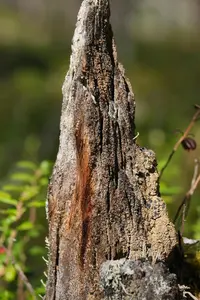
Small Clam Lichen
Carbonicola anthracophila
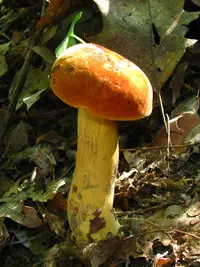
Boletus subluridellus
Boletus subluridellus
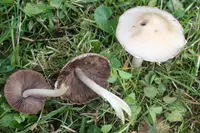
Pale Brittlestem
Candolleomyces candolleanus
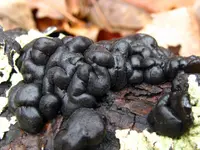
Black Witches' Butter
Exidia glandulosa
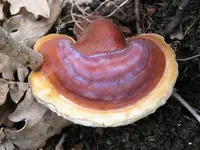
lacquered bracket
Ganoderma lucidum
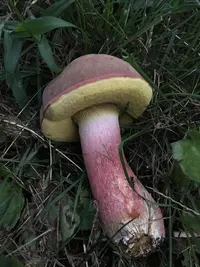
patriotic bolete
Boletus patrioticus
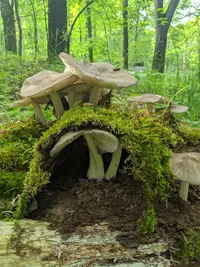
Eastern American Platterful Mushroom
Megacollybia rodmanii
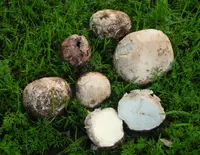
Lead-grey Puffball
Bovista plumbea