

American beech Identification (Fagus grandifolia)

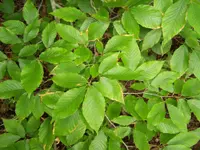
Recognize American beech by its alternate, simple leaves, each 2 to 5 inches (5 to 13 cm) long, with many straight side veins ending at fine teeth.

Mature trees also show a smooth, light gray trunk and a broad, rounded crown with slender twigs that hold long, narrow buds.

Fagus grandifolia Identification

Scan to Confirm American beech

Take or upload a photo to confirm your plant ID with Botan.

Clear images work best. Avoid photos taken too close or too far away

  • 1 free identification
  • No sign-up
  • 30,000+ plants in database

Use these quick visual traits to assess Fagus grandifolia by eye.

  • Leaves are simple and alternate, oval to elliptic, about 2-5 inches (5-13 cm) long.
  • Leaf edges have many small, straight side veins, each ending at a tiny tooth along the margin.
  • The blade is thin with a pointed tip and a nearly symmetrical base.
  • Twigs are slender and zigzag slightly, with very long, narrow, sharply pointed buds.
  • Mature trunks often show smooth, light gray bark with an even, unbroken surface.

Check both the long buds and smooth gray bark together for a more confident visual match.

American beech shows clear visual shifts from seedling leaves to mature bark and fruit.

  • Seedling: Seedlings have a slender upright stem with a few alternate leaves; early leaves are thin, oval, and already edged with small straight teeth.
  • Young plant: Young plants form a dense sapling with many fine twigs and low branching; leaves broaden to about 2-5 inches (5-13 cm) long.
  • Mature plant: Mature trees develop a broad rounded crown and a stout trunk; the bark becomes notably smooth and pale gray, unlike the twiggy sapling stage.
  • Fruiting stage: Fruiting branches carry prickly husks that split open to show triangular beechnuts, a visible difference from nonfruiting crowns even when leaves look similar.

In spring, Fagus grandifolia leafs out with soft, pale green leaves and small flowers that become noticeable as the canopy opens. By fall, the leaves turn clear yellow to yellow-brown before dropping. After leaf drop, winter reveals the smooth, light gray bark and long, narrow, sharply pointed buds along the twigs. Spiny husks with beechnuts may persist briefly into fall.

A few trees can be mistaken for American beech at a glance.

European beech(Fagus sylvatica)

Often confused because both have smooth gray bark and simple oval leaves. European beech usually has broader leaves with fewer, blunter teeth and often a less hairy leaf edge.

Hornbeam(Carpinus caroliniana)

Can look similar from the leaves alone, since both have alternate, toothed leaves. Hornbeam has bark with tight, muscle-like ridges, not the smooth, even bark typical of beech.

Hophornbeam(Ostrya virginiana)

Its narrow, toothed leaves can suggest beech. The quickest check is fruit and bark: hophornbeam has hop-like seed clusters and shredded bark, while beech has prickly burs and smooth bark.

Fagus grandifolia is native to eastern North America, from southeastern Canada through the eastern United States, with a separate Mexican population. Its range is useful because true beeches in this region are limited, so location can help narrow an ID. It is most often found in deciduous forests, rich mesic woodlands, and mountain coves, often on well-drained slopes or stream terraces. In the Northeast and Appalachians, seeing it in mature hardwood forest is a strong habitat clue.

Scan. Check. Confirm.

Use Botan to identify or verify a plant from a photo so you can rule out similar species with more confidence.

FAQ

Yes. Mature trees usually develop a broad, dense crown and keep smooth, light gray bark that remains a key American beech identification trait. Young trees are narrower, while older trunks may appear massive and often show shallow horizontal markings.

More Plant Identification Guides

From Plant ID to Plant Info

Identify a plant from a photo with Botan, then get species-specific care information, safety notes, and common problems.

Botan app identifying a plant from a photo
Is Sugar Water Good for Plants?

4 min read · 14 Sept 2026

Is Sugar Water Good for Plants?

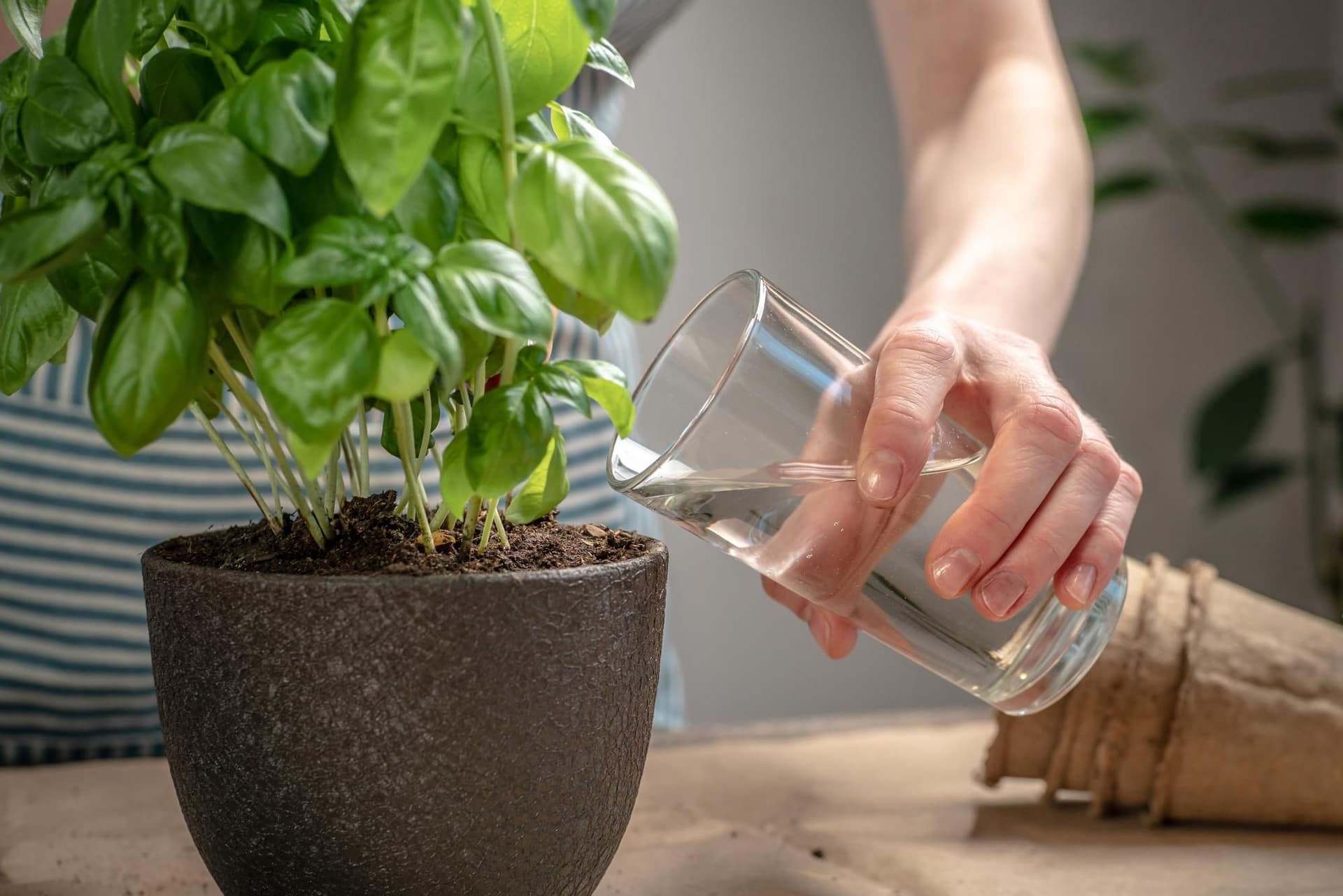
Sugar water may sound like an easy boost, but most rooted plants do not need extra sucrose. This guide explains how green tissues produce carbohydrates, when a sweetened solution can be useful, and why too much can cause problems.

Plant Care
Is Sugar Water Good for Plants?
15 Best Indoor Plants for Your Home

3 min read · 13 Nov 2026

15 Best Indoor Plants for Your Home

Every plant lover has a small graveyard behind them. Here is the twist... most of those plants did not die from bad care.

Plant Recommendations
15 Best Indoor Plants for Your Home
Best Fertilizer for Grass in Summer: How to Choose the Right One

6 min read · 18 Aug 2026

Best Fertilizer for Grass in Summer: How to Choose the Right One

The right fertilizer in summer can make a lawn thrive. The wrong one can damage it. Here, you’ll learn the best NPK ratios by grass type, when and how to apply your formula, and how to recognize the signs of over- or under-fertilizing.

Plant Care
Best Fertilizer for Grass in Summer: How to Choose the Right One