Early growth training
Install light netting or a low trellis as soon as seedlings have a few true leaves, then guide young stems through the support weekly so the vines climb where desired instead of scrambling and smothering nearby plants.

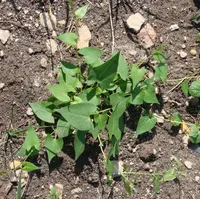
Black bindweed (Fallopia convolvulus) is an annual twining vine in the knotweed family, often seen climbing through crops, hedges, and rough ground. It has slender, scrambling stems, small triangular to arrow-shaped leaves, and clusters of tiny greenish-white flowers that develop into dark seeds.
The plant is native to Europe and parts of Asia but is now widespread in North America as an agricultural and garden weed. It grows quickly, tolerates poor soils, and self-seeds freely, which makes it persistent and sometimes difficult to control.
Understanding how to care for Black Bindweed mainly helps with identification and management, as it thrives in open, disturbed soils with moderate moisture and full sun to light shade.

Care Difficulty
Easy Care

Light Preference
Full Sun

Water Requirements
Moderate Water

Temperature Preference
Cold Hardy

Hardiness Zone
3–9

Soil Texture
Sandy, Loamy, Clay

Soil pH
Acidic (5.5–6.5), Slightly acidic (6.5–7.0)

Soil Drainage
Well-drained

Fertilization
Minimal (feed rarely)
Scan your plant to receive care tips personalized for your specific plant
Available on iOS and Android
This fast-growing annual vine prefers full sun but copes with some shade in many temperate gardens.
This scrambling annual prefers consistently moist, well-drained soil rather than extremes of drought or saturation.
This hardy annual vine grows best in mild to warm conditions typical of many temperate climates.
Humidity is not a major factor for Fallopia convolvulus, which adapts well to typical outdoor air conditions.
Fallopia convolvulus prefers light, well-structured soils that allow roots to spread quickly without staying waterlogged.
This species can be grown in containers, mainly for controlled spreading or short-term display.
This annual vine is vigorous on poor soils, so Black Bindweed usually needs little or no fertilizer.
Pruning Fallopia convolvulus focuses on controlling spread and removing unwanted growth rather than shaping a long‑term plant.
In gardens Fallopia convolvulus is usually managed through site control and transplanting rather than long‑term container culture.
Propagation of this species is almost entirely by seed, which germinates readily under typical garden conditions.
As an annual, Fallopia convolvulus dies back with hard frost and generally requires no dedicated winter care.

Plant Health Check
Not sure what's wrong with your plant? Check your plant's health inside the app.
Archaeobotanical studies of grain stores from Neolithic and Bronze Age Europe have found abundant seeds of Fallopia convolvulus, showing it has been a human-associated weed in cereal fields for thousands of years.
Its small, three-angled fruits are enclosed in a papery structure called a perianth that helps them float and move with soil or water, aiding spread in disturbed agricultural habitats.
The hard seed coat of this species creates strong physical dormancy, so seeds can persist in the soil seed bank for many years and germinate gradually as conditions become favorable.

Genetic and morphological research indicates that Fallopia convolvulus is more closely related to buckwheat (Fagopyrum esculentum) than to true bindweeds (Convolvulus species), despite its common name suggesting otherwise.
This species spreads quickly by twining stems and plentiful seeds, often forming dense tangles in open soil or crops. In gardens it is usually considered a weed and needs firm, regular removal before seed set.
Keep your plants happy and healthy with plant identification, disease detection, and easy care guidance.