Use pre-soaked substrate
Before adding the moss, soak and rinse your rock, wood, or fine-grain substrate in clean, dechlorinated water so it is fully saturated and free of dust that would otherwise smother new fronds.

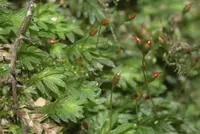
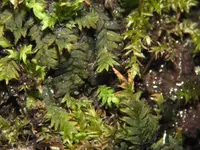
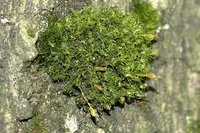
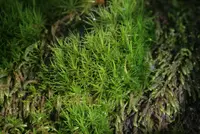
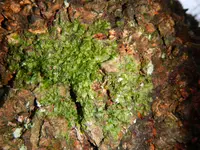
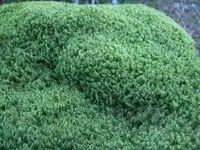
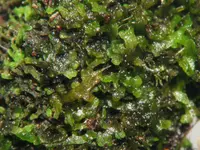
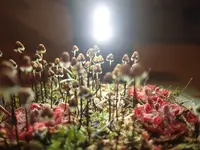
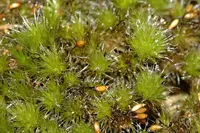
Bryoid fissidens moss (Fissidens bryoides) is a small, finely textured moss that forms low, velvety mats on soil, rocks, and decaying wood. Its tiny, overlapping leaves create a neat, feathered look that stays attractive at close range. This species occurs widely in temperate regions, often in moist, shaded habitats such as forest floors, riverbanks, and damp walls. It is slow growing but quite persistent once settled in a suitable spot. Fissidens bryoides prefers stable moisture, gentle air movement, and soft, indirect light. For those learning how to care for bryoid fissidens moss, its main challenge is preventing drying out while still allowing clean, fresh water and good hygiene around the colony.

Care Difficulty
Moderate Care

Light Preference
Partial Shade

Water Requirements
Keep Soil Moist

Temperature Preference
Cool Climate

Hardiness Zone
4–9

Soil Texture
Loamy, Silty, Organic-rich

Soil pH
Strongly acidic (4.5–5.5), Acidic (5.5–6.5)

Soil Drainage
Moist but well-drained

Fertilization
Minimal (feed rarely)
Scan your plant to receive care tips personalized for your specific plant
Available on iOS and Android
This moss prefers soft, indirect light that mimics a shaded forest floor.
This moss thrives in consistently moist, not waterlogged, conditions.
This moss is adapted to cool to mild climates with moderate seasonal changes.
This moss prefers constantly moist air and benefits from elevated humidity.
This species favors a thin, constantly moist substrate rather than conventional potting soil.
This moss is suitable for shallow containers, trays, or terrariums that hold consistent surface moisture.
This moss needs only very light feeding, as many wild bryophytes grow well on low-nutrient substrates.
Fissidens bryoides needs only minimal trimming to maintain a neat, even mat.
This moss is usually grown on hardscape or shallow substrates, so focus on gentle transplanting rather than frequent repotting.
Fissidens bryoides is commonly propagated by division of existing mats rather than by spores at home.
This moss is cold hardy in many temperate regions and usually needs no special winter protection outdoors.

Plant Health Check
Not sure what's wrong with your plant? Check your plant's health inside the app.
This moss forms small, low cushions only a few millimeters tall, yet it has a broad distribution across temperate regions of Europe, North America, and parts of Asia, often appearing on bare soil in disturbed habitats.
Its leaves are arranged in two neat rows along the stem and have a folded, pocket-like base, a feature that helps distinguish it from many other mosses under a hand lens.
It often colonizes exposed, compacted, or recently disturbed soil, where its dense mats help stabilize the surface and create more suitable conditions for other small plants and microbes.
This species performs reliably both indoors and outdoors as long as moisture and shade are stable. Indoors, humidity control is easier. Outdoors, it prefers sheltered, cool, consistently damp sites with minimal disturbance and protection from direct sun and drying winds.
Keep your plants happy and healthy with plant identification, disease detection, and easy care guidance.