Anchor To Surfaces
Press small clumps firmly onto stone, wood, or substrate using nylon thread or fine mesh for 2–3 weeks so the rhizoids can attach securely before any strong water movement or handling.

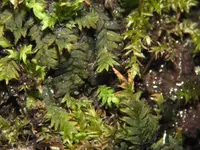
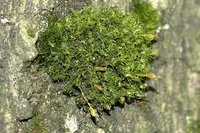
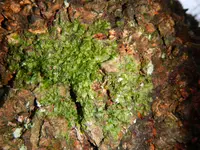
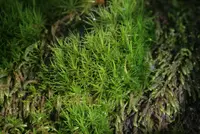
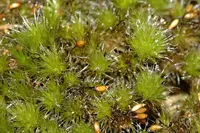
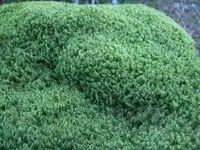
Fissidens taxifolius, often called fissidens moss, is a small, slow-growing moss that forms neat, flat cushions or patches. Its tiny, feather-like fronds resemble miniature yew branches.
This moss naturally occurs on rocks, soil, and rotting wood in moist, shaded forests and along stream banks in many temperate regions. It prefers consistently damp conditions, gentle air movement, and low to moderate light.
Because it is sensitive to drying out and physical disturbance, it is considered moderately challenging for beginners. Understanding how to care for fissidens moss mainly means providing stable moisture, shade, and clean, low-nutrient surfaces to colonize.

Care Difficulty
Moderate Care

Light Preference
Partial Shade

Water Requirements
Keep Soil Moist

Temperature Preference
Cool Climate

Hardiness Zone
5–9

Soil Texture
Loamy, Silty, Organic-rich

Soil pH
Strongly acidic (4.5–5.5), Acidic (5.5–6.5)

Soil Drainage
Moist but well-drained

Fertilization
Minimal (feed rarely)
Scan your plant to receive care tips personalized for your specific plant
Available on iOS and Android
This moss prefers cool, shaded sites that mimic a forest floor or stream bank.
This species thrives in consistently damp conditions and declines quickly if allowed to dry out completely.
This moss is adapted to cool, temperate conditions with moderate seasonal fluctuation.
This moss prefers consistently moist air and reacts quickly to dry conditions.
Fissidens taxifolius anchors best to stable, moist, organic-rich substrates rather than typical potting soil.
This species is well suited to containers and terraria where moisture and airflow can be carefully managed.
This moss needs only very light feeding, and many healthy clumps thrive with no added fertilizer.
Pruning needs for Fissidens taxifolius are minimal and mainly cosmetic.
This moss is usually attached to hardscape or substrate rather than conventionally repotted.
Propagation of Fissidens taxifolius is straightforward by division rather than spores for home growers.
Outdoors this moss is generally cold hardy and needs little specific winter care.

Plant Health Check
Not sure what's wrong with your plant? Check your plant's health inside the app.
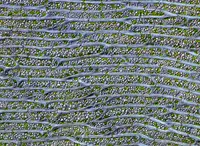
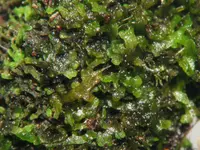
This moss forms tiny, flattened shoots with leaves arranged in two neat rows on each side of the stem, giving it a strong visual similarity to yew needles, which is the origin of the epithet taxifolius (yew-leaved).
It commonly grows on compact, often slightly acidic soil in shaded woodlands, paths, and banks, tolerating moderate disturbance and trampling better than many woodland mosses.
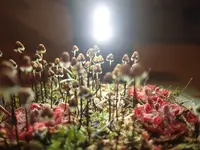
Its sporophytes develop on short setae (stalks) with smooth, cylindrical capsules that release spores through a peristome, a ring of tiny teeth that controls how spores are gradually dispersed in changing humidity.

This species is one of the most widespread members of its genus in temperate Europe and parts of North America, often used as a reference taxon in field bryology training because its characteristic leaf arrangement and habitat make it a reliable indicator of moist, shaded soil conditions.
Growth is slow to moderate. In good conditions, new fronds may extend 1–3 mm per month, gradually thickening into a dense mat over many months. Patience is essential when growing fissidens moss.
Keep your plants happy and healthy with plant identification, disease detection, and easy care guidance.