Substrate hygiene
Remove and discard any slimy or moldy wood chips or leaf litter around colonies, then top up with fresh, uncontaminated hardwood debris to reduce competing fungi and bacteria while growing Flammulaster limulatus.

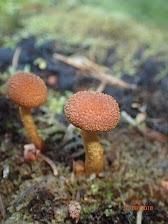
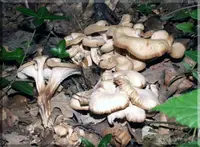
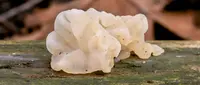
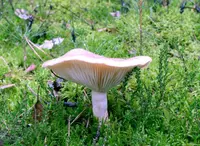
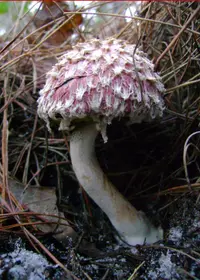
Flammulaster limulatus is a small saprobic mushroom rather than a leafy houseplant. It produces tawny to brown caps with fine scales and slender stems, usually appearing in clusters on decaying wood or rich forest litter. The fruiting bodies are delicate and short-lived.
This species is native to temperate regions of Europe and parts of North America, where it helps break down dead organic matter. It is not commonly cultivated, and consistent methods to care for Flammulaster limulatus at home are not well established.
In nature, it favors cool, moist, shaded habitats with abundant rotting wood or woody debris, reflecting a preference for stable humidity and nutrient-rich, decomposing material.

Care Difficulty
Hard Care

Light Preference
Partial Shade

Water Requirements
Regular Water

Temperature Preference
Cool Climate

Hardiness Zone
Unknown

Soil Texture
Loamy, Organic-rich

Soil pH
Acidic (5.5–6.5)

Soil Drainage
Moist but well-drained

Fertilization
Minimal (feed rarely)
Scan your plant to receive care tips personalized for your specific plant
Available on iOS and Android
This woodland fungus prefers soft, filtered light similar to a shaded forest floor.
Moist, but not waterlogged, substrate is essential for reliable fruiting.
This species fruits best in cool to mild conditions typical of temperate woodlands.
Humidity is not a controlling factor for Flammulaster limulatus, which naturally fruits in open woodland air.
Flammulaster limulatus is a saprotrophic fungus that develops on decaying woody or organic material rather than standard garden soil.
This species is generally unsuitable for deliberate container cultivation, as it depends on complex, decaying woodland substrates.
This small saprophytic fungus grows on decaying wood and generally does not need supplemental feeding in gardens or natural settings.
Flammulaster limulatus does not require intentional pruning because its fruiting bodies are short-lived fungal mushrooms, not structural plant tissue.
In cultivation, this wood-inhabiting mushroom is managed by adjusting the substrate rather than by classic repotting or transplanting steps.
Propagation of Flammulaster limulatus is specialized and usually handled by experienced mycologists rather than home gardeners.
This species is typically left to natural seasonal cycles and does not need targeted winter care in outdoor fungal habitats.

Plant Health Check
Not sure what's wrong with your plant? Check your plant's health inside the app.
This small agaric fungus grows mainly on decaying hardwood debris, especially beech and birch leaf litter, where it helps break down tough plant material and recycle nutrients in temperate forests.
Under a microscope, its spores show fine warts and ridges rather than being smooth, a diagnostic feature used by mycologists to separate it from similar small brown mushrooms.
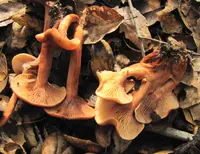
The gills start pale and become rusty to ochre-brown as the spores mature, closely matching the spore-print color and helping field mycologists verify identifications.

This species is considered uncommon across much of Europe and has been used as an indicator of relatively undisturbed, well-established broadleaf woodland, since it tends to appear in older, stable leaf-litter communities.
This small woodland mushroom is not considered edible and has no culinary value. Identification is difficult, and related species may be harmful, so it is safest to treat it as inedible and avoid consumption entirely.
Keep your plants happy and healthy with plant identification, disease detection, and easy care guidance.