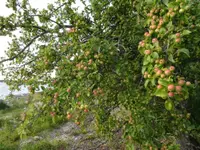
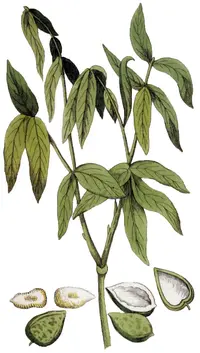
Evergreen tropical ash Care (Fraxinus griffithii)

Evergreen tropical ash

About Evergreen tropical ash

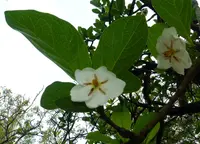
Evergreen tropical ash, Fraxinus griffithii, is a small to medium tree valued for its dense, glossy foliage and light, airy clusters of white flowers. It keeps its leaves year-round in mild climates, giving consistent screening and shade.

This species is native to parts of Southeast Asia and northern Australia, where it grows in warm, humid regions. In cultivation it is often used as a street tree, hedge, or feature tree in suburban gardens.

Fraxinus griffithii grows relatively fast and adapts to a range of soils, which makes it practical for landscapers. It generally prefers full sun, moderate moisture, and well-drained soil, and these traits shape how to care for Evergreen tropical ash in home gardens.

Main Plant Requirements

Care Difficulty

Moderate Care

Light Preference

Full Sun

Water Requirements

Moderate Water

Temperature Preference

Warm Climate

Hardiness Zone

8–11

Soil Texture

Sandy, Loamy, Clay

Soil pH

Slightly acidic (6.5–7.0), Neutral (7.0)

Soil Drainage

Moist but well-drained

Fertilization

Minimal (feed rarely)

Get Personalized Care Plan

Scan your plant to receive care tips personalized for your specific plant

Available on iOS and Android

How to Care for the Evergreen tropical ash

This species prefers bright outdoor conditions and performs best with consistent light exposure.

  • Provide 4–6 hours of direct morning sun with light afternoon shade, especially in hot inland sites, to reduce leaf scorch on Evergreen tropical ash.
  • Plant in an open position with access to high, filtered light for the rest of the day; dense shade leads to thin canopy and slower growth.
  • In cooler climates, allow more direct sun, but in summer heatwaves above 95°F (35°C), temporary shade cloth helps prevent leaf burn.

This tree prefers evenly moist, well-drained soil rather than constant saturation.

  • At planting, water deeply, then continue deep watering when the top 5–8 cm of soil feels dry, focusing on the root zone rather than light surface sprinkling.
  • During the first 1–2 years, increase frequency in hot, dry periods and reduce in cool or rainy seasons, always checking soil moisture before watering Fraxinus griffithii.
  • Watch for yellowing, soft leaves and soggy soil as signs of overwatering, and for browning leaf tips and very dry, hard soil as indicators of underwatering.

This species is a warm-temperate to subtropical tree that tolerates a moderate range of outdoor temperatures.

  • Optimal growth occurs around 65–85°F (18–29°C), with steady warmth encouraging dense foliage and stable extension growth.
  • Fraxinus griffithii tolerates brief drops to about 25–28°F (-4 to -2°C), but young trees and new shoots can be damaged by harder or prolonged frost.
  • In hot regions, it copes with 95–100°F (35–38°C) if soil moisture is maintained and the root zone is mulched to limit heat and water stress.

This species tolerates a wide humidity range but grows best with moderate air moisture.

  • Aim for 40–60% humidity, which is typical of outdoor conditions in many mild climates for Evergreen tropical ash.
  • Dry air is usually tolerated, but prolonged heat with low humidity can cause leaf edge browning and premature leaf drop.
  • Increase humidity around young or container-grown trees by mulching the soil surface and grouping plants rather than misting foliage.

Fraxinus griffithii prefers moderately fertile, well-structured mineral soil that drains freely yet holds some moisture.

  • Use a loamy or sandy-loam soil with 20–30% organic matter such as compost to support steady growth.
  • Ensure drainage is brisk so water does not stand around the roots; avoid compacted or heavy clay that stays wet after rain.
  • Aim for a slightly acidic to neutral pH around 6.0–7.5, which supports nutrient availability for this ash species.
  • Improve aeration and drainage in dense soils by incorporating coarse sand or fine gravel and avoiding excessive peat that can stay soggy.

This tree can be grown in large containers for several years, especially in patios or small gardens.

  • Choose a deep, heavy container to stabilize the canopy against wind and prevent tipping as the tree gains height.
  • Select a potting mix that is slightly heavier than typical indoor mixes so roots anchor the plant securely without excessive water retention.
  • Leave a generous gap between soil surface and rim to allow thorough watering without overflow and to accommodate a surface mulch layer.

Fraxinus griffithii responds well to modest feeding but often grows acceptably in fertile garden soil without extra input.

  • Use a balanced slow-release fertilizer (around 10-10-10) or well-rotted compost once in early spring as growth begins.
  • In poorer soils, repeat light feeding once more in midsummer during the active growing season.
  • Apply at half the label rate for trees, keeping granules or compost away from direct trunk contact.
  • Stop fertilizing in late summer to avoid soft growth that may be damaged over winter.

Fraxinus griffithii benefits from structured pruning to maintain a stable form and safe canopy.

  • Carry out main pruning in late winter to early spring before vigorous new growth starts.
  • Remove dead, diseased, crossing, or storm-damaged branches first, using sharp bypass pruners or a clean pruning saw.
  • Thin congested interior shoots to improve airflow and light penetration, which supports healthier foliage and branching.
  • Shorten or remove awkward or leaning stems to shape a balanced crown and maintain clearances near buildings or paths.

Evergreen tropical ash is usually grown in the ground, so management focuses on correct transplanting rather than frequent repotting.

  • Transplant young trees in late winter or early spring while still dormant and before high summer heat.
  • Look for roots circling the pot or slowed top growth as signs a container-grown tree needs a larger container or planting out.
  • Handle the root ball gently, loosening only lightly matted outer roots, then set at the same soil level in a wider hole with good drainage.
  • Water thoroughly after planting, then keep soil evenly moist for the first growing season to reduce transplant shock and support root establishment.

Fraxinus griffithii is most reliably propagated from seed, with vegetative methods used less often in home gardens.

  • Collect ripe seed in late summer to autumn, removing wings and sowing fresh where possible.
  • Provide a cold stratification period of about 2–3 months at 35–40°F to improve germination consistency.
  • Sow seeds in a free-draining, low-fertility mix, covering lightly and keeping evenly moist at 60–70°F.
  • Semi-ripe cuttings taken in late spring to early summer may root under high humidity and bottom heat, but success rates are variable.

Fraxinus griffithii is moderately cold tolerant in mild climates and usually needs only limited winter care in suitable hardiness zones.

  • In regions with light frost, maintain a 5–8 cm mulch layer over the root zone, keeping it slightly away from the trunk.
  • In colder areas, provide a wind-sheltered site and avoid low frost pockets that stay colder overnight.
  • Container-grown trees in marginal climates can be moved to an unheated but frost-free garage or porch during the coldest spells.

Care Tips

Establish Single Leader

In the first 2–3 years, select one strong upright stem as the main leader and remove competing uprights in late winter to create a stable tree structure that better resists wind and storm damage.

Wind-Resilient Staking

Stake young trees on the windward side with a flexible tie that allows slight movement, and remove the stake after 1–2 years so the trunk develops natural strength rather than remaining dependent on support.

Surface Root Management

If surface roots begin to lift soil or paving, top-dress annually with 2–3 cm of composted mulch out to the drip line instead of adding heavy soil layers, which can suffocate feeder roots and reduce vigor.

Targeted Pest Monitoring

From spring through early fall, inspect new growth and leaf undersides every 2–3 weeks for sap-sucking insects or scale, and treat early with horticultural oil or insecticidal soap according to label directions to avoid larger infestations.

Urban Heat Adaptation

In hot, reflective sites near walls or pavement, extend the mulched area beyond the canopy and use light-colored mulch to reduce root-zone temperatures and moisture stress when growing Evergreen tropical ash in cities or parking strips.

Common Pests and Diseases

Ash whitefly

This pest feeds on the undersides of leaves, causing yellowing, leaf curling, sticky honeydew, and sooty mold on Fraxinus griffithii in warm climates.

Solution

Prune and dispose of heavily infested shoots, then hose down foliage regularly to remove nymphs and honeydew; encourage or introduce natural enemies such as lady beetles and parasitic wasps, and, if needed, apply a targeted horticultural oil or insecticidal soap to the undersides of leaves according to Fraxinus griffithii care instructions.

Ash leafcurl ash aphid

These insects cluster on young shoots and leaf undersides, causing curled, distorted foliage and sticky honeydew that can attract sooty mold.

Solution

Cut off and discard badly curled or deformed leaves, then wash remaining foliage with a strong but controlled stream of water; if populations stay high, treat tender growth with insecticidal soap or a light horticultural oil, repeating every 7–10 days until new leaves develop normally.

Ash anthracnose

This disease causes irregular brown or tan blotches along leaf veins, premature leaf drop, and sometimes dieback of small twigs during cool, wet springs.

Solution

Collect and destroy fallen leaves and small infected twigs to reduce spores, improve airflow by selective thinning of dense interior branches, and avoid overhead watering; in regions with a history of severe outbreaks, preventive copper or chlorothalonil sprays at bud break and early leaf expansion can help protect new growth.

Cercospora leaf spot

This disease produces numerous small, round to irregular dark spots on leaves, which can merge into larger patches and lead to partial defoliation in humid conditions.

Solution

Rake and discard fallen leaves, water at soil level to keep foliage dry, and thin nearby vegetation to increase light and air movement; in persistent cases, use a labeled fungicide for Cercospora on ornamental trees, applied at the first sign of spotting and repeated as directed.

Bark borers

These insects tunnel into stems and larger branches, leading to wilting of sections of the canopy, dieback, frass (sawdust) at entry holes, and weakened branches that may break in wind.

Solution

Monitor trunks and main limbs for fresh exit holes and frass, prune and destroy infested branches back to healthy wood, and keep the tree healthy with proper watering and mulching to reduce susceptibility; in high-pressure areas, a certified arborist can time systemic or trunk-applied insecticides to target the vulnerable life stage of the borers.

Interesting Facts

Evergreen ash among ashes

Unlike many ash species that are fully deciduous, this small tree is functionally evergreen in warm climates, keeping most of its glossy leaflets year-round and only thinning foliage briefly under stress or cool conditions.

Panicles of scented flowers

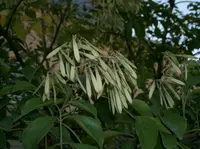
It produces loose, airy clusters (panicles) of small, creamy-white, mildly fragrant flowers that attract bees and other pollinators, often giving the whole crown a light, cloud-like appearance in bloom.

Adapted to monsoon climates

Native to parts of the Himalayas and Southeast Asia, it is naturally adapted to summer-wet, winter-drier monsoon patterns, which helps explain its tolerance of seasonal heavy rain followed by relatively drier periods in cultivation.

Botan icon

Did you know?

This species has naturalized and is considered invasive in parts of eastern Australia, where its prolific seed production and fast growth allow it to spread into bushland and compete with local native vegetation.

FAQs about Evergreen tropical ash

This tree is generally fast-growing, often adding 30–90 cm of height per year in suitable conditions. Growth slows in poor soil, limited root space, or drought. Regular pruning helps manage size and structure when you grow Fraxinus griffithii.

Grow Healthy Plants with Botan Care

Keep your plants happy and healthy with plant identification, disease detection, and easy care guidance.

Botan plant care app — identify plants on mobile

Explore More Plants