Wind‑firm training
Stake young trees only for the first 1–2 years and remove ties as soon as roots anchor, since allowing the trunk to flex in wind produces stronger wood and a more stable, storm‑resistant structure.

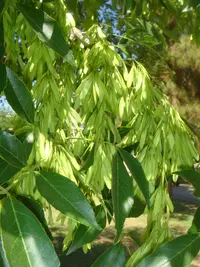
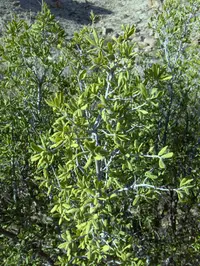
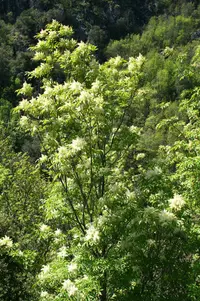
Velvet ash, Fraxinus velutina, is a medium-sized deciduous tree native to arid and semi-arid regions of the southwestern United States and northern Mexico. It typically grows with a rounded to spreading crown and develops textured gray bark with age.
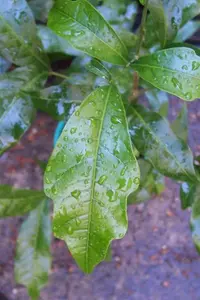
Leaves are divided into several leaflets with a soft, slightly fuzzy surface that gives the tree its common name. In suitable conditions it grows relatively fast and forms a sturdy shade canopy.
This species adapts to heat, sun, and seasonal drought once established, but prefers well-drained soil and occasional deep watering. Its toughness and low to moderate maintenance needs influence how to care for velvet ash in urban and landscape settings.

Care Difficulty
Moderate Care

Light Preference
Full Sun

Water Requirements
Moderate Water

Temperature Preference
Cold Hardy

Hardiness Zone
7–11

Soil Texture
Sandy, Loamy, Clay

Soil pH
Slightly acidic (6.5–7.0), Slightly alkaline (7.0–7.5)

Soil Drainage
Moist but well-drained

Fertilization
Minimal (feed rarely)
Scan your plant to receive care tips personalized for your specific plant
Available on iOS and Android
This sun-loving desert tree needs strong light to build a full, healthy canopy.
This drought-tolerant desert tree still benefits from structured deep watering during establishment.
This species is adapted to hot, arid climates but handles moderate winter cold when established.
Humidity is rarely a limiting factor for velvet ash, which tolerates a wide range of outdoor conditions.
Soil preparation should favor deep rooting, stable anchoring, and steady moisture without waterlogging.
This species is generally unsuitable for long-term container growing due to its vigorous root system and eventual size.
This drought-tolerant desert tree usually needs minimal feeding in the ground, but young or stressed Fraxinus velutina benefit from light fertilization.
Fraxinus velutina responds well to structured pruning that improves safety, airflow, and long-term form.
This species is usually grown in the ground, so care focuses more on transplanting young trees than on long-term container repotting.
Most Fraxinus velutina plants are produced from seed, which is straightforward but slow to reach tree size.
This tree is cold hardy in much of its range and usually needs little winter intervention when planted in the ground.

Plant Health Check
Not sure what's wrong with your plant? Check your plant's health inside the app.
This ash typically occurs along streams, rivers, and canyon bottoms in arid parts of the southwestern United States and northern Mexico, where its deep roots access groundwater that many neighboring desert plants cannot reach.
Mature trees tolerate very high summer temperatures typical of Sonoran and Mojave Desert margins, remaining functional and photosynthetically active when many temperate ash species experience heat stress.
In areas where its range overlaps with Fraxinus latifolia and related western ashes, this species can form natural hybrids, which complicates field identification and has been documented in several regional floras.

Velvet ash is one of the few North American ash species that has shown some individual trees with partial tolerance to emerald ash borer attack in field observations, making it of interest in research on Fraxinus velutina care and conservation breeding, although it is still considered vulnerable to this invasive insect overall.
This species is generally fast-growing, often adding 30–60 cm of height per year in favorable conditions. Growth slows in poor soil, limited rooting space, or drought, and speeds up with regular watering, mulch, and balanced fertilization.
Keep your plants happy and healthy with plant identification, disease detection, and easy care guidance.