Fairy Elephant's-feet Care (Frithia pulchra)

Fairy Elephant's-feet

About Fairy Elephant's-feet

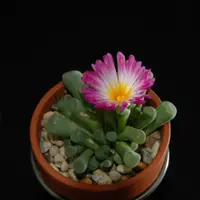
Frithia pulchra is a tiny, stemless succulent known for its tubular, translucent-tipped leaves that form tight clumps, often described as looking like small pebbles. It produces daisy-like pink to magenta flowers that open in bright light and give strong contrast against the grey-green foliage.

This species is native to rocky grasslands of South Africa, where it grows in shallow pockets of sandy, gritty soil and often hides between stones. It can be challenging for beginners because it is sensitive to overwatering and needs sharp drainage, bright light, and a careful dry rest in cooler seasons. Learning how to care for Frithia pulchra mainly involves understanding its strong preference for dryness around the roots.

Main Plant Requirements

Care Difficulty

Hard Care

Light Preference

Full Sun

Water Requirements

Low Water

Temperature Preference

Tropical / Frost Sensitive

Hardiness Zone

10–11

Soil Texture

Sandy, Rocky

Soil pH

Slightly acidic (6.5–7.0), Neutral (7.0)

Soil Drainage

Well-drained

Fertilization

Minimal (feed rarely)

Get Personalized Care Plan

Scan your plant to receive care tips personalized for your specific plant

Available on iOS and Android

How to Care for the Fairy Elephant's-feet

This compact succulent needs strong light but not intense, all-day sun.

  • Provide 4–6 hours of bright light daily, ideally with gentle morning sun and bright filtered light the rest of the day.
  • Tolerates light afternoon sun in cooler seasons, but in summer protect from harsh midday rays that can cause leaf scorch and bleaching.
  • In low light the leaf tips stretch and lose color; move Frithia pulchra gradually to a brighter position over 1–2 weeks.

Watering must mimic dry, rocky habitats with brief, thorough soakings and long dry intervals.

  • In active growth, water only when the top 3–5 cm of soil is completely dry, then water deeply so it drains quickly through the mix.
  • Use a very fast-draining, gritty soil; standing water, a sour smell, or soft, translucent leaves indicate overwatering and root rot risk.
  • In winter dormancy, reduce watering sharply, giving only a light drink when leaves start to wrinkle, to avoid stressing Frithia pulchra.

This species prefers cool to mild conditions with good air movement and protection from extremes.

  • Aim for 60–75°F (16–24°C) during active growth; slightly cooler nights down to 50°F (10°C) help maintain compact leaves.
  • Tolerates brief drops to about 35–40°F (2–4°C) if kept dry, but repeated frost or freezing conditions can damage the fleshy leaves.
  • In hot weather above 85°F (29°C), give bright shade and extra air flow, and avoid heat-reflecting surfaces that can overheat the roots.

This species prefers dry indoor air and does not need elevated humidity.

  • Target 30–50% air humidity, similar to most heated homes, to avoid excess moisture around the leaf windows.
  • Dry air is well tolerated; problems arise more from prolonged dampness than from low humidity.
  • Humidity stress shows as translucent, mushy leaves and algae on the substrate; increase air movement rather than misting or pebble trays.

Frithia pulchra needs a very fast-draining, mineral-rich substrate that dries quickly after watering.

  • Use a gritty, sandy mix with large pores, such as 60–80% mineral components and 20–40% organic matter.
  • Combine pumice or perlite with coarse sand and a small amount of low-peat succulent mix to improve drainage and aeration.
  • Aim for slightly acidic to neutral pH, around 6.0–7.0, which supports root function without nutrient lockout.
  • Avoid fine, compacting materials like heavy peat, clay, or unamended potting mix, which hold water and promote root rot.

This compact succulent is very suitable for container growing.

  • Choose a shallow, wide pot so the fibrous roots can spread horizontally while the substrate dries quickly between waterings.
  • Select unglazed terracotta over plastic to allow faster evaporation from the sides and reduce the risk of prolonged root wetness.
  • Ensure at least one large, unobstructed drainage hole and keep the pot on a slight slope or feet so water cannot pool underneath.

This species needs very light feeding to avoid damaging its fine roots and water-storing leaves.

  • During spring–summer growth, use a low-dose balanced cactus fertilizer or dilute 10–20-10 to 1⁄4–1⁄2 strength.
  • Apply no more than once every 4–6 weeks in well-watered, free-draining soil.
  • Skip feeding in autumn–winter dormancy to prevent weak, elongated growth.
  • Avoid compost-heavy or slow-release fertilizers, which can hold excess moisture around Frithia pulchra roots.

Pruning needs for Frithia pulchra are minimal and mainly hygienic.

  • Best timing is late winter to early spring, just before active growth.
  • Pinch or cut away dead, shriveled, or diseased leaves at the base using small, clean scissors or tweezers.
  • Remove any soft, rotting tissue promptly to limit fungal spread in dense clumps.
  • Light grooming preserves the plant’s natural dome shape without forcing new growth.

This species prefers infrequent repotting in shallow, very free-draining containers.

  • Repot only every 3–4 years or when roots circle the pot or growth slows despite correct care.
  • Plan repotting for late winter to early spring, before strong new growth begins.
  • Lift the plant gently, remove loose soil, and keep the compact root ball largely intact to limit stress.
  • Replant into a slightly wider, shallow pot with gritty cactus mix, then keep soil barely moist for 1–2 weeks.

Frithia pulchra is most often propagated from seed, with division used occasionally for established clumps.

  • Sow fresh seed in late winter–spring on the surface of a fine, gritty succulent mix.
  • Maintain bright, indirect light, 65–75°F, and lightly moist (not wet) substrate for germination.
  • Cover the pot with a clear lid or plastic to keep humidity stable, then ventilate gradually after sprouting.
  • For division, separate offsets only from healthy, dense clumps and allow any broken surfaces to dry before replanting.

Cool, dry winter conditions support healthy dormancy for this frost-sensitive succulent.

  • Keep temperatures around 40–50°F; brief light frost may be tolerated but sustained freezing harms tissues.
  • Move containers indoors or under cover in regions with hard frost or prolonged freezes.
  • Provide maximum light with almost dry soil, watering only enough to stop complete shriveling.
  • Avoid heavy mulching around pots, which can trap moisture and increase rot risk in winter.

Care Tips

Deep pot selection

Use a deeper pot than the roots strictly need so you can provide a tall, sharply draining mineral layer that keeps the taproot cool and dry even when the surface substrate is watered.

Top-dressing with grit

Apply a 1–2 cm layer of coarse quartz grit or small gravel on the surface to stabilize the leaves, reduce rot risk at the neck, and make it easier to water without splashing the foliage.

Summer stress management

During very hot spells, move containers to a bright position with light shade and increase airflow with an open window or fan to prevent heat stress and leaf translucency caused by tissue damage.

Targeted pest checks

Inspect the leaf fissures and the base of the plant with a hand lens every few weeks, as mealybugs and scale often hide between the swollen leaves where they are hard to see with the naked eye.

Controlled division timing

Only divide established clumps in late spring when active root growth begins, using a sterile knife and allowing wounds to dry several days before replanting, which greatly improves success when growing Frithia pulchra.

Common Pests and Diseases

Mealybugs

This pest appears as small white, cottony clusters wedged between the leaf windows and in stem crevices. These insects suck sap, causing shriveling and weak new growth.

Solution

Isolate the plant, then dab visible insects with cotton swabs dipped in 70% isopropyl alcohol and repeat weekly until gone. Improve air movement, avoid overfertilizing, and, if needed, use a light application of a systemic insecticide labeled for succulents, following local regulations and label directions.

Aphids

These insects may cluster on tender new leaves and flower stalks, leaving sticky honeydew and attracting sooty mold. Symptoms include distorted growth and a general decline in vigor.

Solution

Rinse the plant gently with a narrow stream of lukewarm water to dislodge colonies, protecting the gritty soil from washing out. For persistent infestations, apply insecticidal soap or a light horticultural oil spray, ensuring good coverage of all sides of the leaves and repeating every 7–10 days as needed.

Spider mites

This pest is most common in hot, very dry indoor air and can cause fine stippling, dull leaf windows, and occasionally thin webbing between leaves. Symptoms include slow decline and a dusty appearance on the plant surface.

Solution

Increase humidity slightly around the plant without wetting the leaves excessively, then gently rinse the foliage to remove mites. Use insecticidal soap or a light horticultural oil, applied in the cool part of the day and repeated several times, to break the life cycle and support stable Frithia pulchra care instructions.

Fungal leaf spots

This disease appears as small, sunken, translucent or brown patches on the leaf tips, often starting where water sits on the translucent windows. Symptoms include localized tissue collapse that can spread if conditions stay humid and cool.

Solution

Remove and discard the worst affected leaves and keep the plant in bright, dry, moving air. Water at the soil level in the morning, allow the mix to dry well between waterings, and, if spreading continues, apply a mild copper-based or sulfur-based fungicide suitable for succulents, following label guidance carefully.

Basal stem and root rot

This disease develops in poorly drained, constantly moist soil and causes the base of the plant to become mushy, discolored, and easily detached from the roots. Symptoms include sudden collapse of leaf clusters despite apparently adequate light.

Solution

Discard severely affected plants, since advanced rot is rarely reversible. For early cases, unpot, cut away all soft brown tissue, dust healthy firm parts with a dry fungicidal powder, then replant only sound segments in a very fast-draining, mostly mineral mix and water sparingly until clear new growth appears.

Interesting Facts

Windowed leaf tips

The leaf tips contain translucent tissue called epidermal windows that channel light deep into the buried parts of the leaves, an adaptation to intense sun in its native South African grasslands.

Summer dormancy strategy

In habitat the plant often retreats deeper into the soil and slows growth during the hottest, driest summer period, then resumes active growth with cooler temperatures and seasonal rain.

Very restricted habitat

This species occurs naturally in a small area of South Africa’s Highveld region, growing in shallow, sandy soils trapped in rock pockets among grassland vegetation.

Botan icon

Did you know?

Frithia pulchra was long considered rare in cultivation and in the wild until systematic field surveys showed that it can form dense, almost turf-like colonies hidden at soil level, making populations easy to overlook.

FAQs about Fairy Elephant's-feet

Lack of flowers usually comes from insufficient light, overly rich or damp soil, or warm, dry winters. This species needs a cool, bright rest period and a marked light increase in spring to set flower buds reliably.

Grow Healthy Plants with Botan Care

Keep your plants happy and healthy with plant identification, disease detection, and easy care guidance.

Botan plant care app — identify plants on mobile

Explore More Plants