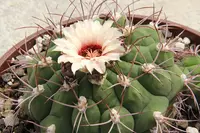
Riverina pear Care (Opuntia elata)

Also known as: Orange Tuna
Riverina pear

About Riverina pear

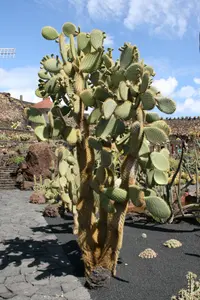
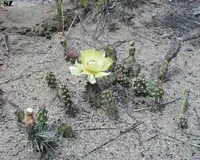
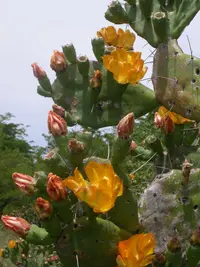
Riverina pear, Opuntia elata, is a shrubby, segmented cactus with flat, rounded pads and sharp spines. It typically forms dense clumps and may produce showy flowers followed by small fruits. Native to inland regions of Australia, it is adapted to hot, dry conditions and poor, stony soils. This background makes it tough and relatively forgiving when established. Growth is usually upright to spreading, with pads stacking over time to create a sculptural outline. The plant prefers strong light, low to moderate moisture, and very free-draining soil. These traits simplify how to care for Riverina pear, provided excess water and deep shade are avoided.

Main Plant Requirements

Care Difficulty

Easy Care

Light Preference

Full Sun

Water Requirements

Low Water

Temperature Preference

Warm Climate

Hardiness Zone

9–11

Soil Texture

Sandy, Loamy, Rocky

Soil pH

Slightly acidic (6.5–7.0), Slightly alkaline (7.0–7.5)

Soil Drainage

Well-drained

Fertilization

Minimal (feed rarely)

Get Personalized Care Plan

Scan your plant to receive care tips personalized for your specific plant

Available on iOS and Android

How to Care for the Riverina pear

Opuntia elata needs strong light to develop firm pads and compact growth.

  • Provide 6–8 hours of direct sun daily; in hot inland areas, give morning sun with light afternoon shade to prevent pad scorching.
  • Young or recently transplanted Riverina pear plants benefit from 1–2 weeks of filtered light before moving into full sun.
  • Watch for pale, elongated pads as a sign of insufficient light and brown, crispy patches as a sign of intense, unacclimated sun exposure.

This cactus is highly drought tolerant and prefers infrequent, deep watering.

  • Outdoors in well-drained soil, water only when the top 5–8 cm are completely dry; in hot, dry spells, this may be every 2–4 weeks.
  • During cool fall and winter, reduce watering sharply, sometimes to once a month or less, to lower rot risk and support a natural rest period.
  • Wrinkling or slightly limp pads suggests underwatering, while yellowing pads, black spots, or a sour smell in the soil indicate overwatering in Opuntia elata.

This species thrives in warm, arid to semi-arid climates with moderate cold tolerance.

  • Aim for active growth temperatures of 70–90°F (21–32°C), with plenty of sun and good air movement around the pads.
  • Mature plants usually tolerate brief drops to about 20–25°F (-6 to -4°C) if soil is dry, but repeated hard frosts can scar or kill young pads.
  • In heat waves above 100°F (38°C), the plant generally copes well if soil drains freely, but light afternoon shade reduces stress and sunscald risk.

Opuntia elata tolerates a wide humidity range and rarely needs special humidity management indoors or outdoors.

Opuntia elata prefers very fast-draining, mineral, low-organic soil that mimics arid, rocky habitats.

  • Use a cactus mix amended with 30–50% extra coarse sand, fine gravel, or pumice to sharpen drainage.
  • Aim for slightly acidic to slightly alkaline pH around 6.0–7.5, avoiding strongly acidic peat-based mixes.
  • Ensure the mix is loose and gritty so water drains through in seconds, not minutes, after watering.
  • Avoid dense clay, water-retentive potting soil, or heavy compost that stays wet for longer than 1–2 days.

This cactus grows well in containers when the pot and substrate prevent waterlogging and instability.

  • Choose a wide, shallow pot that allows pads to spread without becoming top-heavy, keeping the plant base centered for balance.
  • Use a heavy material, such as terracotta or ceramic, to counteract the sideways pull of spreading pads in windy spots.
  • Raise the pot slightly on feet or blocks so drainage holes stay clear and excess water can escape rapidly after rain or watering.

Opuntia elata needs only light feeding in containers and almost none in poor, well-drained native soils, similar to Riverina pear.

  • Use a balanced cactus fertilizer or low-nitrogen liquid feed at 1⁄2 strength during active growth in spring–summer.
  • Apply every 4–6 weeks for potted plants; in-ground plants often manage with 1 light feeding per year.
  • Avoid rich compost or frequent slow-release pellets, which cause weak, overly lush pads.
  • Stop feeding in fall–winter to allow firm, cold-hardy tissue to develop.

Pruning Opuntia elata is mainly for safety, space management, and plant health.

  • Carry out pruning in late winter or early spring before strong new growth starts.
  • Remove dead, diseased, storm-damaged, or rubbing pads, plus any pads crowding paths or other plants.
  • Use long-handled loppers or a sharp knife, plus thick gloves and eye protection to handle spines and glochids.
  • Thoughtful thinning improves light penetration, air flow, and overall shape without excessively reducing flowering.

Transplanting Opuntia elata is infrequent but useful when plants outgrow a site or container.

  • Look for roots circling the pot drainage holes, tipping pots, or stalled growth as signs it needs a move.
  • Plan transplanting for late spring to early summer once soil is warm and frost risk has passed.
  • Expect to move container plants every 3–5 years into only slightly larger, very free-draining cactus mix.
  • Minimize root stress by keeping the root ball largely intact, handling pads with padded tongs, and watering lightly after replanting.

Opuntia elata is commonly propagated from pad cuttings, with seeds used mainly for breeding or wild restoration.

  • Take healthy, mature pads in late spring–summer and let cut surfaces dry and callus for 5–10 days.
  • Insert callused pads upright into gritty, barely moist cactus mix, burying the base 2–3 cm.
  • Provide bright, indirect light, warm temperatures around 70–80°F, and minimal water until firm rooting occurs.
  • For seed, use fresh seed, provide bottom warmth, and keep the surface just slightly moist until germination.

Opuntia elata is fairly cold tolerant in dry conditions but benefits from some winter management in cooler climates.

  • In-ground plants in mild regions tolerate light frost if soil drains freely and stays relatively dry.
  • In colder areas, mulch the root zone with gravel or coarse sand rather than water-holding organic mulches.
  • Keep pads as dry as possible in winter rain by using sloped beds or simple rain covers.
  • Move container plants indoors to a bright, cool, frost-free spot and water sparingly.

Care Tips

Stabilize Heavy Pads

As pads enlarge and become top‑heavy, anchor the base with a ring of coarse gravel or small rocks to reduce wobbling and prevent wind or accidental knocks from snapping joints.

Encourage Compact Form

Rotate the container by 90° every 2–3 weeks during active growth so new pads develop evenly around the plant, producing a stable, compact clump rather than a lopsided, leaning specimen.

Safe Pad Handling

When removing or repositioning pads, use thick, rigid tongs and folded newspaper instead of bare hands or thin gloves so you avoid glochids while keeping pressure off the pad joints.

Targeted Pad Removal

If a pad is shading the rest of the plant or growing inward, snap it off cleanly at the joint in late spring to improve airflow and light penetration, which helps lower the risk of fungal spots when growing Riverina pear.

Winter Wet Protection

In regions with cool, wet winters, tilt potted plants slightly or raise one side of the container so excess rainwater drains quickly away from the roots and pad joints, reducing the chance of rot at low temperatures.

Common Pests and Diseases

Cochineal scale

This pest appears as white, cottony clusters on pads and along areoles, often exuding deep red sap when crushed. Symptoms include weakened pads, yellowing, and slow growth as the insects feed on plant juices.

Solution

Physically remove clusters with a strong jet of water or by wiping pads with cotton dipped in 70% isopropyl alcohol, taking care not to damage the skin. For heavier infestations, repeat cleaning every 5–7 days and, if outdoors, introduce or conserve natural predators such as lady beetles; in severe cases use a horticultural oil labeled for cacti, applied in the cool part of the day.

Cactus mealybugs

This pest forms small white, fluffy masses in pad joints, around areoles, and at the base of spines. Symptoms include sticky honeydew, sooty mold growth, and general decline of the plant over time.

Solution

Isolate the plant, then dab visible insects with 70% isopropyl alcohol or wash them off with lukewarm water and a few drops of mild soap, keeping soap off the roots. Repeat inspections weekly and, if needed, use a low-toxicity systemic insecticide labeled for ornamental cacti to control hidden populations in crevices.

Opuntia stem spot

This disease causes small, sunken, brown to black lesions on pads that may expand and merge, sometimes with a yellow halo. Over time, affected tissue may crack, dry, or drop out, leaving corky scars.

Solution

Prune out and discard heavily spotted pads, cutting back into healthy tissue with a sterile blade and allowing cuts to dry in a warm, airy place. Improve sun exposure, reduce overhead watering, and ensure good airflow around the plant; if spots continue to spread in humid conditions, apply a copper-based fungicide labeled for cacti according to package directions.

Bacterial soft rot

This disease produces wet, dark, foul-smelling areas on pads that quickly collapse and turn mushy. Symptoms include rapid tissue breakdown, sagging pads, and a sour or rotten odor around affected parts.

Solution

Remove and discard all affected pads immediately, cutting well into firm, healthy tissue and disinfecting tools between cuts. After removal, keep the plant in a dry, sunny, well-ventilated position, avoid water on the pads, and adjust watering so the soil dries completely between waterings to prevent recurrence.

Cactoblastis cactus moth

This pest is the larval stage of a moth whose caterpillars tunnel inside pads, leaving entry holes, frass, and drooping, hollow segments. Symptoms include internal decay of pads and rapid structural weakening of the plant.

Solution

Inspect pads regularly in regions where this moth occurs and promptly remove and destroy any pads showing entry holes or internal tunneling. Keep nearby opuntia species well spaced for monitoring, and in high-risk outdoor areas consult local extension services about trapping and regionally approved biological or regulatory controls for this species.

Interesting Facts

Riverina provenance native

This species occurs naturally in inland southeastern Australia, especially around the Riverina region of New South Wales and Victoria, where it grows in open woodlands and on rocky rises.

Segment shape and armature

Its cladodes (flattened stem segments) are typically narrow-elliptic with a slightly wavy margin and carry both obvious spines and very fine glochids, distinguishing it in the field from broader, more paddle-shaped local Opuntia species.

Hybridisation tendencies

Field studies in Australia note that it can form natural hybrids with closely related Opuntia taxa, which contributes to local morphological variation and sometimes complicates identification.

FAQs about Riverina pear

The pads and fruits are considered edible once spines and glochids are carefully removed. Only use parts from plants known to be free of pesticides. Introduce small amounts first, as some people experience mild digestive discomfort.

Grow Healthy Plants with Botan Care

Keep your plants happy and healthy with plant identification, disease detection, and easy care guidance.

Botan plant care app — identify plants on mobile

Explore More Plants