Bulb Marking Stakes
Place discreet stakes or labels exactly where bulbs are planted so you can avoid disturbing them during summer border work and replant companion perennials without damaging dormant bulbs.

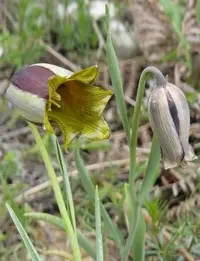
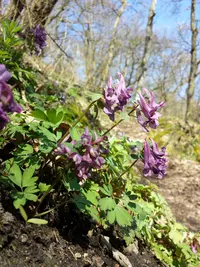
Pointed-petal fritillary, Fritillaria acmopetala, is a small spring-flowering bulb from the eastern Mediterranean, especially Turkey and Cyprus. It belongs to the same family as lilies but stays compact and low-key in the garden. Slender stems carry narrow leaves and nodding, bell-shaped flowers with pointed tips, usually greenish with maroon or purple markings. Clumps slowly expand over time but remain delicate in appearance. This species prefers well-drained soil and benefits from a dry rest in summer, which reflects its natural rocky hillside habitats. It suits gardeners who can provide stable conditions rather than frequent disturbance and is a good choice for those who want to learn how to care for Pointed-petal Fritillary in temperate climates.

Care Difficulty
Moderate Care

Light Preference
Partial Sun

Water Requirements
Moderate Water

Temperature Preference
Cold Hardy

Hardiness Zone
5–8

Soil Texture
Sandy, Loamy, Rocky

Soil pH
Slightly acidic (6.5–7.0), Neutral (7.0)

Soil Drainage
Well-drained

Fertilization
Minimal (feed rarely)
Scan your plant to receive care tips personalized for your specific plant
Available on iOS and Android
This bulb prefers bright conditions with some protection from harsh midday sun.
This species prefers moderate moisture in spring but dislikes prolonged wet soil.
This bulb is adapted to cool, temperate climates with a distinct winter chill and mild summers.
This bulb tolerates a wide humidity range and rarely needs special humidity management outdoors.
Fritillaria acmopetala prefers a light, well-aerated mineral soil that drains quickly yet does not stay bone-dry for long.
This species adapts well to container growing when bulbs are planted in deep, free-draining pots.
This bulb grows from stored reserves and needs only light feeding in reasonably fertile soil.
Fritillaria acmopetala needs minimal pruning, focused mainly on post-flowering clean-up.
This species is usually grown in the ground, with transplanting or repotting done infrequently to avoid disturbing the bulbs.
Propagation of this fritillary is possible but slow, most often done by separating bulbs or growing from seed.
This bulb is generally cold hardy in much of the US and needs only simple winter care in the ground.

Plant Health Check
Not sure what's wrong with your plant? Check your plant's health inside the app.
The nodding, bell-shaped flowers have olive-green outer tepals and rich purple-brown inner markings, creating a checkered or tessellated look that is characteristic of this species. This contrasting coloration is thought to help guide pollinating insects toward the nectar source.
This species occurs naturally from southern Turkey and Cyprus to parts of Syria and Lebanon, where it grows in open woodlands, rocky slopes, and light scrub. It is adapted to regions with cool, moist winters and hot, dry summers, typical of a Mediterranean-type climate.
Like many fritillaries, it survives summer dormancy as a scaled bulb that sheds its old roots each year. New roots form in autumn, allowing the plant to exploit winter and early spring moisture before going dormant again in late spring.

Historical records show that this species was introduced into European cultivation by at least the mid-19th century and has since become a valued bulb among specialist gardeners, particularly in alpine and rock garden collections due to its subtle, wildflower appearance.
All parts of this bulb, especially the bulb itself, contain toxic alkaloids. Ingesting them may cause vomiting, diarrhea, drooling, abdominal pain, and lethargy in pets and humans. Keep bulbs away from children, dogs, and cats.
Keep your plants happy and healthy with plant identification, disease detection, and easy care guidance.