Hairy Scalewort Care (Frullania bolanderi)

Hairy Scalewort

About Hairy Scalewort

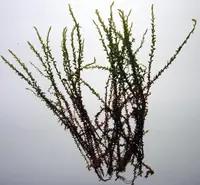
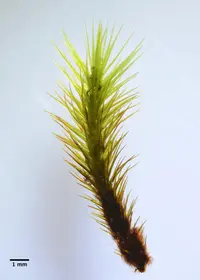
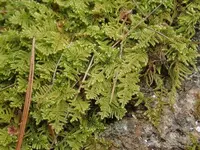
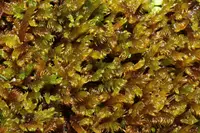
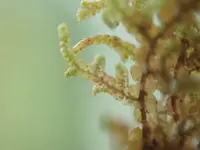
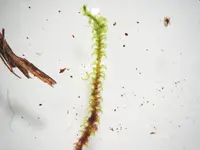
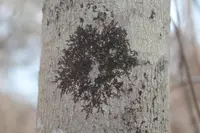
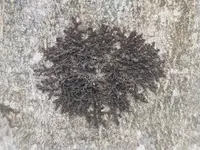
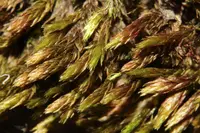
Hairy scalewort (Frullania bolanderi) is a small epiphytic liverwort, a non-vascular plant that often forms thin, overlapping mats on bark or rock. Its shoots are tightly pressed to the surface, creating a fine, scaled texture that can appear reddish, brownish, or deep green depending on moisture and light.

This species is native to western North America, especially in humid forests where air moisture stays relatively high. It prefers shaded to dappled light, constant ambient humidity, and stable, cool to mild temperatures.

Because it is tiny and sensitive to drying out, Frullania bolanderi is more suited to terrariums or specialized moss setups than open pots, and it can be challenging to care for Hairy Scalewort indoors.

Main Plant Requirements

Care Difficulty

Hard Care

Light Preference

Partial Shade

Water Requirements

Keep Soil Moist

Temperature Preference

Cool Climate

Hardiness Zone

Unknown

Soil Texture

Rocky, Organic-rich

Soil pH

Acidic (5.5–6.5)

Soil Drainage

Moist but well-drained

Fertilization

Minimal (feed rarely)

Get Personalized Care Plan

Scan your plant to receive care tips personalized for your specific plant

Available on iOS and Android

How to Care for the Hairy Scalewort

Frullania bolanderi thrives in cool, shaded habitats with soft, indirect light rather than direct sun.

  • Provide dappled or filtered light, such as on the north side of trees or rocks, with no more than 1–2 hours of weak morning sun and no direct midday or afternoon sun.
  • In bright, open sites, protect Hairy Scalewort with overhanging branches, shade cloth, or rock ledges to prevent desiccation, bleaching, and tissue death from intense sun.
  • In summer, increase shade as the sun strengthens; in low-light seasons, ensure some open sky exposure so fronds stay compact and do not thin or brown from light starvation.

This liverwort prefers constantly moist conditions around the rhizoids but suffers if submerged or allowed to dry out completely.

  • Use a sharply draining, fine-textured substrate or natural rock/wood surface that stays evenly damp; avoid standing water or sealed surfaces that stay soggy for more than 24 hours.
  • Water lightly whenever the surface just begins to lose its sheen of moisture, before it feels dry to the touch, increasing checks in hot, windy weather and reducing in cool, humid periods.
  • Signs of underwatering include crisp, curling lobes and dull color; signs of overwatering or poor drainage include soft, translucent patches and a slimy feel on the mats of Frullania bolanderi.

This species favors mild, oceanic or montane climates and is sensitive to both hard freezes and intense heat.

  • Aim for an active growth range around 45–70°F (7–21°C), where tissues stay turgid and photosynthesis is efficient without overheating or rapid desiccation.
  • Short dips to about 25–30°F (-4 to -1°C) may be tolerated if the substrate stays moist and thawing is gradual, but repeated or deeper freezes can kill exposed mats.
  • In hot spells above 80°F (27°C), increase shade, airflow, and surface moisture, since high temperatures combined with low humidity quickly dry and damage Frullania bolanderi.

This epiphytic liverwort needs high, stable humidity to persist in cultivation.

  • Aim for 70–90% humidity, mimicking its natural mossy tree bark habitats.
  • Tolerates only brief dips into 50–60% before fronds crisp, curl, and darken at the edges.
  • Increase humidity with a closed terrarium, covered tray with wet sphagnum, or cool misting near but not directly on the plant.
  • Hairy Scalewort under chronic dry air shows slow dieback from the tips and brittle, flaking mats.

Frullania bolanderi grows best on a moist, airy, organic surface rather than dense mineral soil.

  • Use a loose mix of fine orchid bark, milled sphagnum, and a small amount of leaf mold or compost to mimic decaying bark.
  • Keep structure fibrous and open so water drains quickly yet the surface stays evenly moist, never waterlogged.
  • Target slightly acidic conditions around pH 5.0–6.5, which favor stable growth and discourage lime buildup.
  • Avoid compact peat alone, heavy potting mixes, or clay-rich blends that stay saturated, reduce aeration, and promote rot.

This species can be grown in shallow containers or terraria if humidity and surface moisture are carefully managed.

  • Choose a wide, shallow container so the plant can spread as a thin mat over bark or sphagnum rather than build depth.
  • Use a container material that slows evaporation, such as glazed ceramic or glass, to help maintain a consistently moist microclimate.
  • Position the container so excess water can drain or be poured off quickly, preventing stagnant water at the substrate base.

This small epiphytic liverwort, often called Hairy Scalewort, usually grows well without added fertilizer if placed on nutrient-poor bark in clean, moist conditions.

Frullania bolanderi benefits from light, occasional pruning to keep mats tidy and healthy in cultivation.

  • Trim only in active growth, usually spring to early summer, so plants recover quickly.
  • Pinch or snip away dead, browned, or detached fronds to limit decay and algae growth.
  • Thin crowded patches by removing small tufts, which improves air flow and light penetration.
  • Use fine scissors or tweezers and avoid tearing delicate tissues to reduce stress and infection risk.

Transplanting Frullania bolanderi is mainly about relocating small colonies on bark or rock rather than traditional pot repotting.

  • Transplant when growth is firm and green, but mats detach easily from the old substrate, often in cool, moist seasons.
  • Move colonies only every few years, when the substrate decomposes, dries too fast, or becomes overgrown by algae or mosses.
  • Gently lift thin mats with a scalpel or blunt knife, keeping as much of the underlying rhizoids as possible.
  • Press the colony onto fresh, textured bark or rock and keep evenly humid for several weeks to reduce shock and encourage reattachment.

Propagation of Frullania bolanderi is typically done vegetatively, using small fragments rather than spores in home or educational settings.

  • Best season is cool, moist weather in spring or autumn, when plants are actively growing but not heat stressed.
  • Peel or cut tiny tufts from healthy, green mats, avoiding browned or contaminated sections.
  • Press fragments onto rough bark, rock, or mesh, then maintain constant high humidity and gentle, indirect light.
  • Minimize handling and air movement during establishment, as desiccation quickly kills unattached pieces.

Frullania bolanderi is generally cold hardy in its native range and usually needs minimal special winter care outdoors.

  • In regions with mild, wet winters, normal rainfall and ambient humidity are usually sufficient for survival.
  • On outdoor mounts, avoid strong winter sun and drying winds that can desiccate exposed colonies.
  • Container displays can be overwintered in a cool, frost-free, bright shade location to prevent freeze-thaw damage.

Care Tips

Substrate anchoring

Attach colonies to rough, inert surfaces like unglazed rock, hardwood bark, or cork using fine fishing line or soft mesh, then remove the ties once rhizoids have anchored to stabilize the mat and reduce desiccation stress.

Fine mist management

Use a fine mister or fogger rather than a coarse spray so the plant receives surface moisture without being physically disturbed or blown off its substrate.

Airflow balancing

Provide gentle, indirect air movement using a small fan on a low setting aimed away from the plant to prevent stagnant air and fungal growth while avoiding direct drafts that dry the tissues too quickly.

Seasonal moisture shift

In cooler months slightly extend the interval between misting sessions while keeping humidity high, because reduced evaporation means the plant stays wet longer and becomes more susceptible to rot if misted too frequently.

Fragment propagation

When handling or trimming, place small healthy fragments onto new rough bark or rock, then keep them in consistently humid, shaded conditions for several weeks to allow new rhizoids to attach and slowly expand the colony, which is a practical method for growing Hairy Scalewort.

Common Pests and Diseases

Desiccation stress

Symptoms include browning, curling, and fragmentation of the tiny leafy shoots, often starting at exposed edges or upper surfaces of the substrate. This condition develops when the liverwort dries out faster than it can rehydrate, especially in exposed rock or bark habitats.

Solution

Maintain consistently cool, shaded, humid conditions and avoid direct sun or strong drying wind; in cultivation, provide 70–90% humidity and gentle, even moisture without strong water jets. If colonies have partially dried, rehydrate slowly by misting with soft, chlorine‑free water and reduce light and air movement until new, firm growth appears.

Shading from filamentous algae

This disease-like overgrowth appears as a green, slimy or hairlike layer that settles over the thallus and blocks light, leading to thinning and dieback of the liverwort beneath. These algae proliferate in slow, nutrient‑enriched water films over rock or bark surfaces.

Solution

Reduce dissolved nutrients by avoiding fertilizer runoff, use only very dilute, soft water, and increase gentle water movement or airflow so surfaces do not stay wet and stagnant. In small cultivated colonies, manually tease off algae with fine forceps or a soft brush and lower light intensity slightly while the Frullania tissue recovers.

Fungal blight

This disease causes patches of water‑soaked, then dark brown to black, mushy tissue, sometimes with a fine white or gray fungal growth under persistently wet, stagnant conditions. Affected mats lose their firm, crisp texture and may detach from the substrate.

Solution

Improve air circulation and ensure excess water drains so the colony is moist but not waterlogged, and remove heavily affected patches with sterile tweezers to limit spread. In specialized collections, a very mild fungicide labeled safe for bryophytes may be used as a spot treatment, but cultural correction (less stagnation, more airflow, lower nutrient load) is the primary management.

Mite feeding damage

This pest causes fine speckling, bleaching, or patchy thinning of the leaf lobes and underleaves, often in drier, more exposed microhabitats or in indoor culture with low humidity. These pests are tiny and usually only visible as moving specks under magnification.

Solution

Increase ambient humidity and reduce heat and dryness, since moist, cool conditions discourage many problematic mites while favoring the liverwort. For localized infestations, gently rinse the colony with a soft stream of distilled or rainwater and, in cultivation, use a targeted miticide or insecticidal soap applied as a brief dip or careful spray, then thoroughly rinse with clean water afterward.

Bryophyte‑feeding springtails

These insects are small, pale gray or white, and jump when disturbed; in dense, enclosed cultures they can reach high numbers and graze tender growing points, causing uneven thinning or ragged margins on the mat. Damage is usually worst in very wet, organic substrates with decaying debris.

Solution

Lower organic matter and debris by gently lifting the colony and refreshing the substrate with clean, mineral‑based material, and avoid overfeeding or nutrient buildup. Allow the surface to be just moist rather than saturated, and if numbers are very high, use repeated gentle rinses in clean water to physically remove springtails while keeping the colony shaded and cool during recovery.

Interesting Facts

Specialist epiphyte on oaks

This liverwort occurs most often on the bark of living oak trees in western North America, especially in humid coastal and montane forests, where it forms small reddish-brown mats on twigs and trunks.

Distinctive helmet lobes

Under a hand lens, its leaves show a two-lobed structure, with a larger lobe and a small helmet-shaped lobe that can hold tiny amounts of water, a hallmark of many Frullania species but expressed in a particularly compact form in this species.

Indicator of moist air

Populations of this species are typically found in sites with consistently high humidity and relatively clean air, so its presence can help field botanists identify stable, moist microclimates along the Pacific coast and in nearby mountains.

FAQs about Hairy Scalewort

This liverwort performs best outdoors or in very humid terraria, where air stays cool and moisture is constant. Typical home interiors are too dry. For Hairy Scalewort indoor care, an enclosed glass container with high humidity works better than open pots.

Grow Healthy Plants with Botan Care

Keep your plants happy and healthy with plant identification, disease detection, and easy care guidance.

Botan plant care app — identify plants on mobile

Explore More Plants