

Secure To Substrate
Press the moss gently onto rock, wood, or mesh and pin it with fine plastic mesh or fishing line for 2–4 weeks so rhizoids can anchor before the support is removed.

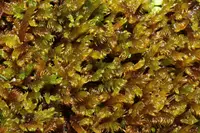
Claw-leaved hook-moss (Palustriella falcata) is a creeping aquatic moss commonly found along cool streams, springs, and wet rocks. It forms dense, bright to yellow-green mats with slightly curved, claw-like leaves that give the plant its name.
This moss prefers constantly moist, clean water and stable, cool conditions, which makes it popular in specialized aquaria, paludariums, and cold-water displays. It anchors to stones, wood, or other hard surfaces and slowly spreads to create a thick, textured carpet.
Because it is adapted to flowing, mineral-rich water and steady moisture, it can be more demanding than common indoor mosses. Understanding how to care for Claw-leaved Hook-moss helps prevent drying, overheating, and algae overgrowth.

Care Difficulty
Moderate Care

Light Preference
Partial Shade

Water Requirements
Aquatic

Temperature Preference
Cold Hardy

Hardiness Zone
4–9

Soil Texture
Silty, Peaty, Organic-rich

Soil pH
Strongly acidic (4.5–5.5), Acidic (5.5–6.5)

Soil Drainage
Waterlogged tolerant

Fertilization
Minimal (feed rarely)
Scan your plant to receive care tips personalized for your specific plant
Available on iOS and Android
Palustriella falcata prefers cool, consistently moist sites with soft, indirect light.
This moss thrives in constantly moist to wet conditions and declines quickly if allowed to dry out.
This species is cold-hardy but grows best in cool to mild temperatures with stable moisture.
This moss needs consistently high humidity similar to stream edges or seepage areas.
This moss prefers saturated, mineral-rich, fine-textured substrates rather than typical potting soil.
This species can be grown in shallow containers or trays if moisture and stability are well managed.
Palustriella falcata, or Claw-leaved Hook-moss, usually needs little added nutrition when grown on natural, mineral-rich substrates.
Palustriella falcata benefits from light grooming rather than heavy structural pruning.
Transplanting Palustriella falcata is occasional and mainly needed when growth becomes unstable, shaded out, or substrate conditions deteriorate.
Palustriella falcata is commonly propagated by simple division rather than from spores in home culture.
Palustriella falcata is naturally cold hardy and often tolerates freezing conditions with minimal intervention outdoors.

Plant Health Check
Not sure what's wrong with your plant? Check your plant's health inside the app.
This moss typically forms dense mats along base-rich, fast-flowing streams and springs, especially where water is constantly moving but not violently turbulent.
Its presence often indicates calcareous conditions, meaning the water and substrate contain dissolved calcium carbonate from limestone or similar rocks.
The small leaves curve to one side (falcate), giving shoots a distinctly hooked or sickle-like appearance that helps distinguish it from many other aquatic or semi-aquatic mosses.

In some European stream and spring systems, this species can play a key role in stabilizing fine sediments, creating microhabitats that shelter aquatic invertebrates and juvenile stages of certain stream organisms.
This moss forms dense, creeping mats along wet substrates but is not considered aggressively spreading. Growth is relatively slow and local. It can expand in favorable seepage areas, yet remains easy to manage by gently lifting or trimming patches.
Keep your plants happy and healthy with plant identification, disease detection, and easy care guidance.

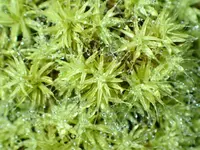
pseudocrossidium moss
Pseudocrossidium crinitum
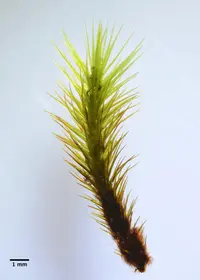
Menzies' anacolia moss
Anacolia menziesii
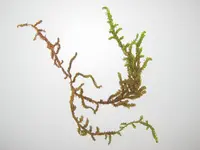
scorpidium moss
Scorpidium scorpioides
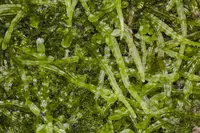
Veilwort
Pallavicinia lyellii
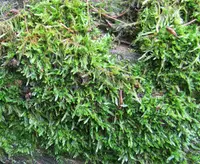
callicladium moss
Callicladium haldanianum
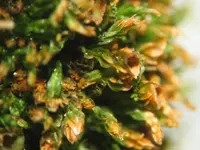
tetraphis moss
Tetraphis pellucida
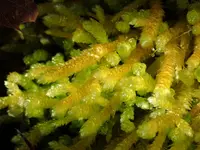
bryoandersonia moss
Bryoandersonia illecebra
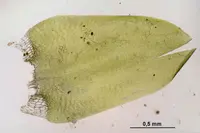
calliergonella moss
Calliergonella cuspidata