fringed twinevine Care (Funastrum cynanchoides)

Also known as: climbing milkweed
fringed twinevine

About fringed twinevine

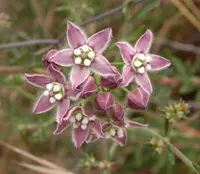
Fringed twinevine (Funastrum cynanchoides) is a perennial, twining vine in the dogbane family, related to milkweeds. It climbs over shrubs, fences, or other support using slender, flexible stems.

The plant has narrow, opposite leaves and clusters of small, pale to pinkish flowers with a delicate fringed appearance, followed by long, pod-like fruits. It is native to arid and semi-arid regions of the southwestern United States and northern Mexico, where it often grows in open, sunny sites.

This species tolerates heat, poor soils, and drought once established, which generally makes it low-maintenance in suitable climates. Those learning how to care for fringed twinevine should focus on strong light, well-drained soil, and avoiding overwatering.

Main Plant Requirements

Care Difficulty

Easy Care

Light Preference

Full Sun

Water Requirements

Low Water

Temperature Preference

Warm Climate

Hardiness Zone

8–11

Soil Texture

Sandy, Loamy, Rocky

Soil pH

Slightly acidic (6.5–7.0), Neutral (7.0)

Soil Drainage

Well-drained

Fertilization

Minimal (feed rarely)

Get Personalized Care Plan

Scan your plant to receive care tips personalized for your specific plant

Available on iOS and Android

How to Care for the fringed twinevine

This sun-loving vine thrives in bright, open sites typical of arid and semi-arid landscapes.

  • Provide 6–10 hours of direct sun daily; full sun is ideal, but light afternoon shade in very hot regions reduces leaf scorch.
  • Fringed twinevine tolerates light partial shade (3–4 hours sun), yet flowering and vigor decrease as shade increases.
  • In summer, monitor for pale, sun-bleached foliage as a sign of excessive heat exposure; in cooler seasons ensure it is not shaded by taller plants or structures.

This drought-adapted species prefers infrequent, deep watering rather than frequent light applications.

  • Allow soil to dry thoroughly between waterings; in typical sandy or rocky ground, wait until the top 5–8 cm are dry before watering again.
  • During hot, dry periods, water deeply when stems start to look slightly limp; in cooler or rainy seasons, natural precipitation is often sufficient for Funastrum cynanchoides.
  • Watch for yellowing, soft stems or a sour soil smell as signs of overwatering, and for crisp, brown leaf edges as signs of prolonged drought stress.

This vine is adapted to warm, arid climates with hot summers and mild winters.

  • Active growth occurs best around 75–95°F (24–35°C), with strong heat tolerance up to about 105°F (40°C) if soil is not waterlogged.
  • It can survive brief drops near 25–28°F (-4 to -2°C), but repeated hard freezes damage young stems and reduce flowering the following season.
  • In colder regions, treat it as a die-back perennial, allowing top growth to freeze while roots are insulated with mulch until spring temperatures rise above 50°F (10°C).

This species tolerates dry air well and rarely needs humidity adjustment.

Funastrum cynanchoides prefers lean, fast-draining, mineral-rich substrates that mimic desert or roadside conditions.

  • Use sandy or gravelly soil with low organic matter, such as a cactus mix blended 1:1 with coarse sand or small grit.
  • Ensure rapid drainage by avoiding peat-heavy mixes that stay wet and instead adding 30–50% inorganic material like pumice or perlite.
  • Target slightly alkaline to neutral pH around 7.0–8.0, which commonly occurs in calcareous or limestone-derived soils.
  • Avoid compacted, clay-heavy, or waterlogged sites, since poor aeration around the roots promotes rot and weak growth.

This vine can grow in containers if the setup supports its deep, scrambling root and climbing habit.

  • Choose a tall, heavy pot that resists tipping when the vine climbs or catches wind on a balcony or patio.
  • Provide a sturdy trellis or rail attachment anchored in the container so stems do not pull the root ball loose.
  • Use a pot with wide drainage openings and a thin gravel layer above them to prevent mix loss while keeping outflow unrestricted.

This drought-adapted native vine needs little feeding, but light fertilization can support growth in poor soils.

  • Use a balanced, low-strength fertilizer (for example 10-10-10) at 1/2–1/4 label rate during active growth in spring–summer.
  • Apply once every 6–8 weeks if plants show pale foliage or weak growth; skip feeding on vigorous vines.
  • In very lean soils, a thin layer of compost around the root zone can replace synthetic products.
  • Stop fertilizing fringed twinevine in late summer so growth hardens before cool weather.

Pruning Funastrum cynanchoides is mainly used to manage size and remove damaged growth.

  • Carry out main pruning in late winter or very early spring before strong new growth begins.
  • Use clean, sharp hand pruners to remove dead, diseased, or storm-damaged stems at their base.
  • Thin crowded or excessively long vines to improve air flow and keep the plant within its support area.
  • Light tip trimming after flowering can refine shape without greatly reducing nectar-rich blooms.

This vine is most often grown in the ground, so focus on careful transplanting rather than frequent repotting.

  • Transplant in late winter or early spring when temperatures are mild and soil is workable.
  • Move plants only when necessary, such as poor site choice or crowding by other vegetation.
  • Choose a sunny, well-drained spot; disturb the root ball as little as possible to reduce transplant shock.
  • Water thoroughly after planting, then allow soil to dry slightly between waterings to encourage new root growth.

New plants are most commonly raised from seed, with cuttings used less often for Funastrum cynanchoides.

  • Collect mature, fluffy seeds in late summer–fall and sow fresh for best viability.
  • Sow seeds on the surface of a very well-drained mix; keep lightly covered and barely moist at 68–75°F.
  • Provide bright light and good air flow; germination may be uneven and take several weeks.
  • For cuttings, root soft to semi-ripe stems in a sandy mix under high humidity and bright, indirect light.

Established plants in suitable climates are quite cold tolerant and usually need minimal winter care.

  • In USDA zones roughly 8–11, top growth may thin with cold, but roots typically survive normal winters.
  • In marginally colder areas, apply a light mulch layer around the root zone to buffer soil temperature.
  • Container-grown vines in cool regions can be overwintered in a bright, frost-free space indoors.

Care Tips

Provide Climbing Support

Install a sturdy wire trellis, fence, or taut twine before planting so vines can attach as they grow, which keeps stems off the ground and reduces rot and pest issues.

Manage Aggressive Spread

Check several times per season for new shoots and seedlings beyond the desired area and remove them promptly, or install a deep edging barrier (20–30 cm) to keep roots and rhizomes confined.

Control Seed Production

Inspect plants frequently for forming seed pods and remove most of them before they mature to limit self-seeding and keep nearby areas from becoming overrun.

Support Pollinators Safely

If monarch caterpillars or other larvae feed on the foliage, avoid using systemic or broad-spectrum insecticides and instead hand-remove only truly problematic pests like heavy aphid colonies.

Establish From Cuttings

To grow Funastrum cynanchoides from cuttings, take semi-ripe stem sections in late spring or early summer, let the cut end dry for a few hours, then insert into a gritty, fast-draining medium kept just slightly moist until rooted.

Common Pests and Diseases

Milkweed aphids

This pest forms dense yellow clusters on tender stems, pods, and flower clusters, sucking sap and stressing the vine. Symptoms include sticky honeydew, sooty mold growth, curled foliage, and reduced flowering.

Solution

Pinch or hose off heavily infested tips, then use a strong water spray every few days to dislodge remaining colonies. For persistent populations, apply insecticidal soap or a light horticultural oil to all stem and leaf surfaces, repeating as needed while also encouraging natural predators like lady beetles by avoiding broad-spectrum insecticides nearby.

Milkweed bugs

These insects feed on seeds and pods, often gathering in groups on developing fruits and flower clusters. Damage appears as distorted or aborted pods and reduced viable seed set, but vines usually survive.

Solution

Handpick and drop bugs into soapy water on small plants, and remove heavily infested seed pods before nymphs mature. To limit future numbers, clear away spent pods and debris where they shelter, and avoid unnecessary insecticide sprays that would disrupt natural predators.

Spider mites

This pest thrives in hot, dry conditions and targets the undersides of leaves, where it sucks plant juices. Symptoms include fine webbing, tiny pale speckles on leaves, and general leaf bronzing or drop.

Solution

Rinse foliage thoroughly with a firm but gentle stream of water, focusing on leaf undersides, and repeat every few days until activity declines. Increase humidity around plants when possible and, if needed, apply insecticidal soap or a labeled miticide, making sure to cover both sides of all leaves.

Leaf spot

This disease causes small tan to brown spots on leaves that may expand and coalesce, leading to premature yellowing and drop, especially in humid or crowded stands. Symptoms include more severe spotting on older foliage and after periods of overhead irrigation or rain splash.

Solution

Remove and discard affected leaves and any dense, shaded growth to improve air movement through the vine. Water at the base in the morning, avoid wetting foliage, and if spotting continues, apply a copper-based or other suitable fungicide according to label directions during wet periods.

Interesting Facts

Specialist milkweed vine

This desert vine is a milkweed relative that produces milky latex and complex flowers adapted to pollination by specialized bees, butterflies, and moths in arid North American habitats.

Desert-adapted climber

Native to the Sonoran and Chihuahuan Deserts, this plant scrambles over shrubs and fences, using its twining stems to reach more light while its deep roots help it tolerate drought and poor, sandy soils.

Larval host for monarchs

Like several milkweeds, it serves as a host plant for monarch and queen butterfly caterpillars, providing them with cardiac glycosides that make the larvae and adults distasteful to many predators.

Botan icon

Did you know?

The intricate star-shaped flowers form a ringed corona structure that temporarily traps visiting insects by their legs, ensuring pollen transfer in a highly specialized pollination mechanism typical of many milkweed relatives but especially important for success in its sparse desert environment.

FAQs about fringed twinevine

This species spreads readily by twining stems and wind‑dispersed seeds. In mild, open sites it can become dominant. Regular pruning and removal of seed pods help keep it within bounds and protect nearby shrubs or small perennials.

Grow Healthy Plants with Botan Care

Keep your plants happy and healthy with plant identification, disease detection, and easy care guidance.

Botan plant care app — identify plants on mobile

Explore More Plants