Container weight planning
Use a wide, heavy container or add gravel to the pot base to counterbalance the rosette’s top‑heavy growth and prevent tipping in windy or exposed sites.

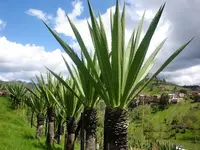
Furcraea andina is a rosette-forming succulent from high-altitude regions of the northern Andes. It develops stiff, sword-like leaves that emerge from a central crown. Mature plants can produce a dramatic flower spike before gradually declining, often leaving offsets at the base. This slow but steady growth habit makes it more suitable for patient growers with space. In cultivation, it prefers strong light, low to moderate moisture, and sharply draining, gritty soil. Understanding how to care for Furcraea andina starts with treating it like a drought-tolerant succulent rather than a typical leafy houseplant.

Care Difficulty
Easy Care

Light Preference
Full Sun

Water Requirements
Low Water

Temperature Preference
Warm Climate

Hardiness Zone
9–11

Soil Texture
Sandy, Loamy, Rocky

Soil pH
Slightly acidic (6.5–7.0), Neutral (7.0)

Soil Drainage
Well-drained

Fertilization
Minimal (feed rarely)
Scan your plant to receive care tips personalized for your specific plant
Available on iOS and Android
This highland succulent prefers bright, open exposure with some protection from the harshest sun.
This species is drought-tolerant and should be watered sparingly to avoid root rot.
This plant prefers warm, frost-free conditions but tolerates moderate temperature swings.
This species handles typical indoor humidity well and rarely needs special humidity care.
Use a sharply draining, mineral-rich mix to prevent root and crown rot.
This species is suitable for container growing when the pot promotes fast drainage and stability.
This drought-adapted species needs only light feeding in containers or poor soils.
Pruning is minimal and mainly hygienic for this structural succulent.
Transplanting or repotting is infrequent because this species grows slowly and dislikes root disturbance.
Propagation is usually done from offsets or bulbils rather than seed for this species.
Cold management depends on climate, as this plant prefers mild, dry winters.

Plant Health Check
Not sure what's wrong with your plant? Check your plant's health inside the app.
This species naturally grows on steep Andean slopes at relatively high elevations, where its dense leaf rosette and strong root system help anchor it against erosion and intense mountain sun.
Furcraea andina can reproduce both by seed and by forming vegetative offshoots (clones) from the base, which allows a single plant to slowly create small clusters on rocky, nutrient-poor soils.
Like many furcraeas, it is monocarpic, meaning the rosette flowers only once in its lifetime, sending up a very tall flowering stalk before the main rosette declines and dies back.
Growth is moderate rather than fast. In suitable outdoor conditions, this plant can take 8–15 years to reach full size, often forming a rosette 1–2 m tall and similarly wide before flowering once.
Keep your plants happy and healthy with plant identification, disease detection, and easy care guidance.