Cinnamon Porecrust Care (Fuscoporia ferrea)

Cinnamon Porecrust

About Cinnamon Porecrust

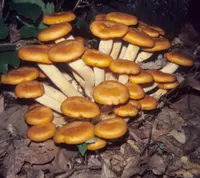
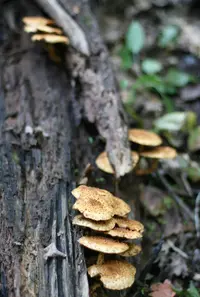
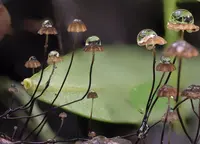
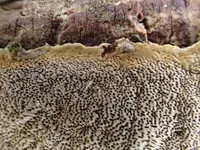
Cinnamon porecrust (Fuscoporia ferrea) is a wood-decaying bracket fungus, not a leafy houseplant. It forms flat to slightly raised, hard crusts on dead or weakened hardwood, often with warm brown, cinnamon-toned pores underneath. In nature, it occurs on logs, stumps, and trunks in forests and wooded areas, contributing to the breakdown of lignin and cellulose in wood. It is generally not grown as a decorative indoor specimen, since it needs solid wood and specific decay conditions rather than potting soil. For anyone who wants to care for Cinnamon Porecrust in a cultivation or research setting, stable moisture, cool air, and consistent woody substrate quality are the key factors.

Main Plant Requirements

Care Difficulty

Moderate Care

Light Preference

Partial Shade

Water Requirements

Moderate Water

Temperature Preference

Warm Climate

Hardiness Zone

Unknown

Soil Texture

Loamy, Organic-rich

Soil pH

Slightly acidic (6.5–7.0)

Soil Drainage

Moist but well-drained

Fertilization

Minimal (feed rarely)

Get Personalized Care Plan

Scan your plant to receive care tips personalized for your specific plant

Available on iOS and Android

How to Care for the Cinnamon Porecrust

This crust fungus prefers stable, shaded forest light rather than direct open sun.

  • Provide dappled shade or full shade with brief, gentle morning sun only, avoiding strong midday and afternoon sun that can dry host wood and the fruiting body.
  • Aim for conditions similar to a closed-canopy woodland: indirect light for most of the day, as Cinnamon Porecrust naturally develops on shaded trunks or fallen logs.
  • In leaf-off seasons, compensate for stronger sun by using the north or east side of logs or stumps, or by adding shade from nearby shrubs or boards to prevent desiccation.

Moisture management focuses on the wood substrate rather than direct watering of the fungal body.

  • Keep the host wood consistently moist but not saturated; allow the outer 2–3 cm of wood or surrounding soil to feel just slightly dry before rewetting.
  • In warm, dry periods, mist or gently hose the log surface and surrounding soil when it feels dry and light, watching for cracking bark as a sign of underwatering.
  • Avoid standing water around the base; persistent soggy conditions with foul odor or slimy wood indicate overwatering, which can favor competing fungi over Fuscoporia ferrea.

This species performs best in mild, temperate conditions without extreme heat or hard frost.

  • Target a general range of 50–77°F (10–25°C) for active growth, similar to cool to mild woodland conditions throughout much of the year.
  • Short dips to about 23–28°F (-5 to -2°C) are often tolerated if the wood stays buffered, but repeated hard freezes with drying winds reduce fruiting quality.
  • Prolonged heat above 86°F (30°C), especially with dry air and sun exposure, can dry the substrate; increase shade and ambient humidity during hot spells to protect the colonized wood.

Humidity is not a meaningful care factor for Cinnamon Porecrust, which is a wood-decaying fungus rather than a houseplant.

Fuscoporia ferrea grows on dead or decaying wood, so soil preparation is not relevant for its cultivation.

  • This fungus naturally colonizes hardwood logs or stumps rather than mineral soil or potting mix.
  • If attempting observation culture, provide untreated hardwood pieces with intact bark instead of any soil-based substrate.
  • Avoid nutrient-rich, wet soil environments, which encourage competing molds and bacteria rather than this crust fungus.
  • Maintain the wood substrate moderately dry to slightly damp, never waterlogged, to resemble natural dead-wood conditions.

This species is not suitable for conventional container growing, as it is a wood-inhabiting fungus rather than a rooted plant.

This tough wood-decay fungus on trees gains nutrients from its host and usually does not benefit from added fertilizer.

As a perennial bracket fungus, Fuscoporia ferrea is not managed with horticultural pruning like a garden plant.

This species is a wood-decay fungus that naturally colonizes tree trunks and is not suited to normal repotting or transplanting.

  • Cultivation focuses on maintaining suitable host wood rather than moving the organism between containers.
  • If studying it under controlled conditions, transfer small colonized wood sections instead of disturbing fungal tissue directly.
  • Handle host wood gently to limit mechanical damage and drying, which can weaken the fungal colony.
  • Use clean tools and containers to reduce contamination from other fungi or bacteria during experimental moves.

This bracket fungus is usually left to reproduce naturally, so home-scale propagation is rarely attempted.

Outdoor colonies on host trees are naturally cold hardy in their native range and need no deliberate winter care.

Care Tips

Sterile wood selection

Use only untreated, unpainted hardwood logs or blocks that are free of visible mold and chemical residues to minimize competitor fungi and support stable colonization.

Controlled moisture cycling

Allow the substrate surface to dry slightly between heavy soakings while keeping the interior damp, which helps discourage bacterial rot but still supports steady mycelium growth.

Shaded mounting method

If mounted on landscape trees or deadwood, choose the shaded, north or east side of trunks to reduce UV damage and desiccation of the fruiting bodies.

Sanitary tool handling

Disinfect drill bits, saws, and inoculation tools with 70% isopropyl alcohol before each use to reduce contamination when establishing new colonies or taking tissue samples.

Fruiting body monitoring

Inspect the brackets regularly for soft spots, off-odors, or atypical color changes and remove only heavily damaged sections with a clean, sharp blade to limit spread of secondary infections while growing Cinnamon Porecrust.

Common Pests and Diseases

White rot advancement

This disease reflects the natural progression of the white rot that Fuscoporia ferrea itself causes on its woody host, where the fungus extends and further degrades lignin and cellulose. Symptoms include increasingly soft, fibrous, pale wood that becomes structurally weak over time.

Solution

Management focuses on host-tree safety rather than curing the fungus. Remove and dispose of severely decayed branches or entire host trees when structural stability is compromised, and avoid wounding nearby trees since fresh cuts and injuries provide new entry sites for the fungus.

Competing wood-decay fungi

This disease issue occurs when other wood-decay fungi colonize the same log or trunk, competing for tissue and sometimes overgrowing or deforming Fuscoporia ferrea brackets. Symptoms include mixed fruiting bodies of different colors and textures on the same wood and distorted or reduced Cinnamon Porecrust growth.

Solution

If the goal is growing Fuscoporia ferrea on a specific log for observation or cultivation, remove and discard fruiting bodies of competing fungi and use fresh, recently cut hardwood inoculated promptly with the desired species, while keeping the log off soil contact to reduce stray spore loads.

Bark beetle association

These insects may tunnel in stressed or dying host trees where Fuscoporia ferrea is active, increasing mechanical damage and potentially altering moisture conditions around the fungal colony. This pest activity can change how and where the fungus fruits on the wood surface.

Solution

To limit bark beetles where host trees are still valuable, promptly remove and chip or burn infested logs, avoid storing fresh cut wood near live trees, and maintain tree health through proper watering and mulching so trees are less attractive to beetle attack and secondary colonization by decay fungi.

Interesting Facts

Iron-hard pore crust

The fruiting body forms a very hard, woody crust tightly attached to dead hardwood, which is why it is called ferrea, meaning iron-like, and it can persist on logs for many years without disintegrating.

White-rot wood decomposer

This species is a white-rot fungus that breaks down lignin in hardwoods, leaving the wood fibrous and pale, and plays an important role in nutrient cycling in temperate and subtropical forests.

Distinct cinnamon coloration

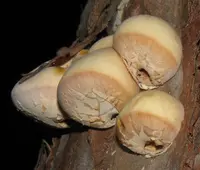
Mature brackets show a characteristic cinnamon to rusty-brown upper surface with fine concentric zoning, while the underside has small round pores, which together help distinguish it from many other crust and bracket fungi when identifying or growing Cinnamon Porecrust in culture.

Botan icon

Did you know?

Molecular phylogenetic studies have shown that this species, once placed in the widespread genus Phellinus, actually belongs in Fuscoporia, helping mycologists clarify evolutionary relationships within the Hymenochaetaceae family and revise the taxonomy of many long-misclassified wood-decay fungi.

FAQs about Cinnamon Porecrust

This bracket fungus is not considered edible. The fruiting bodies are tough, woody, and lack culinary value. It is sometimes studied for medicinal compounds, but it should not be harvested or eaten as food.

Grow Healthy Plants with Botan Care

Keep your plants happy and healthy with plant identification, disease detection, and easy care guidance.

Botan plant care app — identify plants on mobile

Explore More Plants