flaming scalycap Care (Pholiota flammans)

flaming scalycap

About flaming scalycap

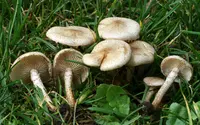
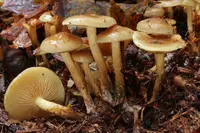
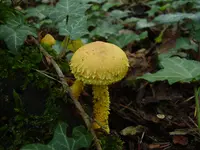
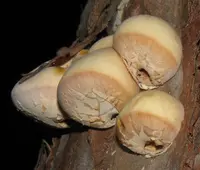
Flaming scalycap (Pholiota flammans) is a small woodland mushroom, not a leafy houseplant. It forms dense clusters of bright yellow to orange caps covered in sharp, scale-like structures. Stems are similarly scaly, giving the whole fruiting body a spiky, flame-like look.

This species occurs mainly on decaying conifer wood in temperate forests of Europe, North America, and parts of Asia. It depends on cool, moist, shaded conditions and stable wood substrates, which makes it difficult to cultivate reliably at home. For most growers, it is more practical to observe rather than actively care for flaming scalycap in cultivation settings.

Main Plant Requirements

Care Difficulty

Hard Care

Light Preference

Shade

Water Requirements

Keep Soil Moist

Temperature Preference

Cool Climate

Hardiness Zone

Unknown

Soil Texture

Organic-rich, Loamy

Soil pH

Acidic (5.5–6.5)

Soil Drainage

Moist but well-drained

Fertilization

Minimal (feed rarely)

Get Personalized Care Plan

Scan your plant to receive care tips personalized for your specific plant

Available on iOS and Android

How to Care for the flaming scalycap

This wood-rotting mushroom prefers cool, shaded forest conditions with minimal direct sun.

  • Provide bright shade or dappled light under trees, receiving at most 1–2 hours of weak morning sun and no harsh afternoon sun on the fruiting area.
  • Choose a north- or east-facing woodland edge or log pile where flaming scalycap is shielded from direct summer sun to prevent drying of the substrate.
  • In warm months, use leaf litter or coarse mulch to shade logs or stumps; in cooler seasons, slightly more open light is acceptable as long as the substrate stays moist, not sun-baked.

This species needs consistently moist, but not waterlogged, wood or woody substrate to fruit well.

  • Maintain moisture so the outer 2–3 cm of the log, stump, or woodchip bed feels damp to the touch without standing water.
  • Increase watering or misting during hot, dry spells so the substrate never fully dries; reduce added water in cool, rainy periods to avoid soggy, anaerobic conditions.
  • Watch for signs of overwatering such as sour smell or slime on the wood, and signs of underwatering such as cracking, very light-weight logs, or shrinking, brittle fruiting bodies of Pholiota flammans.

This mushroom develops best in cool to mild conditions typical of temperate forests.

  • Aim for a fruiting range around 50–68°F (10–20°C), as higher temperatures tend to dry the substrate and slow development.
  • Substrate colonization can tolerate roughly 41–77°F (5–25°C), but growth slows near the edges of this range and becomes unreliable below freezing.
  • Protect colonized logs or stumps from hard frost below 28°F (-2°C) and from prolonged heat above 80°F (27°C), using shade and mulch to buffer rapid temperature swings.

This species needs consistently moist, high-humidity conditions similar to a damp forest floor.

  • Aim for 70–90% humidity to keep caps and mycelium from drying and cracking.
  • Dry air causes shriveling, dull cap color, and slow or stalled fruiting in flaming scalycap.
  • Increase humidity by using a covered, ventilated tub or humidity tent with regular fine misting, avoiding direct spray on developing caps.

This wood-rotting mushroom grows best on moist, organic-rich substrates rather than standard garden soil.

  • Use a loose mix of hardwood sawdust, fine wood chips, and well-aged leaf litter or compost to mimic decaying wood.
  • Ensure the substrate holds moisture but still drains freely so excess water does not pool and sour the mycelium.
  • Keep pH slightly acidic to neutral, around 5.5–7.0, which suits most decomposer fungi including Pholiota flammans.
  • Avoid dense mineral soils, heavily fertilized mixes, or substrates with strong manure odors that encourage bacterial problems.

This species can be grown in containers filled with suitable wood-based substrate rather than typical potting soil.

  • Choose a stout plastic tub or bucket that limits light penetration but allows stable stacking or placement during colonization.
  • Drill small drainage and air-exchange holes near the base and sides so excess water escapes while gas exchange remains adequate.
  • Elevate the container on blocks or a rack so runoff moves away and the base does not sit in stagnant water, reducing contamination risk.

This wood-decaying fungus gains most nutrients from its substrate and usually needs no added fertilizer in natural or log-based culture.

Pholiota flammans does not require conventional pruning, but limited hygiene trimming keeps the fruiting area productive and clean.

  • Remove spent or decaying fruiting bodies with clean gloved hands to limit mold and bacterial growth.
  • Trim away obviously contaminated or slimy clusters with a disinfected knife and discard them off-site.
  • Clear dense overlapping clusters only when they impede air movement, which helps reduce rot and improve spore dispersal.

This species is normally grown on logs or wood-based blocks, so care focuses on renewing substrate rather than classic repotting.

  • Replace or refresh the colonized wood or sawdust block when fruiting declines markedly, usually after 1–3 seasons.
  • Plan transplanting to new substrate during mild weather, avoiding temperature extremes that stress the mycelium.
  • Cut small colonized pieces and firmly press them into fresh, pasteurized hardwood-based substrate to extend the culture.
  • Keep the new substrate evenly moist and shaded for 1–2 weeks to reduce shock and support re-establishment.

Pholiota flammans is propagated by mycelium transfer rather than seeds or cuttings, and this is best handled with clean technique.

  • Use fully colonized grain spawn or stem butt tissue from healthy mushrooms to start new cultures.
  • Work in the cleanest space available, disinfect tools, and avoid touching cut surfaces to limit contamination.
  • Introduce spawn into pasteurized hardwood sawdust, chips, or small logs during mild spring or fall conditions.
  • Maintain high humidity and indirect light while mycelium spreads, then increase fresh air once fruiting begins.

In outdoor log or stump culture, flaming scalycap is generally cold hardy and needs minimal targeted winter care.

  • In regions below about 15°F, place logs in a sheltered, unheated area to moderate freeze–thaw swings.
  • Avoid letting substrate dry out completely; water lightly during winter thaws if conditions are very dry.
  • Container-grown blocks can be moved to a cold garage or shed to reduce wind exposure and rapid temperature shifts.

Care Tips

Use hardwood blocks

For reliable fruiting, drill and inoculate fresh, untreated hardwood logs or blocks (e.g. oak, beech, maple) and keep them shaded and off bare soil so the mycelium can colonize uniformly without competing fungi taking over.

Control competing fungi

Before inoculation, heat-treat or pressure-cook small wood substrates, or rest freshly cut logs for 2–4 weeks, to reduce existing fungal competitors and give the flaming scalycap mycelium a clear head start.

Maintain log moisture

During dry spells, soak inoculated logs in clean, non-chlorinated water for 12–24 hours, then let them drain upright so the interior stays moist enough to support forming fruiting bodies without promoting anaerobic rot.

Rotate fruiting sites

Set up several shaded fruiting stations and rotate inoculated logs between them each season to reduce local buildup of slugs, fungus gnats, and mold that can damage clusters when growing flaming scalycap.

Monitor cap maturity

Harvest clusters when caps are fully expanded but still firm and bright, using a clean knife at the base, as this timing limits spore load on the substrate and encourages more consistent subsequent flushes.

Common Pests and Diseases

Fungus gnat larvae

This pest targets moist fungal substrates, where larvae feed on mycelium and developing fruiting bodies, causing stunting and surface tunneling. Symptoms include small black adult gnats flying around the grow area and pitted, scarred caps or aborted mushrooms.

Solution

Reduce excess moisture in the substrate, allow the surface to dry slightly between misting, and use fine mesh or screens on vents to block adults. Sticky traps near the grow area help monitor and reduce adults, while a biological control such as Bacillus thuringiensis israelensis (Bti) applied to the substrate water can suppress larvae without harming the fungus.

Mite infestation

These insects, especially springtails and parasitic mites, are attracted to decaying wood and fungal cultures and may graze on mycelium or young pins. Symptoms include tiny moving specks on the substrate or caps and poor or deformed fruiting.

Solution

Improve hygiene by removing old spent substrate, spilled debris, and heavily infested blocks, and maintain good ventilation to avoid stagnant, overly damp air. Use physical barriers such as raised shelves, clean trays, and fine mesh around intakes, and if needed apply a targeted, mushroom-safe acaricide or introduce predatory mites sourced for mushroom cultivation systems.

Bacterial blotch

This disease, often caused by Pseudomonas species, develops in very humid, poorly ventilated conditions and leads to greasy yellow or brown spots on caps and stems. Symptoms include slimy lesions and water-soaked patches that can merge and discolor entire fruiting bodies.

Solution

Lower humidity slightly, increase fresh air exchange, and avoid directly wetting caps during misting to reduce surface moisture. Remove and discard heavily affected mushrooms, clean surfaces and tools with a dilute bleach or food-safe disinfectant, and maintain moderate air movement to keep caps dry between mist cycles.

Green mold contamination

This disease is usually due to Trichoderma species that colonize the same woody or sawdust-based substrate, outcompeting the fungus and forming dense white mycelium that turns bright green as spores develop. Symptoms include sharply bordered green patches on the substrate, reduced pin formation, and rapid dieback of Pholiota mycelium.

Solution

Discard or isolate heavily contaminated blocks immediately to prevent spore spread, and carefully bag them before removal to avoid releasing dust. For remaining culture, improve cleanliness, sterilization or pasteurization of future substrate, reduce handling during colonization, and increase fresh air exchange to avoid overly warm, stagnant conditions that favor Trichoderma growth.

Interesting Facts

Spiky cap scales

The cap surface is densely covered with sharp, dry, pyramidal scales that remain bright yellow even as the mushroom ages, giving it a distinctly bristly texture compared with related Pholiota species whose scales often flatten or darken quickly.

Conifer wood specialist

This species is strongly associated with dead conifer wood, especially pine and spruce, where it helps decompose lignin-rich tissues and contributes to nutrient cycling in boreal and montane forests.

Bitter, not edible

Although not known to be dangerously toxic, this mushroom is considered inedible due to its pronounced bitter taste and tough, scaly texture, and it is not recommended for consumption in field guides.

Botan icon

Did you know?

Pholiota flammans produces abundant yellowish spores that form a fine powder on the gills and nearby surfaces, which mycologists use as a key identification feature when distinguishing it from similar bright yellow woodland mushrooms.

FAQs about flaming scalycap

This species is considered inedible and is not recommended for consumption. It has no established culinary value and may cause gastrointestinal upset. For safety, treat it as a decorative wild fungus only, not food.

Grow Healthy Plants with Botan Care

Keep your plants happy and healthy with plant identification, disease detection, and easy care guidance.

Botan plant care app — identify plants on mobile

Explore More Plants