Pholiota terrestris Care

About Pholiota terrestris

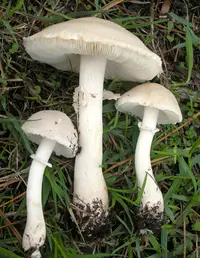
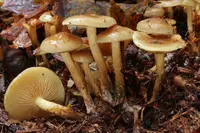
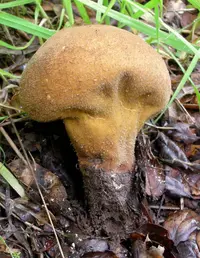
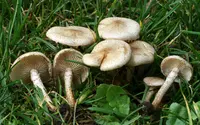
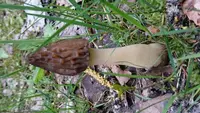
Pholiota terrestris is a small, ground-dwelling mushroom rather than a leafy plant. It typically forms clustered fruiting bodies on soil, often in lawns, gardens, or disturbed ground near buried wood or roots. Caps are usually brownish to yellow-brown, sometimes slightly scaly, with pale gills that darken as spores mature.

This species appears seasonally and may recur in the same area where suitable organic material is present. It plays a role in breaking down dead plant matter, helping recycle nutrients in the soil.

Because it is a fungus with specific habitat needs, it is not commonly cultivated, and how to care for Pholiota terrestris at home is not well established.

Main Plant Requirements

Care Difficulty

Moderate Care

Light Preference

Partial Shade

Water Requirements

Keep Soil Moist

Temperature Preference

Cool Climate

Hardiness Zone

Unknown

Soil Texture

Loamy, Silty, Organic-rich

Soil pH

Acidic (5.5–6.5), Slightly acidic (6.5–7.0)

Soil Drainage

Moist but well-drained

Fertilization

Minimal (feed rarely)

Get Personalized Care Plan

Scan your plant to receive care tips personalized for your specific plant

Available on iOS and Android

How to Care for the Pholiota terrestris

This wood-inhabiting fungus prefers cool, sheltered light conditions rather than direct, intense sun.

  • Provide dappled or filtered light under shrubs, trees, or woody debris, with indirect exposure for most of the day and no more than 1–2 hours of weak direct sun.
  • Site Pholiota terrestris where it receives early-morning or late-afternoon light but is shaded from strong midday sun to prevent drying of its substrate.
  • In summer, ensure deeper shade to counter higher UV and heat; in autumn, slightly more open shade supports fruiting without exposing the substrate to rapid moisture loss.

Moist, but not waterlogged, wood or organic debris is essential for reliable fruiting and mycelial health.

  • Keep the substrate (decaying wood, woodchip, or rich organic layer) consistently damp to a depth of 5–8 cm, never letting it dry out completely between natural rains.
  • If rainfall is low, water the surrounding substrate when the top 2–3 cm feel just barely moist rather than wet, using a gentle soak so water penetrates slowly and drains away.
  • Watch for signs of overwatering such as standing water, sour or rotten odor, and slimy growth; underwatering shows as cracked, pale substrate and sparse or aborted mushroom formation around the Pholiota terrestris colony.

This species favors cool to mild conditions typical of shaded woodland floors.

  • Aim for an active growth range of 50–68°F (10–20°C), where mycelium in buried wood or organic debris can steadily colonize and prepare for fruiting.
  • Tolerate brief drops to about 32°F (0°C) once established, but repeated hard freezes or freeze–thaw cycles without insulating leaf litter can damage exposed fruiting bodies.
  • Avoid prolonged heat above 77–82°F (25–28°C), which can dry the substrate and slow development; in warmer periods, deeper shade and added mulch help buffer the temperature around the colonized material.

This fungus handles a wide humidity range but fruits best in moderately moist air.

  • Aim for 60–80% humidity during active growth and fruiting for consistent development.
  • Tolerates short dry spells, but caps may crack and edges dry if humidity stays low.
  • If air stays below 50%, increase humidity with a nearby open water tray, damp mulch layer, or light misting around, not directly on, the clusters.

This species prefers moist, organic-rich ground with steady drainage rather than waterlogged conditions.

  • Use a loose, humus-rich substrate such as composted wood chips mixed with leaf mold or well-rotted compost.
  • Ensure excess water drains away freely; standing water around the mycelium encourages bacterial problems and rot.
  • A slightly acidic to neutral pH around 5.5–7.0 supports nutrient availability and stable fungal activity.
  • Improve aeration by blending in coarse bark or chunky wood chips so air can move through the substrate and prevent compaction.

This fungus can be grown in containers if the substrate and moisture are carefully controlled.

  • Choose a deep, stable tub or box to hold a thick substrate layer that allows mycelium to spread horizontally and vertically.
  • Drill multiple side and bottom holes so excess water exits quickly while still allowing gas exchange through the container walls.
  • Line the top layer with coarse wood chips to slow surface drying without sealing in excessive moisture around the base.

This soil-dwelling fungus typically grows on nutrient-rich substrates and usually needs no additional fertilizer in garden or container culture.

Pholiota terrestris does not require structured pruning, but limited hygiene trimming can support healthy fruiting surfaces in cultivated beds.

  • Work at the end of a flush, removing spent, decayed fruiting bodies before they collapse fully.
  • Use clean, sharp scissors or a knife to cut mushrooms at the base without disturbing the mycelium layer.
  • Clear away heavily moldy or insect-damaged clusters to reduce competition from other fungi and pests.
  • Maintain surrounding vegetation by trimming back encroaching plants that shade or dry the substrate excessively.

This fungus is usually grown in prepared outdoor beds or trays, so transplanting focuses on moving colonized substrate rather than individual fruiting bodies.

  • Plan moves in cool, moist weather during active growth, when substrate is fully colonized with white mycelium but before heavy fruiting.
  • Treat compacted or poorly producing blocks as candidates for relocation or refreshing with new organic material.
  • Lift colonized substrate gently in intact sections to limit tearing of the mycelial network.
  • Reinstall the block in a similar, shaded, evenly moist site and water lightly to settle air gaps without waterlogging.

Cultivation of Pholiota terrestris relies on controlled propagation of mycelium rather than traditional plant methods.

  • Use grain or sawdust spawn from a reliable supplier, as home spore work needs sterile technique and lab-like conditions.
  • Inoculate pasteurized or properly prepared substrate in spring or fall when ambient temperatures are moderate.
  • Keep the inoculated substrate in high humidity with indirect light and stable 55–68°F conditions to encourage colonization.
  • Avoid disturbing the substrate once inoculated; allow full white mycelial coverage before exposing to slightly cooler, fresh-air conditions for fruiting.

Outdoor cultures are moderately cold tolerant but benefit from basic substrate protection in regions with freezing winters.

  • Apply a 3–5 cm layer of loose straw or leaf mulch over colonized beds once temperatures approach freezing.
  • Avoid saturated conditions; ensure excess water can drain from beds or containers before hard frosts.
  • In very cold areas, move small trays to an unheated garage or shed, where temperatures stay just above 32°F.

Care Tips

Host plant choice

Use healthy, established host plants such as turfgrass or low-value nursery stock for trials, because this soil fungus is typically pathogenic to roots and stresses weak or young plants more severely.

Sanitation between beds

Disinfect tools and shoes with a quaternary ammonium or bleach solution when moving between infested and clean plots to reduce spread of spores and contaminated soil while caring for Pholiota terrestris.

Soil disturbance control

Limit deep cultivation and mechanical disturbance in infested areas, since frequent tilling or pulling roots can move contaminated soil and infected root fragments into new sections of the site.

Moisture mapping

Monitor and record soil moisture patterns across the site, then adjust irrigation layout so that chronically wet spots that favor this fungus receive shorter, less frequent watering than better-drained zones.

Quarantine new material

Hold new turf sod, seedlings, or nursery plants in a separate observation area for 2–3 weeks and check roots and surrounding soil for unusual decay before planting into any bed known to harbor this fungus.

Common Pests and Diseases

Fungus gnats

These insects are small dark flies whose larvae feed in very wet, organic substrates where the fungus is growing. Symptoms include tiny flying adults around trays and damage to young fungal mycelium and pins in heavily infested setups.

Solution

Allow the substrate surface to dry slightly between misting, use fine mesh or covers over vents, and place yellow sticky traps near the growing area to capture adults. For heavier infestations, apply a biological control such as Bacillus thuringiensis israelensis (BTI) as a drench according to label directions to target larvae without harming the crop, which is a practical approach when caring for Pholiota terrestris.

Mites

This pest includes tiny arthropods that feed on fungal mycelium and developing fruiting bodies. Symptoms include pale or roughened patches on caps, slowed growth, and fine dust-like movement on the substrate or mushrooms.

Solution

Reduce excess humidity and standing water, clean up spent blocks and debris promptly, and isolate any heavily infested containers. Use predatory mites purchased from a reputable supplier as a biological control, and sanitize shelving, tools, and work surfaces between batches to prevent reinfestation.

Green mold (Trichoderma)

This disease is caused by competitor molds that colonize the same substrate, often after stress or contamination during inoculation. Symptoms include white mycelium that quickly turns bright to dark green, with a powdery spore layer that outcompetes the crop.

Solution

Immediately remove and discard heavily contaminated blocks or trays in sealed bags to limit spore spread. Improve hygiene during inoculation, use properly pasteurized or sterilized substrate, increase fresh air movement without drafts, and reduce excess condensation on surfaces to discourage Trichoderma growth.

Bacterial blotch

This disease appears in very humid, poorly ventilated conditions and is caused by bacteria on the mushroom surface. Symptoms include greasy yellow to brown spots or streaks on caps, often starting near water droplets that sit on the mushrooms.

Solution

Lower humidity slightly, increase gentle air movement, and avoid overhead watering so that caps do not stay wet for long periods. Remove and discard blotched mushrooms, clean condensation from surfaces, and regularly sanitize misting equipment and containers to reduce bacterial load.

Interesting Facts

Soil‑fruiting fungus

This mushroom often fruits directly from compacted or disturbed soil, such as along paths, in lawns, and at forest edges, rather than from obvious wood like many other Pholiota species.

Strong mycelial odor

Its underground mycelium can produce a noticeable earthy to slightly pungent smell when soil is disturbed, which experienced field mycologists sometimes use as a supporting identification clue.

Seasonal fruiting pattern

It typically produces clusters of small to medium caps in cool, moist conditions of autumn and early winter in temperate regions, and may appear again in early spring when soil moisture and temperature align.

FAQs about Pholiota terrestris

This species is generally regarded as inedible. Identification within Pholiota is difficult, and some related species may cause stomach upset. For safety, it is best to treat these mushrooms as non-edible and avoid consumption.

Grow Healthy Plants with Botan Care

Keep your plants happy and healthy with plant identification, disease detection, and easy care guidance.

Botan plant care app — identify plants on mobile

Explore More Plants