maroon blanketflower Care (Gaillardia amblyodon)

About maroon blanketflower

Maroon blanketflower, Gaillardia amblyodon, is a compact, clump-forming perennial wildflower native to Texas and nearby regions of the southern United States. It typically grows in open prairies, roadsides, and rocky grasslands.

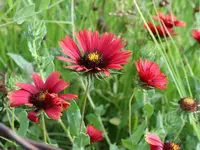
Plants carry daisy-like flower heads with deep maroon to burgundy rays and contrasting darker centers, creating a strong color block in sunny borders or naturalistic plantings. Foliage is usually gray-green and slightly hairy, forming a low mound that highlights the blooms.

This species is adapted to heat, sun, and relatively dry, well-drained soils, which makes it generally undemanding once established. Gardeners who want to care for maroon blanketflower mainly need to provide full sun exposure and avoid consistently wet conditions.

Main Plant Requirements

Care Difficulty

Easy Care

Light Preference

Full Sun

Water Requirements

Low Water

Temperature Preference

Warm Climate

Hardiness Zone

7–10

Soil Texture

Sandy, Loamy, Rocky

Soil pH

Slightly acidic (6.5–7.0), Neutral (7.0)

Soil Drainage

Well-drained

Fertilization

Minimal (feed rarely)

Get Personalized Care Plan

Scan your plant to receive care tips personalized for your specific plant

Available on iOS and Android

How to Care for the maroon blanketflower

Gaillardia amblyodon thrives in strong, direct light and performs best in open, unshaded sites.

  • Provide 6–8 hours of full sun daily; in hot inland areas, light afternoon shade can reduce stress while maintaining flowering.
  • Maroon blanketflower tolerates brief partial shade, but stems may elongate and flowering declines if it receives less than 4–5 hours of direct sun.
  • In spring and fall, full sun is ideal; in peak summer, monitor for leaf scorch or crispy edges that indicate intense reflected heat rather than simple sunlight exposure.

Gaillardia amblyodon prefers infrequent, deep watering and dry-to-moderate soil between soakings.

  • Water when the top 3–5 cm of soil is completely dry, allowing water to soak the root zone, then drain away fully.
  • Use very well-drained, gritty or sandy soil; standing water, sticky mud, or a sour smell indicate poor drainage and high risk of root rot.
  • In cool seasons reduce watering further; wilting that recovers at dusk suggests mild drought stress, while limp, yellowing lower leaves often point to overwatering.

This species handles heat well but prefers moderate warmth and good seasonal drainage.

  • Optimal growth occurs around 65–80°F (18–27°C), supporting strong flowering and compact foliage.
  • It generally tolerates down to about 20°F (−6°C) with good drainage, but hard freezes below this or repeated freeze–thaw cycles can damage crowns.
  • Heat tolerance is high up to about 95°F (35°C) if soil is not waterlogged; in extended heat waves, dry, airy conditions are safer than hot, humid, poorly drained sites.

Humidity is not a major factor for Gaillardia amblyodon, which thrives in relatively dry air.

Gaillardia amblyodon prefers lean, well-drained soil that does not stay wet after rain or watering.

  • Use sandy or sandy-loam soil with low to moderate organic matter to mimic its native, open habitats.
  • Maintain slightly acidic to neutral pH around 6.0–7.0 for reliable growth and flowering.
  • Mix coarse sand or fine gravel into heavier soils to improve drainage and root aeration.
  • Avoid compacted clay, waterlogged spots, or thick mulch layers that trap moisture around the crown.

This species can grow successfully in containers when drainage and root space are carefully managed.

  • Choose a relatively wide, not overly deep pot to accommodate its spreading root system and reduce tipping in wind.
  • Use a gritty potting mix with at least 30–40% coarse sand or fine gravel to keep water moving through the root zone.
  • Place containers where rain cannot pool around the base, since maroon blanketflower is prone to crown rot in standing water.

Gaillardia amblyodon is a low-maintenance feeder but responds well to light nutrition in lean soils.

  • Use a balanced slow-release fertilizer (around 10-10-10) or a light top-dressing of compost in early spring.
  • Feed once more in midsummer if growth or flowering slows, especially in very sandy soils.
  • Apply fertilizer at half the label strength to avoid lush, floppy growth and maintain compact plants.
  • Avoid feeding in late fall or winter, as maroon blanketflower is resting and extra nutrients are not used.

Gaillardia amblyodon benefits from periodic pruning to maintain bloom and a tidy shape.

  • Deadhead spent flower heads throughout the growing season to extend blooming and reduce unwanted self-seeding.
  • In midsummer, shear back lightly by 1/3 to refresh foliage and encourage a new flush of flowers.
  • Remove dead, damaged, or crossing stems at the base using clean, sharp hand pruners or scissors.
  • Cut old, dried stems down to ground level in late fall or early spring to promote healthy new growth.

This species is usually grown in garden beds, so transplanting young plants is more common than long-term container repotting.

  • Transplant in spring or early fall when temperatures are mild and soil is workable.
  • Move plants if growth is stunted, flowering declines, or clumps become congested and crowd neighbors.
  • Lift the clump with a trowel, keeping a firm soil ball so roots are disturbed as little as possible.
  • Replant at the same depth in well-drained soil, water thoroughly, then keep soil lightly moist until new growth resumes.

Gaillardia amblyodon is commonly propagated from seed and by division of established clumps.

  • Sow seeds in late winter to spring in trays or directly outdoors after frost, using a well-drained, sandy mix.
  • Press seeds lightly onto the surface, as they germinate best with light exposure, and keep evenly moist at 65–75°F.
  • Divide healthy clumps in early spring or early fall, ensuring each division has several shoots and a good root portion.
  • Replant divisions promptly, water in well, and maintain moderate moisture until new growth shows successful establishment.

This species is fairly cold hardy in much of the US and usually needs minimal winter care in the ground.

  • In regions with freezes, allow top growth to die back naturally, then cut spent stems to the base in late winter.
  • Apply a light, 2–5 cm mulch around the crown in colder zones to buffer rapid freeze–thaw cycles.
  • For container-grown plants in cold climates, move pots to a sheltered, unheated but frost-sheltered area to protect roots.

Care Tips

Staggered Deadheading

Leave some of the oldest flower heads to dry and set seed while regularly deadheading the rest, so you maintain continuous bloom while also allowing natural self-seeding for next year’s plants.

Targeted Heat Protection

In climates with prolonged extreme heat, place a low, open-sided shade cloth frame that blocks harsh afternoon sun only, which reduces stress and flower scorch without sacrificing the full-sun exposure this species prefers overall.

Soil Surface Management

Top-dress around established plants with a thin layer (0.5–1 in) of coarse grit or small gravel to keep the crown dry, suppress splash-borne diseases, and improve winter survival on heavy soils.

Seedling Selection Strategy

When growing maroon blanketflower from seed, thin or transplant seedlings so that only the most vigorous, upright plants remain at roughly 12–15 in spacing, which improves airflow and reduces the risk of foliar disease in maturity.

Lean Nutrition Approach

If plants become floppy or overly leafy, skip feeding for a season and lightly trim back the most vigorous stems to encourage sturdier, flower-focused growth under leaner nutrient conditions.

Common Pests and Diseases

Powdery mildew

This disease appears as white, powdery patches on upper leaf surfaces, often in warm, dry conditions with poor air movement.

Solution

Remove and discard heavily infected leaves to reduce spore spread, then improve spacing and airflow around plants and avoid overhead watering; if needed, apply a sulfur or potassium bicarbonate fungicide labeled for ornamentals early in the infection according to maroon blanketflower care instructions.

Aster yellows

This disease causes distorted, stunted growth, yellowing foliage, and deformed, greenish flowers that may fail to set seed.

Solution

Promptly remove and destroy symptomatic plants to eliminate the infection source and control leafhopper vectors by reducing nearby weedy hosts, using reflective mulches, or applying insecticidal soap or horticultural oil when leafhoppers are active.

Leaf spot

This disease presents as small brown or purplish spots on leaves that may enlarge and coalesce, leading to premature leaf drop in wet or humid conditions.

Solution

Prune and discard affected foliage, water at soil level to keep leaves dry, and increase spacing; in persistent cases, use a copper- or chlorothalonil-based fungicide labeled for ornamental perennials, applied according to label directions.

Aphids

These insects cluster on stems, buds, and leaf undersides, sucking sap and causing curling leaves, sticky honeydew, and sometimes sooty mold growth.

Solution

Wash colonies off with a firm stream of water, then treat remaining infestations with insecticidal soap or neem oil, repeating every 5–7 days as needed and focusing on the undersides of leaves and young growth.

Leafhoppers

These insects feed on foliage, causing pale stippling, small white spots, and general loss of vigor, and also act as vectors for aster yellows.

Solution

Reduce nearby grassy and weedy areas that harbor leafhoppers, use yellow or blue sticky traps for monitoring, and apply insecticidal soap or a light horticultural oil spray in the evening when nymphs are active, repeating as necessary.

Interesting Facts

Texas endemic specialist

This maroon blanketflower is naturally restricted to central and southern Texas, where it grows on open prairies and roadsides with thin, often calcareous soils that many other ornamentals would not tolerate.

Color-driven pollinator appeal

Its deep maroon to burgundy ray florets with contrasting yellow disk florets create a strong visual target that attracts native bees and butterflies, supporting local pollinator communities in its limited range.

Short-lived yet persistent

Although typically short-lived as an individual plant, it often maintains its presence in a site by reseeding readily, forming self-sustaining colonies under the right open, sunny conditions.

FAQs about maroon blanketflower

This species is highly attractive to native bees, honeybees, and many butterfly species due to its open, nectar-rich flowers. It is a useful choice for supporting local pollinators in low-input, sunny garden areas.

Grow Healthy Plants with Botan Care

Keep your plants happy and healthy with plant identification, disease detection, and easy care guidance.

Botan plant care app — identify plants on mobile

Explore More Plants