Galerina sideroides Care

Galerina sideroides

About Galerina sideroides

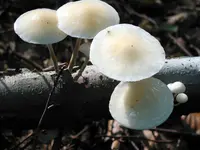
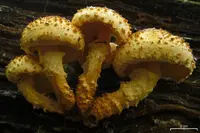
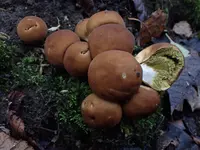
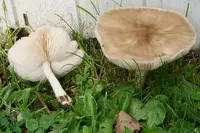
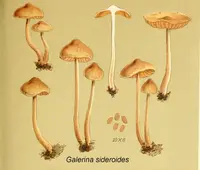
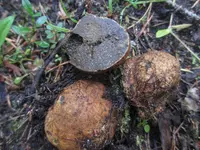
Galerina sideroides is a small, brownish, wood-inhabiting mushroom rather than a leafy plant. It typically forms slender stems with modest caps on decaying wood or plant debris. Occurring in temperate regions, it is most often found in damp forests and shaded, mossy habitats where humidity stays high. This fungus is not suited to typical home cultivation, as it has specific substrate and moisture requirements and a short-lived fruiting phase. For most plant owners, learning how to care for Galerina sideroides is mainly of academic interest rather than a practical indoor growing project.

Main Plant Requirements

Care Difficulty

Hard Care

Light Preference

Partial Shade

Water Requirements

Keep Soil Moist

Temperature Preference

Cool Climate

Hardiness Zone

Unknown

Soil Texture

Loamy, Silty, Organic-rich

Soil pH

Acidic (5.5–6.5)

Soil Drainage

Moist but well-drained

Fertilization

Minimal (feed rarely)

Get Personalized Care Plan

Scan your plant to receive care tips personalized for your specific plant

Available on iOS and Android

How to Care for the Galerina sideroides

This fungus prefers cool, shaded forest conditions with brief, gentle light exposure.

  • Provide dappled or filtered light equal to roughly 1–2 hours of weak morning sun; avoid direct midday and afternoon sun, which can overdry its substrate.
  • Allow growth under partial to full shade beneath shrubs, trees, or decaying wood, as Galerina sideroides naturally fruits in low-light woodland habitats.
  • In summer, protect from strong sun and drying winds, while in autumn and early spring slightly brighter but still indirect light can support normal development.

Moist, not waterlogged, conditions are essential for this wood-inhabiting fungus.

  • Maintain evenly moist substrate around decaying wood or leaf litter, letting only the surface 1–2 cm start to dry before rewetting with a gentle soak or misting.
  • Ensure excellent drainage so excess water runs off; persistent pooling, sour odor, or slimy surfaces indicate overwatering and poor aeration.
  • During cool, damp seasons, reduce added water and rely more on natural rainfall; in hot, dry spells, increase frequency, watching for shriveling or brittle fruiting bodies as a sign of dryness.

This species favors cool to mild conditions typical of temperate forests.

  • Aim for an active growth range around 50–68°F (10–20°C), which supports stable mycelial activity and normal fruiting.
  • Avoid temperatures below 32°F (0°C), since hard frost can damage fruiting bodies, though buried mycelium may survive short cold snaps.
  • Limit exposure above 77–82°F (25–28°C), as sustained heat combined with dry air can halt development; provide shade and higher humidity in hot, dry weather to moderate temperature swings.

This species is not cultivated as a houseplant, and humidity management is generally not relevant for typical encounters with Galerina sideroides.

Soil considerations mainly apply to understanding this toxic woodland fungus in situ, not to routine cultivation.

  • It typically occurs on well-drained, organic-rich forest substrates, such as decaying wood, leaf litter, or humus layers rather than mineral garden soil.
  • Moist but aerated conditions favor its growth; prolonged waterlogging or compacted, clay-heavy ground reduces fungal activity and fruiting.
  • Slightly acidic conditions (around pH 5.0–6.5) are common in its habitats where coniferous or mixed woodland litter accumulates.
  • Maintaining layered organic matter, such as rotting logs and leaves, enhances aeration and drainage while providing the lignin-rich material this saprobe decomposes.

This species is not suitable for ornamental container growing and is generally not intentionally cultivated in pots.

This small saprophytic fungus typically gains nutrients from decaying organic matter and does not benefit from garden fertilization.

Pruning is not applicable to Galerina sideroides, as it is a short-lived mushroom fruiting from decaying material rather than a plant with persistent stems or foliage.

Transplanting is generally not appropriate because this fungus fruits from specific decaying substrates and does not adapt well to being moved.

  • Avoid disturbing natural colonies; the mycelium network in wood or leaf litter is sensitive to disruption and drying.
  • If removal is necessary, cut and discard fruiting bodies rather than digging, which damages underlying mycelium.
  • Gardeners managing habitat should instead focus on maintaining stable, moist, shaded decaying wood or litter rather than relocating material.
  • Container culture is not recommended, as controlled substrate and humidity conditions are difficult to maintain consistently for this species.

Deliberate propagation of this wild, potentially toxic mushroom is not recommended for home growers, so no routine propagation methods are advised.

Specific winter care is unnecessary, as the fungal mycelium persists in suitable decaying material and fruits when conditions allow.

Care Tips

Use sterile substrate

Prepare a fully pasteurized or sterilized wood-based substrate before inoculation to reduce competition from molds and other fungi, which is critical for successfully growing Galerina sideroides.

Control contamination

Handle spawn and substrate with clean tools and washed hands or gloves, and wipe work surfaces with 70% isopropyl alcohol to limit bacterial and fungal contamination during inoculation.

Monitor gas exchange

Provide limited but consistent fresh air through micropore-filtered holes or slightly loosened lids so the culture receives gas exchange without drying out or inviting pests.

Track colonization time

Label containers with date and strain source, then monitor colonization speed and appearance so you can discard slow, patchy, or off-color growth before it spreads contamination.

Implement strict safety

Because this genus contains highly toxic species and identification can be difficult, maintain clear labeling, keep cultures away from edibles, and avoid any consumption or use outside controlled research conditions when caring for Galerina sideroides.

Common Pests and Diseases

Fungivorous springtails

These insects live in damp substrates around the fungus and feed on decaying organic matter and fine mycelium, sometimes reducing growth in dense culture trays.

Solution

Reduce constant surface wetness by improving drainage and ventilation, then allow the substrate surface to dry slightly between mistings; in containers, remove heavily infested top substrate and replace with fresh, pasteurized material, and use fine mesh or tight‑fitting lids with air holes to limit re‑infestation while maintaining high humidity for Galerina sideroides care instructions.

Fungus gnat larvae

This pest thrives in very moist substrates and the larvae tunnel through the growing medium, occasionally grazing on young mycelium and newly formed primordia.

Solution

Let the upper 0.5–1 cm of substrate dry slightly between waterings, use yellow sticky traps to reduce adult numbers, and cover substrate vents with fine mesh; for severe cases, drench only the substrate (not fruiting bodies) with a Bacillus thuringiensis israelensis (BTi) product following label rates to target larvae.

Trichoderma green mold

This disease appears as fast‑spreading, bright to dark green patches on the substrate surface that can overrun the slower Galerina mycelium and suppress fruiting.

Solution

Isolate and discard heavily colonized trays to prevent spore spread, increase air movement and reduce standing condensation, and in future batches pasteurize or pressure‑sterilize substrates, work with clean tools, and avoid over‑rich manures that favor Trichoderma growth.

Mucor and Rhizopus molds

This disease complex shows as rapidly growing, fluffy white to gray mold that blankets substrate and aborts primordia under overly wet, unsterilized conditions.

Solution

Remove and discard badly affected cultures, reduce watering and free water on surfaces, enhance fresh air exchange, and prepare new cultures with properly pasteurized substrate and strict hygiene so competitive molds do not establish before the crop mycelium.

Bacterial blotch

Symptoms include soft, water‑soaked, sometimes yellow‑brown spots on caps and stems that develop where free water sits on tissue under stagnant, humid air.

Solution

Improve air circulation to dry caps between mistings, avoid overhead spraying that leaves persistent droplets, promptly remove and discard affected fruiting bodies, and in future maintain high humidity through fine mist or humidifiers rather than heavy direct wetting of the mushrooms.

Interesting Facts

Tiny moss associate

This species is a minute brownish mushroom that typically fruits among bryophytes, especially mosses, on soil or decaying plant material in temperate forests.

Distinctive spore features

Its ellipsoid, ornamented spores with a plage (a smooth area on the spore surface) and dextrinoid reaction in Melzer’s reagent are key microscopic traits used to separate it from similar small brown mushrooms.

Taxonomic complexity

G. sideroides has a complicated taxonomic history, with some collections historically misidentified or lumped under other Galerina species, so modern identification relies on careful microscopic study and comparison with type material.

FAQs about Galerina sideroides

This small brown mushroom is considered highly poisonous. It contains toxins similar to deadly Amanita species, which can cause liver damage or death if eaten. It must never be tasted, handled casually around children, or offered to pets.

Grow Healthy Plants with Botan Care

Keep your plants happy and healthy with plant identification, disease detection, and easy care guidance.

Botan plant care app — identify plants on mobile

Explore More Plants