

Use inert substrate
Grow the fungus on well-charred hardwood or conifer debris with minimal remaining bark or unburned wood, since a clean, carbon-rich substrate favors colonization and reduces competition from other fungi.

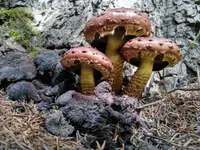
Pholiota carbonaria is a small saprotrophic mushroom that fruits on charred wood and burnt ground after forest or grass fires. It forms clustered caps that are yellow‑brown to dark brown, often with fine scales, on slender stems.
This fungus occurs mainly in temperate regions of the Northern Hemisphere, especially in recently burned coniferous and mixed forests. It appears seasonally, often in the first years after a fire.
Because it relies on specific post‑fire substrates, it is not a practical species for home cultivation, and information on how to care for Pholiota carbonaria in cultivation is limited. In nature it prefers moist, cool conditions and nutrient‑rich, carbonized wood debris.

Care Difficulty
Hard Care

Light Preference
Partial Shade

Water Requirements
Keep Soil Moist

Temperature Preference
Cool Climate

Hardiness Zone
Unknown

Soil Texture
Loamy, Silty, Organic-rich

Soil pH
Acidic (5.5–6.5)

Soil Drainage
Moist but well-drained

Fertilization
Minimal (feed rarely)
Scan your plant to receive care tips personalized for your specific plant
Available on iOS and Android
This fire-following fungus prefers bright, indirect forest light rather than intense, open sun.
Moist but not waterlogged substrate is essential for stable fruiting.
This species fruits best in cool to mild conditions typical after recent fires.
This fungus is not humidity-sensitive and can fruit across a wide humidity range, so active humidity management is usually unnecessary.
Pholiota carbonaria grows on burned wood and charcoal-rich ash rather than true soil, so substrate structure and aeration are more important than standard potting mixes.
This species is only moderately suitable for container growing when recreating a shallow, burned-wood substrate.
This saprophytic fungus usually gains enough nutrients from its substrate, so Pholiota carbonaria needs no routine fertilization in typical culture.
As a short-lived fungus producing fruiting bodies on charred wood, Pholiota carbonaria does not benefit from structural pruning.
Cultivation focuses on providing fresh, suitable substrate rather than classic repotting for Pholiota carbonaria.
Propagation of this fungus is specialized and not usually attempted by casual growers, so practical home methods for Pholiota carbonaria are limited.
Outdoor mycelium is naturally cold hardy in many temperate climates and generally needs no special winter protection.

Plant Health Check
Not sure what's wrong with your plant? Check your plant's health inside the app.
This species typically appears in the first 1–2 years after forest or grassland fires, fruiting on charred wood and soil rich in burnt organic matter, then becoming rare again as vegetation recovers.
Its fruiting bodies are strongly associated with charcoal and heavily burned substrates, which is reflected in the species name carbonaria, meaning related to coal or charcoal.
The mushrooms produce a dark brown to smoky brown spore print, which helps distinguish it from some superficially similar post-fire fungi with paler spores.
This species is generally regarded as inedible or of unknown edibility and should not be collected for food. Identification in this genus is difficult, and misidentification risks poisoning. Treat all similar brown gilled mushrooms as potentially unsafe to eat.
Keep your plants happy and healthy with plant identification, disease detection, and easy care guidance.

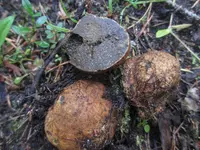
Yellow False Truffle
Rhizopogon luteolus
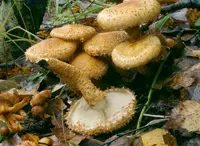
shaggy scalycap
Pholiota squarrosa
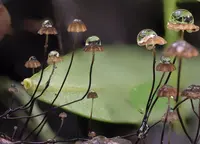
Oliveleaf Crypto
Cryptomarasmius corbariensis
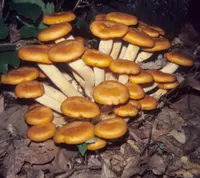
jack-o'-lantern mushroom
Omphalotus illudens
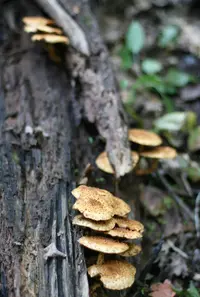
Pholiota adiposa
Pholiota adiposa
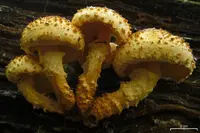
Sharp-scaly Pholiota
Pholiota squarrosoides
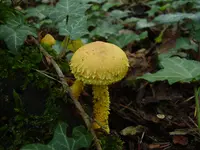
flaming scalycap
Pholiota flammans
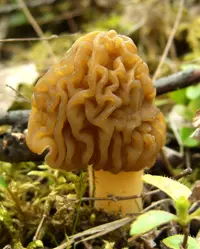
wrinkled thimble morel
Verpa bohemica