

Use Sterile Substrate
Prepare a pasteurized or sterilized lignin‑rich substrate such as well‑aged hardwood chips or sawdust to reduce competing fungi and bacteria and give Pluteus petasatus mycelium a clear advantage.

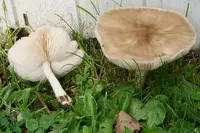
Patrician deer mushroom, Pluteus petasatus, is a saprophytic fungus that feeds on decaying wood rather than living plant tissue. It produces pale cream to tan caps with a smooth, sometimes slightly cracked surface and a central darker area, supported by a slender, whitish stem.
This species appears in temperate forests, parks, and wood chip beds, often on buried hardwood logs or stumps. It is not a beginner-friendly species to cultivate, as it demands consistently clean conditions and a suitable wood-based substrate. Those who want to care for Patrician Deer Mushroom should focus on stable moisture, moderate indirect light, and a fresh, uncontaminated growing medium.

Care Difficulty
Hard Care

Light Preference
Shade

Water Requirements
Keep Soil Moist

Temperature Preference
Cool Climate

Hardiness Zone
Unknown

Soil Texture
Loamy, Organic-rich, Peaty

Soil pH
Acidic (5.5–6.5), Slightly acidic (6.5–7.0)

Soil Drainage
Moist but well-drained

Fertilization
Minimal (feed rarely)
Scan your plant to receive care tips personalized for your specific plant
Available on iOS and Android
This woodland fungus prefers low to moderate light, similar to a shaded forest floor.
This species needs consistently moist, not waterlogged, wood or organic debris to fruit well.
This fungus fruits best in cool to mild conditions typical of temperate woodlands.
Humidity is not a key factor for Pluteus petasatus, which typically fruits outdoors in naturally variable conditions.
Pluteus petasatus fruits best on decaying wood or very organic-rich substrates rather than typical garden soil.
This species is not well suited to conventional container growing, as it naturally colonizes decaying wood and forest debris rather than developing in a stable root ball.
This saprophytic fungus lives on decaying wood or rich organic debris and usually gains enough nutrition without added fertilizer.
Pluteus petasatus does not need pruning in the horticultural sense, but cleanup of spent fruiting bodies is useful for hygiene and spore management.
This mushroom is not managed like a potted plant; any handling focuses on moving colonized substrate rather than true repotting.
Cultivating Pluteus petasatus at home is specialized and not routinely attempted by typical plant owners, so practical propagation instructions are limited.
In natural settings, this species tolerates normal outdoor seasonal changes and usually needs no targeted winter care from gardeners.

Plant Health Check
Not sure what's wrong with your plant? Check your plant's health inside the app.
This species typically fruits on decaying hardwood, but in cities it is often found on buried wood under lawns, paths, and mulched beds, so it can appear to spring directly from soil or turf.
Mature fruitbodies show a pale cream to whitish cap with fine, radial, brownish fibrils, giving a silky or slightly scaly appearance that helps separate it from similar pale mushrooms.
Its gills do not touch the stem (free gills) and turn from whitish to pink as the spores mature, reflecting its pink spore print typical of the genus but in a combination of colors and structures characteristic for this species.

Molecular studies have shown that material once identified under this name in different regions actually represents several distinct but closely related species, so modern identification often combines classic field characters with DNA data to confirm true Pluteus petasatus.
This species is generally regarded as edible but is not widely consumed. Identification errors with similar-looking toxic fungi are a serious risk. For safety, only experienced foragers using multiple identification features should consider eating it.
Keep your plants happy and healthy with plant identification, disease detection, and easy care guidance.

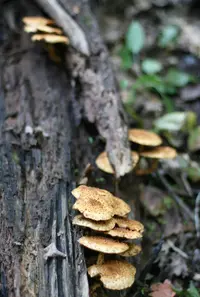
Pholiota adiposa
Pholiota adiposa
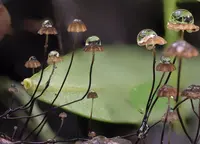
Oliveleaf Crypto
Cryptomarasmius corbariensis
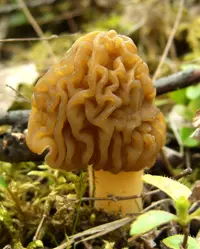
wrinkled thimble morel
Verpa bohemica
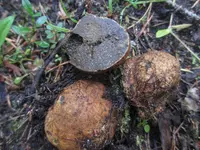
Yellow False Truffle
Rhizopogon luteolus
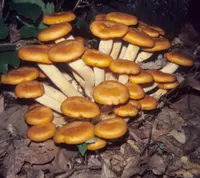
jack-o'-lantern mushroom
Omphalotus illudens
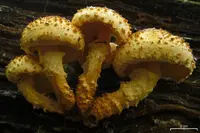
Sharp-scaly Pholiota
Pholiota squarrosoides
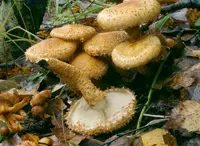
shaggy scalycap
Pholiota squarrosa
Pear-shaped Puffball
Apioperdon pyriforme