Select host wood
Use freshly cut, untreated hardwood logs (oak, beech, maple) 10–25 cm in diameter, as slightly moist, sound wood supports denser fruiting body development and delays log decay.

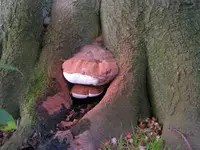
Ganoderma tornatum, also known as Ganoderma adspersum, is a perennial bracket fungus rather than a typical leafy plant. It forms hard, woody, shelf-like fruiting bodies on the trunks or roots of living or dead trees, especially on broadleaf species in parks, woodlands, and urban landscapes.
This fungus contributes to wood decay, creating a brown rot that weakens tree structure over time. It is slow-growing but long-lived, often forming large, thick tiers.
In cultivation, it is considered specialized and is not commonly grown as a decorative species. Those who care for Ganoderma tornatum usually focus on managing it on host trees rather than promoting its growth, since it signals internal wood damage.

Care Difficulty
Moderate Care

Light Preference
Partial Shade

Water Requirements
Regular Water

Temperature Preference
Cool Climate

Hardiness Zone
5–9

Soil Texture
Loamy, Clay, Organic-rich

Soil pH
Slightly acidic (6.5–7.0), Neutral (7.0)

Soil Drainage
Moist but well-drained

Fertilization
Minimal (feed rarely)
Scan your plant to receive care tips personalized for your specific plant
Available on iOS and Android
This bracket fungus prefers stable shade conditions similar to mature woodland understories.
Ganoderma adspersum depends on consistently moist but not waterlogged wood rather than direct soil watering.
This wood-decaying fungus is adapted to temperate climates with cool to mild conditions across the year.
This bracket fungus prefers consistently moist, humid conditions around decaying wood rather than dry air.
Ganoderma adspersum naturally colonizes woody substrates, but cultivation benefits from a carefully structured, organic-rich medium.
This species can be grown in containers when they mimic stable, moist, woody habitats.
Ganoderma adspersum normally grows on living or dead trees and does not need routine fertilization in cultivation.
Ganoderma adspersum requires minimal pruning, mainly for safety and appearance rather than plant health.
This bracket fungus is rarely grown in containers, so care focuses on managing colonized wood rather than classic repotting.
Propagation of Ganoderma adspersum is specialist work and not usually attempted by general plant owners.
Ganoderma adspersum is cold hardy in temperate climates and generally needs no special winter care once established on wood.

Plant Health Check
Not sure what's wrong with your plant? Check your plant's health inside the app.
This bracket fungus is especially common on mature broadleaf trees in urban parks and streets, where it colonizes the lower trunk and buttress roots, often on horse chestnut, beech, and lime.
The woody, hoof-shaped basidiocarps develop very slowly and can persist for many years, building up thick, layered tissue that makes them extremely hard and resistant to decay.
As a white-rot fungus, it breaks down both lignin and cellulose in wood, leading to a characteristic light-colored, stringy decay that gradually compromises the mechanical stability of living trees.

Molecular studies have shown that material once identified under several different names in Europe, such as Ganoderma europaeum, actually represents the same species as Ganoderma adspersum, leading to significant taxonomic revision in this group of wood-decaying fungi.
This bracket fungus is not considered a culinary mushroom. Its fruiting bodies are tough, woody, and lack pleasant flavor. Some related Ganoderma species are used in traditional medicine, but this one is generally not used for food or supplements.
Keep your plants happy and healthy with plant identification, disease detection, and easy care guidance.