

Rotate for symmetry
Turn the pot 90° every 2–3 weeks so the rosette develops evenly and leaves stay compact instead of leaning toward one light source.

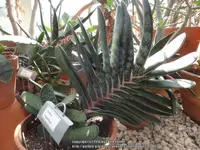
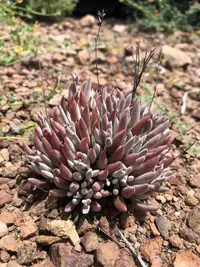
Klein Karoo ox-tongue, Gasteria brachyphylla var. brachyphylla, is a compact succulent from arid regions of South Africa’s Klein Karoo. It forms low, neat rosettes of thick, tongue-shaped leaves often marked with pale spots or bands. Leaves are usually stiff and slightly rough to the touch.
This plant grows slowly and stays small, which makes it suitable for windowsills and small indoor collections. It is generally considered forgiving, as it tolerates some neglect, irregular watering, and a range of indoor humidity levels.
To care for Klein Karoo Ox-Tongue, provide bright, indirect light, well-drained gritty soil, and allow the mix to dry between waterings to reduce the risk of root problems.

Care Difficulty
Easy Care

Light Preference
Bright Indirect Light

Water Requirements
Low Water

Temperature Preference
Tropical / Frost Sensitive

Hardiness Zone
10–11

Soil Texture
Sandy, Loamy, Rocky

Soil pH
Acidic (5.5–6.5), Slightly acidic (6.5–7.0)

Soil Drainage
Well-drained

Fertilization
Minimal (feed rarely)
Scan your plant to receive care tips personalized for your specific plant
Available on iOS and Android
This succulent prefers bright, indirect light with some gentle direct sun, similar to its rocky habitat.
This species prefers thorough but infrequent watering that allows the roots to dry slightly between soakings.
This succulent prefers moderate, stable temperatures and avoids extremes of heat or cold.
This species tolerates typical indoor humidity well and seldom needs special humidity management.
This succulent needs a very fast-draining, airy mix that mimics gritty, rocky ground.
This compact succulent is very suitable for container growing.
This slow-growing succulent needs modest feeding to stay healthy without becoming etiolated or overly lush.
Gasteria brachyphylla var. brachyphylla needs only minimal pruning to maintain a clean, compact rosette.
This compact succulent prefers slightly snug pots and only occasional repotting in well-drained mix.
This species is most commonly propagated vegetatively to maintain identical clones.
This succulent dislikes prolonged cold and needs simple indoor protection in most temperate climates.

Plant Health Check
Not sure what's wrong with your plant? Check your plant's health inside the app.
This species is naturally restricted to rocky shale slopes and cliff faces in the Klein Karoo region of South Africa, where it grows in narrow crevices with very shallow, gritty soil. Its compact, low rosette form helps it withstand strong sun reflected from rock surfaces while keeping the growth point shaded.
Unlike many other Gasteria species with longer, tongue-like leaves, this variety has short, broad, and noticeably flattened leaves that often form a dense, stacked rosette. The leaves usually show a mottled pattern of pale spots on a dark green background, which helps break up the outline of the plant in its rocky habitat.
In its natural range, most rainfall occurs in the cooler months, so this plant is adapted to growing and actively photosynthesizing in winter while resting through hot, dry summers. Its thick succulent leaves store water that buffers the plant through prolonged dry periods typical of the semi-arid Klein Karoo.
Lack of blooms often comes from insufficient light intensity, a pot that is too large, or irregular dry rest periods. Mature plants flower more reliably when slightly root-bound and given strong light and stable, moderate feeding.
Keep your plants happy and healthy with plant identification, disease detection, and easy care guidance.

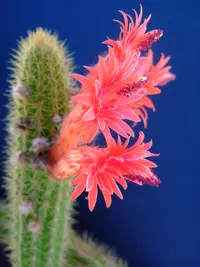
Cleistocactus samaipatanus
Cleistocactus samaipatanus
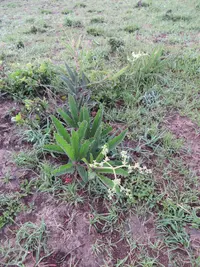
Cyphostemma serpens
Cyphostemma serpens
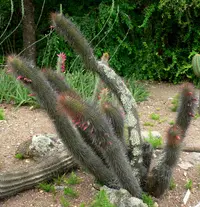
old man of the mountain
Cleistocactus buchtienii
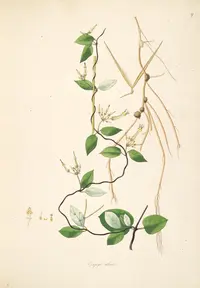
Ceropegia candelabrum
Ceropegia candelabrum
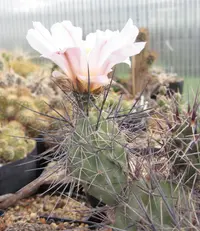
Tephrocactus alexanderi
Tephrocactus alexanderi
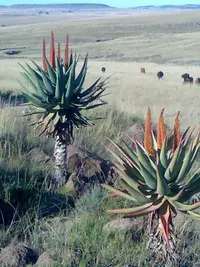
Cape aloe
Aloe ferox
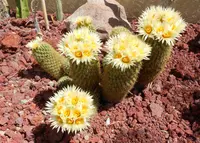
Coryphantha erecta
Coryphantha erecta
tapertip liveforever
Dudleya attenuata