Deadhead Precisely
Remove spent flowers by snipping just below the flower head without cutting healthy foliage to keep continuous blooming and reduce disease entry points.

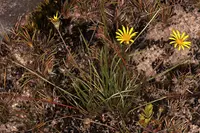
Treasureflower, Gazania linearis, is a low-growing, sun-loving perennial often grown as an annual in cooler climates. It forms neat clumps of narrow, silver-green leaves. The plant is known for its large, daisy-like flowers in bright yellow, orange, or bi-colored patterns that open in strong light and close at night or in cloudy weather. This trait makes it best suited to bright, open sites. Native to South Africa, it is adapted to dry, poor soils and coastal conditions, which makes it relatively easy to grow and tolerant of neglect. Those who want to learn how to care for treasureflower should focus on strong light, good drainage, and avoiding overwatering.

Care Difficulty
Easy Care

Light Preference
Full Sun

Water Requirements
Low Water

Temperature Preference
Warm Climate

Hardiness Zone
8–11

Soil Texture
Sandy, Loamy, Rocky

Soil pH
Slightly acidic (6.5–7.0), Neutral (7.0)

Soil Drainage
Well-drained

Fertilization
Minimal (feed rarely)
Scan your plant to receive care tips personalized for your specific plant
Available on iOS and Android
Gazania linearis needs strong, direct sun to produce compact growth and abundant flowers.
Gazania linearis prefers dry to moderately moist soil and is highly drought-tolerant once established.
This species thrives in warm, dry conditions and dislikes prolonged cold or damp.
Gazania linearis handles typical indoor and outdoor humidity well, so humidity usually does not limit performance.
Gazania linearis prefers lean, very free-draining soil that never stays waterlogged.
This species is suitable for container growing with attention to fast drainage and controlled moisture.
Gazania linearis benefits from light feeding but grows acceptably in lean soils.
Gazania linearis responds well to light pruning that maintains compact growth and strong flowering.
Gazania linearis is usually grown in the ground, but container plants or young starts may need occasional transplanting.
Gazania linearis is commonly propagated from seed and sometimes by division of mature clumps.
Gazania linearis is tender to frost and needs protection in colder climates.

Plant Health Check
Not sure what's wrong with your plant? Check your plant's health inside the app.
This species naturally colonizes sandy coastal slopes and dunes in South Africa, helping to stabilize loose soils with its spreading, mat-forming root system.
Its characteristically narrow, often grass-like leaves reduce surface area and water loss, an adaptation to the hot, dry, and windy habitats where it evolved.
The bright flower heads open fully only in strong light and close in low light or cloudy conditions, a behavior that protects pollen and optimizes visits by sun-loving pollinators.

In South Africa, Gazania linearis has been used in restoration plantings on disturbed road banks and eroded slopes, because it establishes quickly, tolerates poor soils, and forms dense groundcover that limits further erosion.
Lack of blooms often comes from insufficient light, overly rich or wet soil, or excessive nitrogen fertilizer. Deadhead spent flowers, avoid shade, and keep soil free-draining and slightly lean to support continuous flowering when growing treasureflower.
Keep your plants happy and healthy with plant identification, disease detection, and easy care guidance.