Encourage Compact Shape
Pinch back soft new shoots after flowering to keep the plant low and dense, which helps prevent branches from splaying open under their own weight.

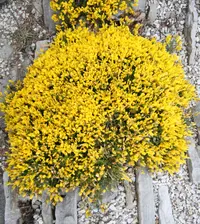
Lydian broom, Genista lydia, is a compact, deciduous shrub valued for its arching stems and bright yellow, pea-like flowers in late spring to early summer. It typically forms a low, fountain-shaped mound with fine green shoots that stay attractive even when not in bloom.
This species is native to the Balkans and parts of Turkey, where it grows on rocky, well-drained slopes. Its natural adaptation to poor, dry soils makes it relatively undemanding in gardens and suitable for sunny banks or rock gardens.
It prefers full sun, sharply drained soil, and does not tolerate heavy, waterlogged conditions. Once established, it needs minimal maintenance, which makes it appealing to gardeners who want to learn how to care for Lydian broom without complex routines.

Care Difficulty
Easy Care

Light Preference
Full Sun

Water Requirements
Low Water

Temperature Preference
Cold Hardy

Hardiness Zone
5–8

Soil Texture
Sandy, Loamy, Rocky

Soil pH
Slightly acidic (6.5–7.0), Neutral (7.0)

Soil Drainage
Well-drained

Fertilization
Minimal (feed rarely)
Scan your plant to receive care tips personalized for your specific plant
Available on iOS and Android
This compact shrub prefers bright, open conditions to flower well and stay dense.
This drought-tolerant shrub needs careful watering to avoid root problems.
This species is adapted to warm, dry summers and cool to cold winters.
Humidity is rarely a concern for this species, which thrives in dry outdoor air.
This shrub prefers lean, very well-drained soil and copes poorly with prolonged moisture around the roots.
This species adapts well to container growing when the potting mix and pot choice limit excess moisture.
This drought-tolerant shrub needs only light feeding in poor soils to maintain healthy growth and flowering.
Thoughtful pruning keeps Genista lydia compact, tidy, and free-flowering.
This shrub is usually grown in the ground, with transplanting needed only occasionally once established.
New Genista lydia plants are most often produced from semi-ripe cuttings or seeds under controlled conditions.
Mature plants are fairly cold hardy, so most outdoor specimens in mild climates need only minimal winter care.

Plant Health Check
Not sure what's wrong with your plant? Check your plant's health inside the app.
This low, mounding shrub naturally grows on rocky, gravelly slopes in the Balkans and Turkey, where its root system helps it cling to shallow, stony soils that many other shrubs cannot tolerate.
As a legume, it forms symbioses with root nodule bacteria that convert atmospheric nitrogen into forms the plant can use, gradually improving poor, sandy or gravel soils around it.
Its dense display of small, bright yellow pea-like blossoms in late spring provides an abundant nectar and pollen source for bees and other pollinating insects in its native range and in gardens.

In several European countries, especially in rock and alpine garden design, this species is valued as a long-lived, compact alternative to larger broom species because it maintains a low, dome-shaped form without regular pruning, making it a stable structural element in small-space plantings.
Poor flowering usually comes from too little light, excessive nitrogen fertilizer, or pruning at the wrong time, which removes flower buds. Light, well-drained soil and pruning right after flowering are key parts of Genista lydia plant care.
Keep your plants happy and healthy with plant identification, disease detection, and easy care guidance.