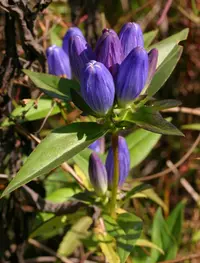
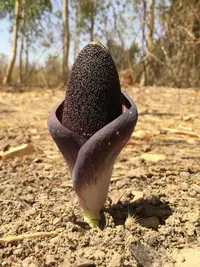
closed bottle gentian Care (Gentiana andrewsii)

Also known as: bottle gentian
closed bottle gentian

About closed bottle gentian

Closed bottle gentian, Gentiana andrewsii, is a perennial wildflower native to moist meadows, prairies, and open woods in eastern and central North America. It forms compact clumps with upright stems and narrow, lance-shaped leaves.

The plant is best known for its deep blue, bottle-shaped flowers that stay mostly closed, giving it a distinctive, almost sculptural look in late summer and fall. It can be moderately challenging to grow because it prefers consistently moist, cool, slightly acidic soils and does not tolerate drying out.

Gardeners who want to care for closed bottle gentian need to match its natural habitat as closely as possible, especially regarding moisture and soil conditions.


Main Plant Requirements

Care Difficulty

Moderate Care

Light Preference

Partial Sun

Water Requirements

Keep Soil Moist

Temperature Preference

Cold Hardy

Hardiness Zone

3–7

Soil Texture

Loamy, Silty, Organic-rich

Soil pH

Acidic (5.5–6.5), Slightly acidic (6.5–7.0)

Soil Drainage

Moist but well-drained

Fertilization

Minimal (feed rarely)

Get Personalized Care Plan

Scan your plant to receive care tips personalized for your specific plant

Available on iOS and Android

How to Care for the closed bottle gentian

This woodland-edge perennial prefers cool sun exposure with consistent, moderate light levels.

  • Provide 3–5 hours of direct morning sun with light shade or dappled light in the afternoon to protect closed bottle gentian from leaf scorch.
  • Site the plant in partial shade, such as the east or north side of a building or under open-canopy trees, avoiding harsh west-facing exposure.
  • In summer, monitor for pale, floppy stems as a sign of too little light and for crispy, browned leaf edges as a sign of excessive sun.

This species needs steadily moist but not waterlogged soil throughout the growing season.

  • Aim for soil that feels evenly moist; allow only the top 2–3 cm to dry slightly between waterings in well-drained, humus-rich ground.
  • Increase attention during hot, dry spells, using rainfall plus soil feel as a guide, and reduce watering in late fall as Gentiana andrewsii goes dormant.
  • Watch for drooping, dull foliage and dry soil as signs of underwatering, and yellowing lower leaves with soggy soil as an indication of overwatering or poor drainage.

This cold-hardy perennial thrives in cool to mild climates with pronounced seasons.

  • Optimal active growth occurs around 60–70°F (16–21°C), with flowering and bud development strongest in consistently cool conditions.
  • Plants tolerate winter cold down to about -20°F (-29°C) in the ground when soil is not waterlogged and there is some mulch for root protection.
  • Heat above 85°F (29°C), especially with full afternoon sun, can stress plants, so provide shade and increased soil moisture during hot spells to reduce stress.

Humidity plays a minor role for closed bottle gentian, which is adapted to outdoor temperate conditions.

Gentiana andrewsii prefers cool, moist, well-structured soil that never stays waterlogged.

  • Use a deep, loamy soil rich in organic matter, combining garden loam with leaf mold or compost for structure.
  • Aim for slightly acidic to neutral pH around 5.5–7.0, avoiding strongly alkaline or chalky sites.
  • Ensure steady moisture with free drainage by incorporating coarse sand or fine grit to prevent waterlogging.
  • Avoid compacted, heavy clay; lighten dense soil by mixing in compost plus sharp sand to improve aeration.

This species can grow in containers if the pot mimics its cool, moist yet free-draining root conditions.

  • Choose a tall, narrow container to give the deep root system enough vertical space and reduce overheating of the root zone.
  • Use a heavier material such as clay to stabilize the pot against wind and support upright flower stems.
  • Raise the container slightly on pot feet so drainage holes stay clear and excess water escapes quickly after rain or irrigation.

Gentiana andrewsii benefits from light, carefully timed feeding rather than heavy fertilization.

  • Use a balanced, low-strength liquid fertilizer (such as 10-10-10) at 1/2–1/4 label strength during active growth in spring–early summer.
  • Apply every 4–6 weeks while the plant is forming foliage and flower buds, avoiding dry or heat-stressed soil.
  • For closed bottle gentian in lean garden soils, lightly top-dress with compost in early spring instead of frequent liquid feeds.
  • Stop fertilizing by late summer and do not feed during fall–winter dormancy to prevent weak, frost-tender growth.

Pruning needs for Gentiana andrewsii are minimal and focus on cleanliness rather than reshaping the plant.

  • In late fall or very early spring, remove dead, diseased, or winter-damaged stems with clean, sharp scissors or hand pruners.
  • Snip off spent flower stalks after blooming to keep plants tidy and encourage stronger root and crown development.
  • Avoid heavy cutting into healthy foliage; this clump-forming perennial naturally maintains a compact, upright habit.
  • Disinfect tools before and after use to reduce the risk of transmitting fungal or bacterial problems between plants.

This species is usually grown in the ground, so focus on careful transplanting rather than frequent repotting.

  • Transplant Gentiana andrewsii in early spring or early fall, when temperatures are mild and soil moisture is consistent.
  • Look for slow growth, sparse flowering, or roots circling a container as signs that a potted plant needs a slightly larger pot.
  • Move the root ball gently, disturbing roots as little as possible and replant at the same soil depth in well-drained, slightly acidic soil.
  • Water thoroughly after transplanting, then keep soil evenly moist and shaded for 1–2 weeks to reduce transplant shock and support root recovery.

Propagation of Gentiana andrewsii is possible but somewhat specialized, relying mainly on division and seed.

  • Divide established clumps in early spring just as new shoots emerge, keeping divisions small and roots intact.
  • Replant divisions immediately into moist, well-drained, slightly acidic soil and shade them lightly until re-established.
  • Sow fresh seed outdoors in fall, allowing natural winter cold to provide stratification, which breaks seed dormancy.
  • Maintain consistently moist, cool conditions for seed trays or newly divided plants to support slow but steady root development.

This hardy perennial tolerates typical winters in much of its native range and usually needs only modest protection.

  • Gentiana andrewsii survives subfreezing temperatures once established, as its crowns rest below the soil surface in winter.
  • After hard frost, allow foliage to die back naturally, then cut it to ground level if desired for tidiness.
  • Apply a 5–7 cm layer of loose mulch around, not on top of, the crown to buffer freeze–thaw cycles.
  • For container-grown plants in very cold regions, move pots into an unheated garage or cold frame to prevent root freezing.

Care Tips

Mulch To Cool

Apply a 5–7 cm layer of shredded bark or leaf mold around the root zone (not touching the stems) to keep roots cool, conserve moisture, and suppress weeds, which is especially helpful when growing closed bottle gentian in warmer summers.

Gentle Soil Shading

In hot climates, plant a low, shallow-rooted groundcover nearby or place flat stones on the soil surface to shade and insulate the root zone without competing heavily for nutrients.

Careful Site Preparation

Before planting, double-dig or loosen the soil 25–30 cm deep and remove stones and compacted layers so the fine, fibrous roots can spread evenly and are less prone to rot in winter.

Protect From Winter Heave

In regions with freeze–thaw cycles, add an extra 2–3 cm of mulch in late fall and avoid disturbing the soil in late winter to reduce the risk of plants being pushed upward and exposing roots.

Minimal Disturbance Policy

Avoid frequent division or transplanting; instead, mark the planting area clearly and work around the clumps, since this species resents root disturbance and often declines if moved repeatedly.

Common Pests and Diseases

Rust

This disease causes small orange to brown pustules on leaves and stems, often leading to yellowing and early leaf drop in moist conditions.

Solution

Remove and discard affected leaves, avoid overhead watering, and space plants to improve airflow; if rust persists, apply a sulfur or chlorothalonil-based fungicide labeled for ornamental perennials according to instructions.

Powdery mildew

This disease produces a white, powdery coating on leaves and stems, which can cause distortion and reduced vigor, especially in dense plantings with poor air circulation.

Solution

Increase spacing and airflow, water at soil level, and remove heavily infected foliage; for persistent cases, use a potassium bicarbonate or neem oil product labeled for powdery mildew on ornamentals.

Leaf spot

Symptoms include small dark or tan spots on leaves that may enlarge, merge, and cause partial defoliation during prolonged wet weather.

Solution

Avoid wetting the foliage, promptly remove and dispose of spotted leaves, and use a copper- or chlorothalonil-based fungicide if new spots continue to appear in suitable weather conditions.

Aphids

These insects cluster on young stems and buds, sucking sap and causing curling, distortion, and sticky honeydew that can attract sooty mold on the foliage.

Solution

Wash colonies off with a strong stream of water and prune heavily infested tips; if necessary, apply insecticidal soap or a horticultural oil, ensuring thorough coverage of the undersides of leaves and tender growth.

Slugs and snails

This pest feeds on tender foliage and flower buds, leaving irregular holes and slime trails, particularly in cool, damp habitats typical for Gentiana andrewsii plant care.

Solution

Hand-pick at night, reduce hiding spots such as dense mulch and debris, and use iron phosphate slug baits placed around but not touching plant crowns according to label directions.

Interesting Facts

Closed flowers strategy

The flowers stay tightly closed at the tip and are mainly pollinated by strong bumblebees that force their way between the petal lobes, an unusual mechanism among North American wildflowers.

Late-season bloomer

This species flowers in late summer to early fall in its native range, providing one of the last reliable nectar and pollen sources for bumblebees before winter.

Moist-prairie specialist

It naturally occurs in moist prairies, fens, and wet meadows of the upper Midwest and northeastern US and adjacent Canada, where it often indicates relatively undisturbed, high-quality habitat.

Botan icon

Did you know?

Closed bottle gentian is listed as threatened or endangered in several US states due to habitat loss and wetland alteration, and is sometimes used in prairie restoration projects as a flagship species for conserving late-season pollinators.

FAQs about closed bottle gentian

Lack of blooms usually results from too much shade, dry soil during summer, or soil that is too alkaline. This plant prefers consistent moisture, cool roots, and slightly acidic conditions. Avoid heavy fertilization, especially high-nitrogen products.

Grow Healthy Plants with Botan Care

Keep your plants happy and healthy with plant identification, disease detection, and easy care guidance.

Botan plant care app — identify plants on mobile

Explore More Plants