Japanese gentian Care (Gentiana scabra)

Also known as: Japanese gentian
Japanese gentian

About Japanese gentian

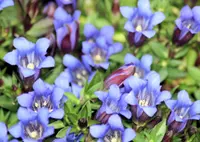
Japanese gentian (Gentiana scabra) is a compact, herbaceous perennial known for its vivid blue, funnel-shaped flowers that appear in late summer to autumn. Plants usually stay low and form tidy clumps, making them suitable for borders, rock gardens, and containers.

In the wild, this species occurs in cool, mountainous regions of East Asia, often in meadows or open woodland clearings with consistent moisture. It can be moderately challenging for beginners because it dislikes heat, drought, and poorly drained or compacted soil.

The plant generally prefers cool conditions, bright but not harsh light, and moist, humus-rich soil. Understanding these natural preferences makes it easier to care for Japanese gentian at home.

Main Plant Requirements

Care Difficulty

Hard Care

Light Preference

Partial Sun

Water Requirements

Keep Soil Moist

Temperature Preference

Cool Climate

Hardiness Zone

5–7

Soil Texture

Loamy, Peaty, Organic-rich

Soil pH

Strongly acidic (4.5–5.5), Acidic (5.5–6.5)

Soil Drainage

Moist but well-drained

Fertilization

Light (every 4–6 weeks)

Get Personalized Care Plan

Scan your plant to receive care tips personalized for your specific plant

Available on iOS and Android

How to Care for the Japanese gentian

This alpine perennial prefers cool, bright conditions without intense midday exposure when grown as Japanese gentian.

  • Provide 4–6 hours of morning sun or light afternoon shade; east or northeast aspects suit most climates.
  • Allow dappled or filtered light during the hottest part of the day to prevent leaf scorch and faded flowers.
  • In warmer regions, shift plants to more partial shade in summer, while in cooler climates they can tolerate near full sun if soil stays moist.

Gentiana scabra prefers consistently moist but not waterlogged soil, especially during active growth and flowering.

  • Water when the top 2–3 cm of soil feels barely damp, aiming for deep soaking that reaches the root zone rather than light surface sprinkling.
  • Use free-draining, humus-rich soil so excess water can escape; yellowing, soft stems indicate overwatering, while limp, dull leaves signal drought stress.
  • In spring and summer, check moisture more often during dry spells; in cooler or rainy seasons, extend intervals and avoid leaving the soil saturated.

This species favors cool, temperate conditions and dislikes extreme heat or sudden temperature swings.

  • Aim for growing temperatures around 55–70°F (13–21°C) during the main season to support strong vegetative growth and flowering.
  • Established plants tolerate brief dips to about 20°F (-6°C) with mulch protection, but young plants are more vulnerable to hard freezes.
  • In hot summers above 80°F (27°C), provide afternoon shade and slightly higher soil moisture to offset heat stress and prevent bud drop.

Gentiana scabra prefers cool, moderately moist air but is not highly humidity-sensitive outdoors.

  • Target 40–60% humidity, which is typical for temperate outdoor conditions in most regions.
  • Dry indoor air above heating vents can cause leaf edge browning and reduced flowering in Japanese gentian.
  • If leaves curl or buds dry, increase local humidity with a gravel tray under the pot or by grouping plants together.

Gentiana scabra grows best in cool, moist, sharply drained soil with high organic content.

  • Use a loose, loamy mix made from roughly 50% composted bark or leaf mold, 30–40% garden loam, and 10–20% coarse sand or grit.
  • Keep drainage fast; water should pass through within seconds and never leave the root zone waterlogged.
  • Aim for slightly acidic soil, around pH 5.5–6.5, which supports nutrient uptake and healthy root growth.
  • Improve aeration by mixing in coarse sand, fine gravel, or perlite, and avoid heavy clay or compacted substrates.

This species can be grown in containers if moisture and drainage are carefully controlled.

  • Choose a deep pot that allows roots to grow downward, supporting the plant’s preference for a cool, stable root zone.
  • Select a heavy or clay container in windy sites to prevent tipping and to moderate rapid moisture loss.
  • Elevate the pot on feet or bricks so drainage holes remain clear and excess water escapes quickly after rain or watering.

Gentiana scabra benefits from modest, balanced feeding during active spring–summer growth.

  • Use a balanced, diluted liquid fertilizer (for example 10-10-10 at 1/2 strength) every 4–6 weeks while shoots and buds develop.
  • Alternatively, apply a low-dose slow-release fertilizer or a thin layer of fine compost in early spring around, not on, the crown.
  • Suspend feeding in late fall and winter when growth stops to avoid weak, elongated shoots on Japanese gentian.
  • Always water lightly before liquid feeding to reduce root burn risk in containers and in well-drained beds.

Pruning Gentiana scabra is light and mainly focused on tidying and supporting flowering.

  • In late winter or early spring, remove dead or damaged stems with clean, sharp scissors or hand pruners.
  • Deadhead faded flower clusters during the blooming period to encourage a tidier appearance and possible repeat flowering.
  • Thin out weak, crowded shoots at the base to improve air movement and reduce fungal problems in damp climates.
  • Avoid cutting into healthy woody crowns; keep shaping minimal to preserve the plant’s natural low mound.

This species is more often transplanted in garden beds than shifted between containers.

  • Transplant in early spring or early fall when temperatures are mild and soil stays evenly moist.
  • Move plants only every few years, when flowering declines, growth becomes weak, or roots fill and circle a container.
  • Lift carefully with a trowel or fork, keeping as much root ball intact as possible to limit transplant shock.
  • Replant into well-drained, slightly acidic soil at the same depth, water thoroughly, then shade briefly until recovery.

Gentiana scabra is propagated mainly by division and seeds, with cuttings used less often.

  • Divide established clumps in early spring, keeping several buds and fibrous roots on each section, then replant promptly.
  • Sow fresh seed in fall or late winter in trays outdoors so natural cold stratification breaks dormancy.
  • Use a sharply draining, slightly acidic seed or cutting mix and keep it just moist, never waterlogged.
  • For basal cuttings, remove non-flowering shoots in spring, treat with rooting hormone, and root under bright, cool, humid conditions.

Mature Gentiana scabra is fairly cold hardy and usually needs only simple winter care.

  • In regions with freezing winters, apply a 3–5 cm layer of loose mulch around, but not over, the crown after soil cools.
  • Avoid winter waterlogging by ensuring sharp drainage; soggy cold soil increases root and crown rot risk.
  • Container plants in very cold areas can be moved to a sheltered, unheated porch or cold frame to buffer temperature swings.

Care Tips

Mulch For Cool Roots

Apply a 3–5 cm layer of fine bark or leaf mold around the plant to keep the root zone cool and evenly moist, but pull it back 2–3 cm from the stems to prevent rot.

Slight Root Shading

Plant low, shallow-rooted groundcovers or place flat stones around the crown to shade the upper root area while still allowing the stems and flowers to receive full light.

Acid Level Monitoring

Test soil pH once or twice a year and top-dress with a small amount of ericaceous compost or elemental sulfur if pH drifts above about 6.0, as this species declines quickly in more alkaline conditions.

Gentle Winter Protection

In colder climates, add a light, airy mulch of pine needles or shredded leaves after the ground begins to freeze to protect the crown from freeze–thaw cycles, then remove most of it in early spring.

Plan For Short Lifespan

Because many clumps weaken after a few years, treat them as short-lived perennials and start new plants from seed or cuttings every 2–3 years to maintain continuous displays when growing Japanese gentian.

Common Pests and Diseases

Powdery mildew

This disease causes a white, powdery coating on leaves, stems, and sometimes flower buds, especially in warm, dry conditions with poor airflow. Symptoms include distorted new growth and reduced flowering.

Solution

Remove and discard heavily infected leaves, then thin surrounding vegetation to increase air movement and avoid overhead watering. Apply a sulfur or potassium bicarbonate fungicide labeled for ornamentals at the first sign of disease and keep foliage as dry as possible for consistent Gentiana scabra care.

Botrytis blight

This disease produces gray, fuzzy mold on flowers, buds, and leaves during cool, humid, or wet weather. Symptoms include browning of petals, soft, water-soaked lesions, and collapse of affected stems or buds.

Solution

Promptly remove spent flowers and any soft, moldy tissue and dispose of it away from the garden. Improve drainage and spacing, water at soil level in the morning, and if needed use a labeled botrytis-targeting fungicide during prolonged damp periods.

Leaf spot

This disease causes small, brown to purplish spots on leaves that may merge into larger blotches, leading to yellowing and premature leaf drop. Symptoms include more severe spotting on lower, older foliage in crowded or damp plantings.

Solution

Prune off and discard heavily spotted leaves and avoid wetting the foliage when watering. Improve air circulation, keep the area free of plant debris, and use a copper- or chlorothalonil-based fungicide if spotting progresses despite cultural corrections.

Aphids

These insects cluster on tender shoots and flower stems, sucking sap and causing curling, yellowing, or distorted growth. This pest also excretes sticky honeydew that can attract sooty mold on leaves and stems.

Solution

Spray affected shoots with a firm stream of water to dislodge colonies, then treat remaining insects with insecticidal soap or a light horticultural oil, covering all leaf surfaces. Encourage natural predators such as lady beetles and avoid excessive nitrogen fertilization that promotes soft, aphid-prone growth.

Slugs and snails

These pests chew irregular holes in leaves and young shoots, often leaving only leaf midribs and causing stunted plants in damp, shaded sites. Symptoms include slime trails on soil and damaged foliage, especially after rainy weather or overnight.

Solution

Hand-pick slugs and snails in the evening, remove hiding spots such as dense mulch and debris, and use iron phosphate bait around plant bases if damage persists. Keep the soil surface slightly drier near the crown by watering in the morning and focusing irrigation at the root zone.

Interesting Facts

Autumn-blooming strategy

Gentiana scabra typically flowers from late summer into autumn, when many other herbaceous species have finished blooming, providing a late-season nectar source for pollinators in its native East Asian habitats.

Color-shifted corolla

The funnel-shaped flowers usually show a gradient from deep blue at the lobe tips to paler or whitish tones toward the throat, with spotted or striped markings that help guide pollinating insects.

East Asian mountain native

This species is naturally distributed in cool, montane regions of China, Korea, Japan, and parts of eastern Russia, where it often grows in grasslands, open woods, and slopes with well-drained, slightly acidic soils.

Botan icon

Did you know?

In traditional East Asian horticulture, selected forms of Gentiana scabra have been used in breeding programs to produce ornamental gentian cultivars with compact growth and intense blue flowers that are now traded internationally as specialty autumn-blooming garden plants.

FAQs about Japanese gentian

Lack of flowers often comes from plants being too young, planted too deep, or stressed by heat, drought, or recent transplanting. Mild, cool conditions, consistent moisture, and avoiding heavy disturbance around the roots usually restore normal flowering.

Grow Healthy Plants with Botan Care

Keep your plants happy and healthy with plant identification, disease detection, and easy care guidance.

Botan plant care app — identify plants on mobile

Explore More Plants